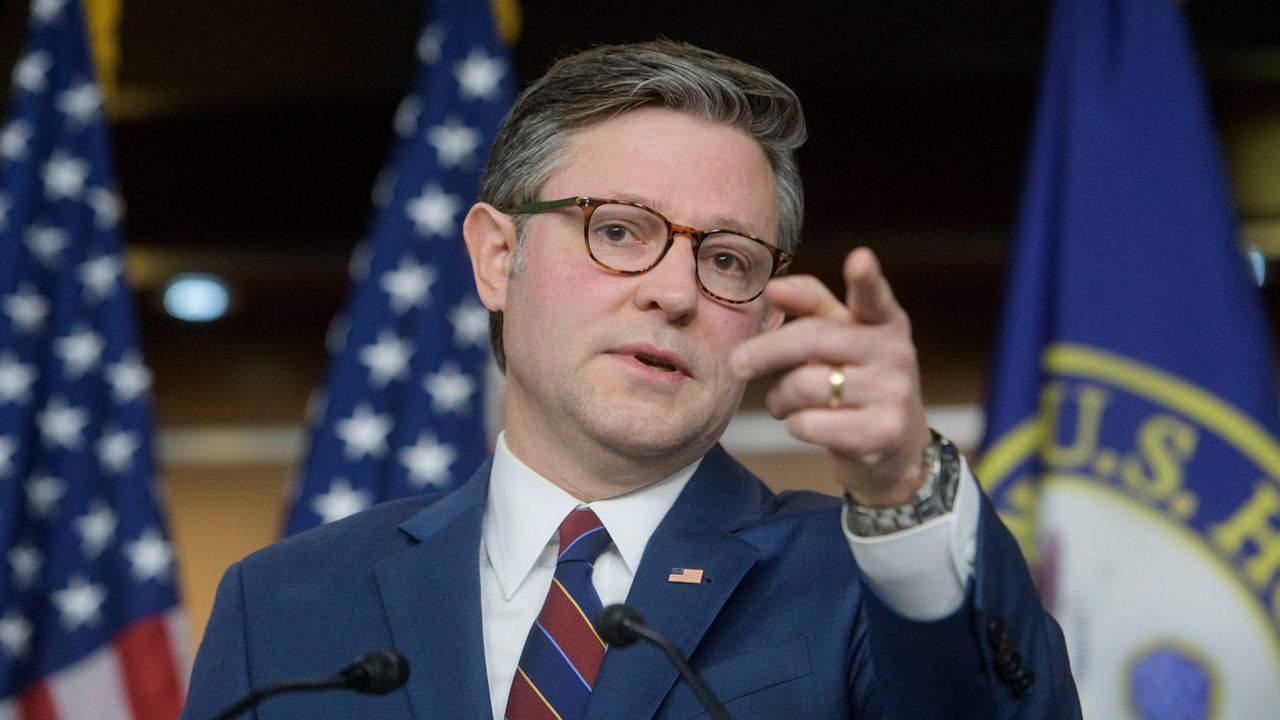
House Speaker Mike Johnson (R-La.) made headlines this week by calling for the indictment of six lawmakers who, last fall, released a video urging members of the military and intelligence community to refuse certain orders they deemed unlawful. Johnson’s comments came shortly after a grand jury declined to bring charges against the legislators, highlighting the deep partisan divisions over the limits of public commentary by elected officials.
Speaking to reporters on Tuesday, Johnson said, “I think that anytime you’re obstructing law enforcement and getting in the way of these sensitive operations, it’s a very serious thing, and it probably is a crime. And, yeah, they probably should be indicted.” The Speaker’s remarks underscore the tension between political expression and legal boundaries, raising questions about the role of elected officials in addressing controversial government actions.
The controversy centers on a joint video statement released in November by a group of six Democratic lawmakers, in which they called on service members and intelligence personnel to disobey orders they considered illegal. The video quickly drew national attention, both for its content and the high-profile backgrounds of the individuals involved, who collectively bring significant military and intelligence experience to Congress.
The timing of the video was particularly sensitive, coinciding with the Trump administration’s decision to carry out targeted strikes in the Caribbean. The strikes, which were widely covered in the media, resulted in immediate debate over the authority of the executive branch to conduct such operations without congressional approval. Critics argued that the lawmakers’ video encouraged insubordination, while supporters contended that it represented a constitutional check on potential abuse of power.
President Trump responded to the video with inflammatory rhetoric, initially calling for the lawmakers to be “hanged” in reaction to their statements. However, the former president eventually walked back the extreme language, though the episode cemented a broader political debate over the consequences of public criticism by members of Congress.
In the aftermath, the Justice Department launched a federal probe into the six lawmakers, seeking potential criminal liability. Yet on Tuesday, a grand jury refused to issue indictments, citing insufficient evidence to meet the standard of probable cause. Legal experts noted that grand juries often exercise broad discretion, but the refusal highlighted the difficulty prosecutors faced in translating political speech into criminal conduct.
Johnson’s call for indictment has drawn criticism even from some Republican voices, who argue that pursuing legal action against sitting members of Congress risks further politicizing the justice system. Others view it as an extraordinary step for the Speaker, who occupies one of the most powerful positions in government, and believe it sets a troubling precedent for targeting lawmakers based on partisan disagreements.
It was only after the grand jury decision that the identities of the six lawmakers involved became central to the story. They include Senators Mark Kelly of Arizona and Elissa Slotkin of Michigan, as well as Representatives Jason Crow of Colorado, Maggie Goodlander of New Hampshire, Chrissy Houlahan of Pennsylvania, and Chris Deluzio, also of Pennsylvania. Each of the six has experience either in the military or in intelligence, lending significant weight to their assertions about orders they considered unlawful.
In response to Speaker Johnson’s comments, Senator Kelly, a retired Navy captain, criticized the Speaker’s rhetoric and urged more careful consideration from those in power. “He’s the Speaker of the House of Representatives. He’s one of the most powerful people in this country. And if he’s going to side at every moment with this administration when they are clearly not on the side of the Constitution, I think he’s got to really evaluate why he is there and who he is really serving,” Kelly said.
Senator Slotkin echoed these sentiments, emphasizing the importance of checks and balances. “The Speaker should take a beat and remember why he’s there and that our Founding Fathers designed this as a separate branch of government to provide checks and balances on the president, not salute like a good boy and do what he says every single time,” she said during a press briefing.
The attempted indictment has also triggered administrative action within the Pentagon. Officials are reportedly considering measures to censure Kelly and potentially lower his retirement rank, a step that could have significant financial implications for his pension. These actions have raised additional questions about the separation of military and civilian oversight and the treatment of former service members in the context of political disputes.
Legal scholars observing the case have noted that the grand jury’s refusal to indict is a critical affirmation of the protections afforded to lawmakers under the First Amendment. Public officials often walk a fine line between expressing concern about government actions and engaging in conduct that could be interpreted as obstructive or coercive. In this instance, the grand jury concluded that the lawmakers’ statements, while controversial, did not meet the threshold for criminal charges.
Critics of the Justice Department’s effort have described the investigation as politically motivated, framing it as an attempt to intimidate or silence members of Congress who challenge the administration. Senator Kelly characterized the probe as a “master alarm flashing for our democracy,” highlighting the broader implications for legislative independence and accountability.
“Anytime you have a legal system being used to target elected officials for expressing concerns about government actions, that is dangerous territory,” Kelly said. He went on to describe the attempted indictment as “straight from the authoritarian playbook,” signaling concern about the erosion of traditional democratic norms and the potential chilling effect on dissent within government institutions.
The House Speaker’s comments, meanwhile, suggest a continued willingness to escalate the rhetoric surrounding this episode. Johnson’s insistence that the six Democrats should face indictment contrasts sharply with the grand jury’s determination and reflects ongoing partisan divides in Washington over both the boundaries of lawful criticism and the appropriate response to controversial executive actions.
The debate also resonates with broader discussions about civil-military relations and the role of service members in interpreting orders they receive. By calling for the public to resist orders deemed unlawful, the six lawmakers were highlighting a historical and legal principle enshrined in military law, yet critics have argued that the public nature of their appeal could create confusion within the ranks.
As the conversation unfolds, it is clear that the episode has ramifications far beyond the immediate question of potential criminal liability. It touches on constitutional governance, the independence of Congress, the protection of political speech, and the proper use of prosecutorial discretion. Analysts suggest that the controversy will be studied in law schools and political science courses as an example of the tension between accountability and authority in modern American politics.
For the six lawmakers themselves, the grand jury’s decision represents both relief and vindication. While the legal threat has been neutralized, they face ongoing scrutiny and the political consequences of their public statements. Each has emphasized the seriousness of their message while asserting their commitment to constitutional principles and the rule of law.
In the coming months, lawmakers, legal experts, and political commentators will continue to examine the implications of this episode. Questions about the balance of power, the protection of dissent, and the potential for political influence within the justice system remain central to the national conversation. Speaker Johnson’s call for indictment, despite the grand jury’s refusal, ensures that the story will remain a touchpoint in debates over law, politics, and civil liberties.
Ultimately, the clash between Speaker Johnson and the six Democrats underscores a central tension in American governance: how to uphold the law and maintain order while also protecting the rights of elected officials to speak out against perceived wrongdoing. It is a debate that is likely to persist as long as questions of executive authority, legislative independence, and military obedience intersect in the public sphere.

Emily Johnson is a critically acclaimed essayist and novelist known for her thought-provoking works centered on feminism, women’s rights, and modern relationships. Born and raised in Portland, Oregon, Emily grew up with a deep love of books, often spending her afternoons at her local library. She went on to study literature and gender studies at UCLA, where she became deeply involved in activism and began publishing essays in campus journals. Her debut essay collection, Voices Unbound, struck a chord with readers nationwide for its fearless exploration of gender dynamics, identity, and the challenges faced by women in contemporary society. Emily later transitioned into fiction, writing novels that balance compelling storytelling with social commentary. Her protagonists are often strong, multidimensional women navigating love, ambition, and the struggles of everyday life, making her a favorite among readers who crave authentic, relatable narratives. Critics praise her ability to merge personal intimacy with universal themes. Off the page, Emily is an advocate for women in publishing, leading workshops that encourage young female writers to embrace their voices. She lives in Seattle with her partner and two rescue cats, where she continues to write, teach, and inspire a new generation of storytellers.