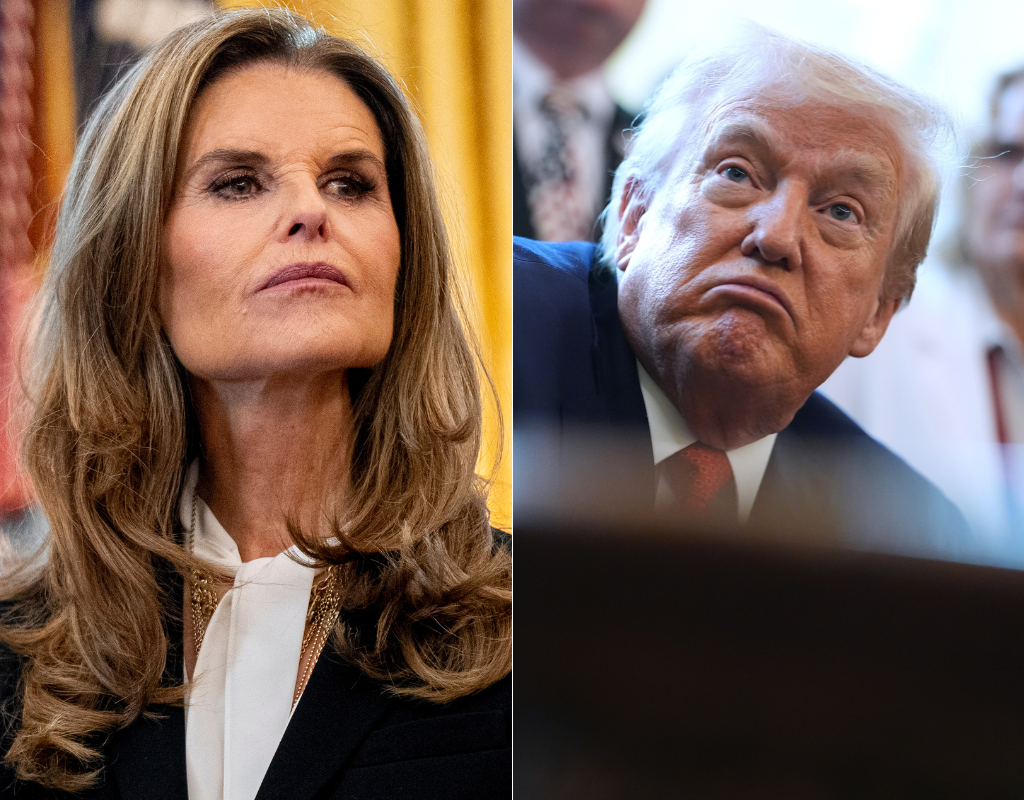
Maria Shriver, journalist, advocate, and niece of the late President John F. Kennedy, has publicly condemned President Donald Trump’s recent effort to rename the John F. Kennedy Center for the Performing Arts. Shriver described the proposal as “beyond comprehension” in a social media message that quickly went viral, reigniting discussions about the politicization of national memorials and the legacy of one of America’s most celebrated presidents.
The controversy began on Thursday, December 19, 2025, when the board of trustees at the Kennedy Center, the nation’s preeminent performing arts institution, voted to rename the center the “Donald J. Trump and John F. Kennedy Memorial Center for the Performing Arts.” The move immediately drew criticism from members of the Kennedy family, arts organizations, and cultural commentators, many of whom viewed the decision as a politically motivated act that undermined the historical significance of the center and its original namesake.
Shriver, whose mother Eunice Kennedy Shriver was JFK’s sister and a tireless advocate for children and individuals with disabilities, took to the social media platform Threads to issue a public rebuke. In her statement, she emphasized that the Kennedy Center was named in honor of her uncle, a man whose commitment to the arts, culture, education, and public service remains a central part of his enduring legacy.
“The Kennedy Center was named after my uncle, President John F. Kennedy. It was named in his honor. He was a man who was interested in the arts, interested in culture, interested in education, language, history. He brought the arts into the White House, and he and my Aunt Jackie amplified the arts, celebrated the arts, stood up for the arts and artists,” Shriver wrote. She continued, “It is beyond comprehension that this sitting president has sought to rename this great memorial dedicated to President Kennedy. It is beyond wild that he would think adding his name in front of President Kennedy’s name is acceptable. Next thing perhaps he will want to rename JFK Airport, rename the Lincoln Memorial, the Trump Lincoln Memorial. The Trump Jefferson Memorial. The Trump Smithsonian. The list goes on.”
Shriver’s comments quickly gained traction online, attracting tens of thousands of likes and shares within hours. Public opposition to the board’s decision grew, reflecting widespread concern over what many perceived as an attempt to merge partisan politics with the nation’s historical and cultural institutions. Critics argue that renaming the Kennedy Center after a sitting president sets a dangerous precedent, potentially diminishing the memorialization of past presidents and the historical significance attached to national landmarks.
Historical and Cultural Context
The John F. Kennedy Center for the Performing Arts, located on the Potomac River in Washington, D.C., has long stood as a symbol of artistic excellence and a tribute to the 35th president’s commitment to the arts. Established by an act of Congress in 1964, the center was envisioned as a national cultural hub, providing a home for theater, music, and dance, as well as educational programs for communities across the United States. Over the decades, the center has hosted countless performances by world-renowned artists, serving both as a monument to Kennedy’s vision and a living, vibrant institution supporting contemporary and classical art.
The Kennedy Center has historically been regarded as a neutral cultural space, bridging political divides while honoring the arts. Its naming after JFK carries significant symbolic weight: it reflects Kennedy’s advocacy for public engagement in the arts, the promotion of cultural diplomacy, and the belief that artistic expression plays a vital role in shaping national identity. The center’s original naming sought to celebrate these ideals, rather than serve as a vehicle for personal or political branding.
By attempting to attach his name to the center alongside JFK’s, President Trump has ignited questions about the propriety of associating current political figures with memorials intended to honor historical legacies. Cultural critics and historians argue that such moves risk undermining the integrity of national institutions and diminishing their symbolic value for future generations.
Reactions from the Kennedy Family
In addition to Shriver’s forceful response, other members of the Kennedy family have voiced concern over the renaming. Historically, the Kennedy family has maintained a careful stewardship of JFK’s legacy, emphasizing the importance of public service, civic engagement, and respect for cultural institutions. Many family members view the proposed renaming as an act of self-promotion that conflicts with the values and vision JFK embodied.
In a separate statement, a spokesperson for the Kennedy family noted that the center’s naming was intended to honor JFK’s contribution to American culture, education, and the arts. The statement underscored that any attempts to rebrand the center should preserve the historical significance and intent behind the original designation.
Political and Public Backlash
The renaming has triggered immediate political backlash, both domestically and internationally. Critics argue that the move blurs the line between governance and self-aggrandizement, raising questions about the appropriateness of leveraging national memorials for political branding. Lawmakers from both parties have weighed in, with some calling for legislation to prevent renaming of historic sites after sitting presidents without Congressional approval.
Public response has been equally vocal. Social media platforms have seen widespread discussion of the issue, with hashtags criticizing the renaming trending within hours of Shriver’s post. Cultural commentators, journalists, and historians have weighed in, largely agreeing that the proposal undermines the center’s historical integrity. Some have framed the controversy as emblematic of a broader trend in which political figures seek to assert personal influence over national symbols, rather than preserving them as neutral spaces of public memory.
Historical Precedents and Controversies
Renaming national landmarks and institutions after sitting presidents is not unprecedented, but it is rare and often controversial. The Lincoln Memorial, the Jefferson Memorial, and JFK Airport, among others, have remained largely untouched in terms of naming, preserving the historical and cultural significance associated with their original designations. The current proposal raises concerns among historians about setting a new standard, where future administrations might feel empowered to rename public institutions to reflect personal legacies, rather than honoring historical figures in their own right.
Academics have pointed out that national memorials and cultural institutions serve not only as sites of commemoration but also as educational resources, reflecting the values and achievements of the individuals they honor. Altering names for contemporary political purposes risks erasing historical context and complicating the public’s understanding of past leaders’ contributions.
Arts Community Responds
The arts community has expressed dismay over the decision as well. The Kennedy Center has long been a cornerstone of American cultural life, hosting premieres, recitals, and educational programs. Many artists view the renaming as a politicization of a cultural institution that should remain apolitical.
Eminent figures in theater, music, and dance have voiced concern that such a change could set a troubling precedent, potentially inviting political interference in artistic programming, funding decisions, and institutional management. A coalition of arts organizations released a joint statement emphasizing the importance of preserving the center’s neutrality and integrity, arguing that its purpose is to celebrate artistic achievement rather than serve as a platform for political self-promotion.
Trump Administration’s Perspective
While the proposal has been met with criticism, White House officials defended the move, describing it as recognition of the administration’s support for the arts and its contributions to national infrastructure. Supporters argue that attaching the president’s name to the center underscores a commitment to cultural programs and highlights the administration’s investment in American artistic life.
However, detractors contend that the rationale is largely symbolic and self-serving, noting that no substantive enhancements to programming or educational initiatives have been tied to the proposed renaming. Many see it as an act aimed at cementing the president’s personal brand in public memory rather than furthering the center’s mission.
Social Media Reactions and Public Discourse
Social media platforms have been a central forum for the debate. Shriver’s Threads post alone garnered more than 50,000 likes and shares within hours, illustrating the speed with which public sentiment can mobilize around cultural controversies. Many users echoed her sentiments, calling the renaming “disrespectful,” “self-aggrandizing,” and “a political stunt.”
Conversely, some pro-Trump voices defended the decision, asserting that the renaming was justified due to the administration’s contributions to national cultural institutions. The debate has highlighted the deeply polarized nature of contemporary discourse around politics and culture, reflecting broader divides in public perception and interpretation of historical legacies.
Implications for National Memorials
Beyond the immediate controversy, the proposed renaming raises broader questions about the treatment of national memorials and historical institutions. Scholars argue that the integrity of cultural landmarks depends on maintaining historical authenticity and neutrality, allowing the public to engage with these sites in a manner that honors the values and achievements of the individuals commemorated.
Renaming a national institution after a sitting president risks politicizing spaces that are intended to be inclusive and representative of collective cultural memory. It could also establish a precedent that encourages future administrations to assert personal influence over historical monuments, potentially eroding the educational and commemorative purposes of these sites.
Historical Significance of JFK’s Legacy
John F. Kennedy’s legacy is multifaceted, encompassing his leadership during the Cold War, his vision for public service, and his advocacy for the arts and education. The Kennedy Center was established to honor these contributions, serving as a living tribute to his commitment to culture and civic engagement. By proposing to rename the center after himself, President Trump has touched on a legacy that carries both symbolic and historical weight, prompting concerns about historical erasure and misrepresentation.
Conclusion
The renaming of the Kennedy Center has sparked a national debate over the intersection of politics, culture, and historical memory. Maria Shriver’s outspoken condemnation highlights the deep unease felt by many Americans regarding attempts to conflate personal political branding with the commemoration of historical figures.
As the controversy unfolds, it remains unclear whether the board of trustees will proceed with the renaming or reconsider in the face of public backlash. For now, Shriver’s statement serves as a reminder that national memorials are not merely symbols—they are repositories of history, culture, and collective memory, deserving careful stewardship rather than political exploitation.
As Americans debate the appropriate ways to honor past leaders, the Kennedy Center controversy underscores the importance of preserving historical integrity while navigating the evolving landscape of politics, celebrity, and cultural memory in the 21st century.

Emily Johnson is a critically acclaimed essayist and novelist known for her thought-provoking works centered on feminism, women’s rights, and modern relationships. Born and raised in Portland, Oregon, Emily grew up with a deep love of books, often spending her afternoons at her local library. She went on to study literature and gender studies at UCLA, where she became deeply involved in activism and began publishing essays in campus journals. Her debut essay collection, Voices Unbound, struck a chord with readers nationwide for its fearless exploration of gender dynamics, identity, and the challenges faced by women in contemporary society. Emily later transitioned into fiction, writing novels that balance compelling storytelling with social commentary. Her protagonists are often strong, multidimensional women navigating love, ambition, and the struggles of everyday life, making her a favorite among readers who crave authentic, relatable narratives. Critics praise her ability to merge personal intimacy with universal themes. Off the page, Emily is an advocate for women in publishing, leading workshops that encourage young female writers to embrace their voices. She lives in Seattle with her partner and two rescue cats, where she continues to write, teach, and inspire a new generation of storytellers.