Vice President JD Vance has reignited global attention around Greenland after issuing a pointed message to European leaders that many observers say sounded less like diplomacy and more like a warning.
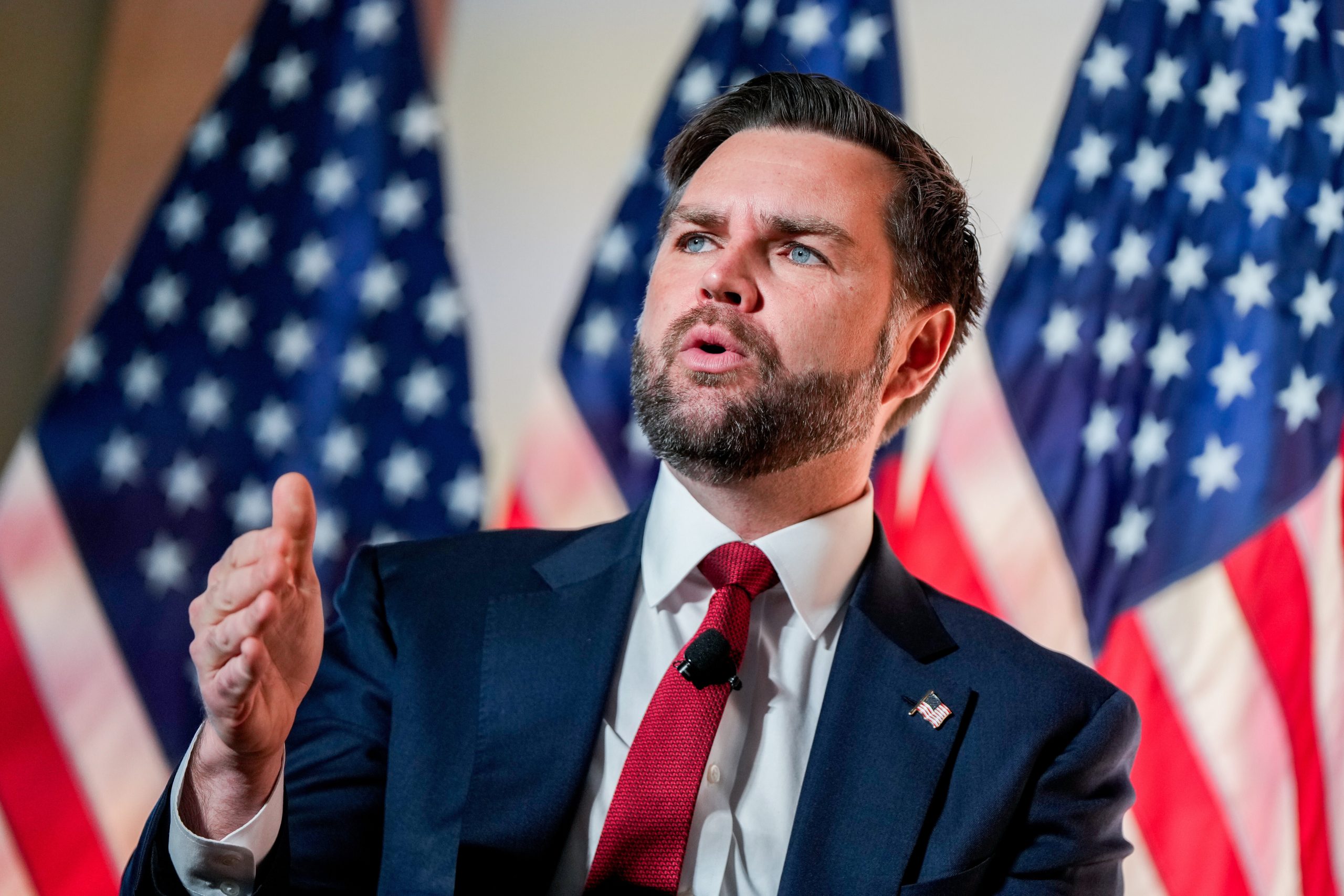
Speaking during a White House briefing this week, Vance urged European governments to “take the president of the United States seriously” when it comes to Greenland, a statement that quickly triggered concern across diplomatic and political circles. While Vance insisted that media coverage had exaggerated the administration’s intentions, his remarks suggested that the United States sees the Arctic territory as a strategic priority that Europe has failed to safeguard.
The comments come amid renewed interest from President Donald Trump in Greenland, a territory that remains politically autonomous but formally part of the Kingdom of Denmark. Trump has repeatedly argued that Greenland’s location makes it essential to U.S. national security, particularly in the context of missile defense and rising competition with rival powers.
Although the idea of acquiring Greenland has been dismissed by its leaders in the past, Vance’s latest remarks indicate that the administration is far from backing away from the concept.
Greenland Pushes Back
Greenland’s premier, Jens Frederik Nielsen, recently delivered a firm response to Washington’s rhetoric, rejecting any suggestion that the territory could be pressured into changing its status.
“Threats, pressure, and talk of annexation do not belong anywhere between friends,” Nielsen said. “This is enough.”
He added that Greenland is not a commodity to be bought, sold, or traded, and emphasized that its people have repeatedly demonstrated political responsibility and stability.
Public opinion in Greenland mirrors that position. Many residents have expressed frustration with what they see as repeated attempts to treat their homeland as a strategic asset rather than a living society with its own democratic will.
Despite that resistance, U.S. officials have continued to stress Greenland’s military and geopolitical importance.
Vance’s Warning
Vance framed his remarks as a call for realism rather than confrontation.
“My advice to European leaders and anybody else would be to take the president of the United States seriously,” he said. He argued that Greenland plays a crucial role not only in America’s missile defense system, but in global security more broadly.
He also warned that hostile foreign powers have shown growing interest in the Arctic region, including Greenland, and that European governments have not taken that threat seriously enough.
“So what we’re asking our European friends to do is to take the security of that landmass more seriously,” Vance said. “Because if they’re not, the United States is going to have to do something about it.”
Vance stopped short of specifying what that “something” might involve, saying he would leave that to President Trump as diplomatic discussions continue.
Yet it was precisely that vagueness that unsettled many listeners.
Why Greenland Matters
Greenland sits at a strategic crossroads between North America and Europe. During World War II, the United States established a military presence there after Germany occupied Denmark. Although American forces eventually withdrew, the U.S. retained long-term defense agreements and continues to operate key installations on the island.
Today, Greenland is seen as a critical early-warning location for missile detection and a gateway to Arctic shipping routes that are becoming more accessible as ice melts.
China and Russia have both expanded their Arctic ambitions in recent years, investing in infrastructure, research stations, and shipping capabilities. U.S. officials argue that failing to secure Greenland’s alignment with Western interests could leave a dangerous opening for adversaries.
To the Trump administration, Greenland is not just a territory—it is a chess piece in a larger global power competition.
European Reaction
European leaders have responded cautiously. While few deny Greenland’s strategic value, many are uneasy with the tone of Washington’s approach.
Danish officials have reiterated that Greenland’s future can only be decided by Greenlanders themselves. They have also stressed that any cooperation must be rooted in mutual respect rather than pressure.
Behind the scenes, diplomats worry that aggressive rhetoric could push Greenland closer to seeking greater independence from Denmark while simultaneously alienating both Copenhagen and Brussels.
Some European analysts say Vance’s comments risk reinforcing the perception that the U.S. is willing to bypass traditional alliances in pursuit of unilateral advantage.
Public Backlash
On social media, Vance’s remarks sparked immediate backlash.
Some users described his tone as threatening. Others said it reflected a return to Cold War-style power politics. A few went further, calling the vice president more dangerous than Trump himself because of his calm delivery of hardline ideas.
One widely shared comment read: “Every day feels like another warning sign. This isn’t diplomacy, it’s pressure.”
Another wrote: “Greenland is not for sale. And Europe shouldn’t be bullied into pretending it is.”
Supporters of the administration, however, praised Vance for what they saw as honesty. They argue that global security requires blunt conversations and that polite language has failed to stop hostile powers from expanding their influence.
Rubio’s Role
Reports indicate that Secretary of State Marco Rubio is preparing to meet with Greenland’s leaders in the coming days or weeks. The goal, according to U.S. officials, is to reassure Greenland while emphasizing shared security interests.
Diplomats familiar with the discussions say Rubio is expected to strike a more measured tone than Vance, focusing on cooperation rather than acquisition.
Still, the shadow of Trump’s past comments about purchasing Greenland hangs over every conversation.
Trump’s Longstanding Interest
Trump’s fascination with Greenland is not new. During his first term, he openly floated the idea of buying the territory, a proposal that was swiftly rejected by Danish and Greenlandic officials.
At the time, the idea was widely mocked. But in Trump’s second term, the conversation has shifted from novelty to strategic debate.
Administration officials now frame Greenland not as a purchase target, but as a security responsibility that Europe has failed to manage.
That framing allows Trump and Vance to argue that American involvement is not about ownership, but protection.
A Delicate Line
Greenland now finds itself in a difficult position: valued by major powers, but determined to maintain its autonomy.
Premier Nielsen has made clear that Greenland wants respectful partnerships, not pressure campaigns.
“Our future belongs to our people,” he said. “Not to foreign governments, no matter how powerful.”
Yet the reality of geopolitics means Greenland cannot simply ignore the interests of the world’s superpowers.
What Comes Next
For now, diplomacy remains the official path forward. Meetings are planned. Statements are being softened. But the underlying tension remains.
Vance’s words signaled that the United States is prepared to escalate its involvement if Europe does not change course. Greenland’s leaders, meanwhile, insist that their sovereignty is non-negotiable.
Whether this dispute evolves into deeper cooperation or sharper confrontation will depend on how carefully the next round of talks is handled.
The Bigger Picture
At its core, the Greenland debate is about more than one island.
It is about:
-
Who controls the Arctic’s future
-
How far the United States is willing to go to protect its interests
-
And whether Europe can maintain unity under growing pressure
JD Vance may have intended to calm speculation by urging people to take Trump seriously. Instead, he reminded the world that when America speaks about Greenland, it is no longer in passing.
It is in planning.
And for many watching across Europe and the Arctic, that realization is exactly what has caused the concern.

Emily Johnson is a critically acclaimed essayist and novelist known for her thought-provoking works centered on feminism, women’s rights, and modern relationships. Born and raised in Portland, Oregon, Emily grew up with a deep love of books, often spending her afternoons at her local library. She went on to study literature and gender studies at UCLA, where she became deeply involved in activism and began publishing essays in campus journals. Her debut essay collection, Voices Unbound, struck a chord with readers nationwide for its fearless exploration of gender dynamics, identity, and the challenges faced by women in contemporary society. Emily later transitioned into fiction, writing novels that balance compelling storytelling with social commentary. Her protagonists are often strong, multidimensional women navigating love, ambition, and the struggles of everyday life, making her a favorite among readers who crave authentic, relatable narratives. Critics praise her ability to merge personal intimacy with universal themes. Off the page, Emily is an advocate for women in publishing, leading workshops that encourage young female writers to embrace their voices. She lives in Seattle with her partner and two rescue cats, where she continues to write, teach, and inspire a new generation of storytellers.