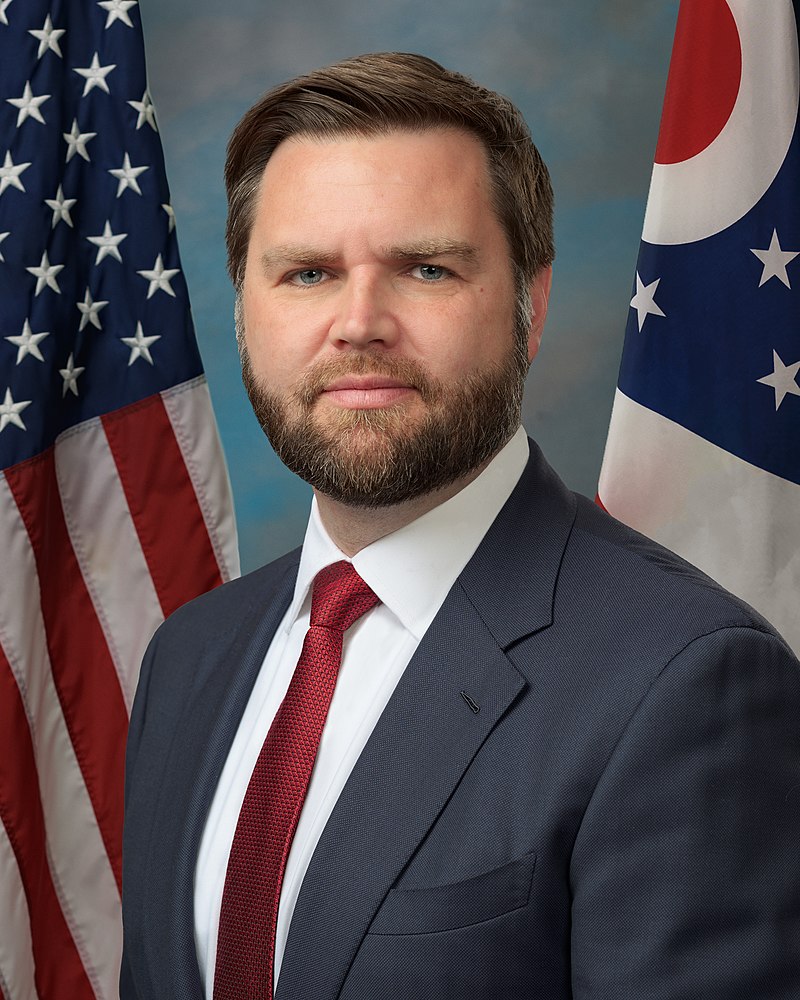
Vice President J.D. Vance has unleashed a fiery response to California Governor Gavin Newsom’s controversial proposal to radically reshape the state’s congressional districts — a plan critics are calling one of the most brazen power grabs in recent memory.
The brewing political storm began when Newsom floated a proposal to dismantle California’s independent Citizens Redistricting Commission, the nonpartisan body created by voters to draw fair and impartial congressional maps. Instead, Newsom wants to give his Democratic-controlled government the power to redraw the state’s districts directly — a move that could cement his party’s dominance for years to come.
The plan, if enacted, would end a system many Californians see as a safeguard against partisan manipulation. Established in 2008, the commission was designed to ensure that district boundaries reflect population data and communities of interest rather than political agendas. Its creation was meant to insulate the redistricting process from exactly the kind of partisan interference Newsom is now accused of attempting.
According to reports, the governor’s office has drafted a proposal that would require a statewide special election, asking voters to approve a ballot measure dismantling the commission. Newsom has justified the idea by pointing to Republican-led gerrymandering in states like Texas and Florida. He argues that California must “level the playing field” by taking similar measures to protect its own political representation.
But Vice President Vance isn’t buying it. He sees the move as nothing less than an attempt to rewrite the rules of democracy in favor of one party.
“This is nothing more than an effort to gerrymander California to further eliminate GOP districts,” Vance said in a blistering statement. “Republicans are already underrepresented in California, and this would make it even worse. It’s an outrageous abuse of power.”
The Stakes in California
California is already a bastion of Democratic power, with Republicans holding just a small fraction of the state’s congressional seats despite millions of registered GOP voters. Many conservatives argue that structural biases — from media influence to campaign finance and cultural dominance — already tilt the state’s political landscape heavily in the Democrats’ favor.
Now, critics fear Newsom’s plan could permanently lock Republicans out of power by allowing partisan lawmakers to handpick the state’s congressional boundaries. “This is a blatant attempt to silence opposition,” said California Assemblyman Carl DeMaio, a Republican from San Diego. “It’s not about fairness — it’s about control.”
The proposed special election to approve the plan could cost taxpayers an estimated $250 million. And while no date has been set, the timeline appears designed to ensure the new districts are ready ahead of the 2026 election cycle — when control of Congress could once again hinge on just a handful of seats.
Vance’s Counterattack
Vance, never one to shy away from a political fight, has seized on the controversy as proof of what he calls “Democratic hypocrisy.” He pointed out that the same leaders who accuse Republicans of undermining democracy are now trying to rewrite election laws for their own gain.
“Democrats scream about protecting democracy,” Vance said, “but every time they feel threatened, they try to change the rules. Newsom’s plan is a masterclass in political hypocrisy — pretending to defend fairness while plotting to destroy it.”
This isn’t the first time Vance and Newsom have clashed. The two men have been trading barbs since Vance’s days as a U.S. senator, often sparring over issues like immigration, energy, and education. Their rivalry reflects a broader cultural divide between the populist conservatism embodied by Vance and the progressive establishment politics represented by Newsom.
In recent months, Vance has emerged as one of the most visible figures in the Trump administration, taking a hard line against what he calls “elite manipulation” of American institutions. Newsom, meanwhile, has positioned himself as a national counterweight to Trumpism — an ambitious liberal leader unafraid to challenge Washington.
The Battle Over Redistricting
At the heart of the dispute is the broader national fight over redistricting — the once-a-decade process of redrawing electoral maps to reflect new census data. Both parties have been accused of manipulating district lines to secure political advantage, but California’s system was long held up as a model of reform.
The state’s Citizens Redistricting Commission consists of 14 members: five Democrats, five Republicans, and four independents. It draws districts based on strict legal criteria and public input, ensuring maps are compact, contiguous, and representative.
By sidelining this commission, Newsom would transfer control to state legislators — many of whom owe their political fortunes to party leaders. Critics warn that such a move would open the door to extreme gerrymandering, enabling Democrats to consolidate power by grouping Republican voters into as few districts as possible.
Vance’s allies argue that the timing is no coincidence. With California losing a congressional seat after the 2020 census and facing another potential population shift, Democrats may see redistricting as an opportunity to regain lost ground. “They’re trying to weaponize the map,” Vance said. “When the people don’t vote the way they want, they try to redraw the lines until they do.”
Public Reaction and Political Fallout
The proposal has already ignited fierce debate across California. Progressive activists have praised Newsom for “fighting back” against Republican states, while civil rights groups and nonpartisan watchdogs have condemned the plan as anti-democratic.
Even some Democrats are uneasy. Several state legislators have expressed concern that dismantling the independent commission would spark a massive public backlash. “We fought hard to create a fair system,” said one Democratic lawmaker anonymously. “If we tear it down now, we lose credibility.”
Polls show Californians overwhelmingly support the independent commission model, which many see as a bulwark against political corruption. A survey conducted earlier this year found that over 70% of likely voters oppose giving redistricting power back to politicians.
A National Flashpoint
The Vance-Newsom showdown has become a national flashpoint in the broader debate over election integrity. Conservatives argue that Democrats are engaging in the very practices they accuse Republicans of — using the language of fairness to justify raw political power.
For Vance, the issue fits neatly into his populist message: defending ordinary Americans against what he describes as “elite manipulation.” During a recent speech, he warned that the fight over redistricting is about more than just California. “This is a test case,” he said. “If they get away with it there, they’ll try it everywhere.”
Meanwhile, Newsom has dismissed the criticism as “fearmongering,” claiming that the changes are necessary to protect California’s representation in Washington. “We will not let other states undermine our voice,” he said. But his assurances have done little to calm the storm.
The Road Ahead
With the proposal still in its early stages, California’s political future remains uncertain. The special election could face legal challenges, budgetary hurdles, and public opposition. But the battle lines are already drawn — and both sides are preparing for a fight that could shape national politics for years to come.
For Vance, the controversy is a political gift. It allows him to rally conservatives around the themes of fairness, transparency, and accountability — and to paint Democrats as power-hungry elites willing to rewrite the rules to stay in control.
For Newsom, the gamble could either solidify his standing as a liberal warrior or backfire spectacularly if voters perceive it as an attack on democracy.
Either way, the clash between the populist vice president and California’s ambitious governor has become one of the defining political dramas of the year — a vivid example of how the battle over power, fairness, and representation continues to shape the American story.

Emily Johnson is a critically acclaimed essayist and novelist known for her thought-provoking works centered on feminism, women’s rights, and modern relationships. Born and raised in Portland, Oregon, Emily grew up with a deep love of books, often spending her afternoons at her local library. She went on to study literature and gender studies at UCLA, where she became deeply involved in activism and began publishing essays in campus journals. Her debut essay collection, Voices Unbound, struck a chord with readers nationwide for its fearless exploration of gender dynamics, identity, and the challenges faced by women in contemporary society. Emily later transitioned into fiction, writing novels that balance compelling storytelling with social commentary. Her protagonists are often strong, multidimensional women navigating love, ambition, and the struggles of everyday life, making her a favorite among readers who crave authentic, relatable narratives. Critics praise her ability to merge personal intimacy with universal themes. Off the page, Emily is an advocate for women in publishing, leading workshops that encourage young female writers to embrace their voices. She lives in Seattle with her partner and two rescue cats, where she continues to write, teach, and inspire a new generation of storytellers.