
The Department of Defense has released a sweeping investigative report shedding new light on the now-infamous Signalgate controversy, detailing exactly how senior administration officials — including Vice President J.D. Vance — interacted with an encrypted group chat that had already been compromised by the time their messages were sent. The 84-page dossier paints a vivid picture of confusion, carelessness, and damage control at the highest levels of government, all triggered by the accidental addition of a journalist into a messaging thread discussing sensitive military operations.
At the center of one of the report’s most striking revelations is a single message sent by the vice president at 2:30 a.m. on March 25, hours after the scandal had exploded publicly. Investigators uncovered that Vance entered the compromised Signal group — already under intense scrutiny — and posted a casual message to participants who had gone silent as the fallout intensified.
“This chat’s kind of dead. Anything going on?” Vance wrote, according to the Pentagon’s reconstruction of the conversation.
Not a single person replied.
The new information provides one of the first detailed timelines of how key figures reacted in the immediate aftermath of the scandal. It also reveals how senior officials scrambled to modify their accounts, delete messages, and distance themselves from the channel once it became clear a journalist had viewed sensitive information — and potentially classified briefings — shared inside the group.
A Late-Night Message After a Very Public Explosion
The scandal broke on March 24, when reporting surfaced showing that Jeffrey Goldberg, the editor-in-chief of The Atlantic, had been added to the Signal chat known internally as the Houthi PC Small Group. The chat contained sensitive exchanges among U.S. officials, including information related to upcoming strikes on Yemen.
Goldberg, who had been added accidentally, recognized immediately that the content was not intended for him. The journalist did not publish operational details but did reveal the existence of the chat — enough to launch an avalanche of scrutiny toward the Defense Department and several high-ranking officials.
Despite the crisis atmosphere, and despite the knowledge that the chat had been compromised, investigators found that Vance still opened the thread in the early hours of the next day and sent his now-famous one-line message.
Pentagon analysts described the move as “unusual” considering the circumstances and noted that no other participant attempted to revive the chat following the breach. In fact, the report highlights that the chat had gone almost completely silent after news of the leak.
Digital Cleanup as Officials Panic
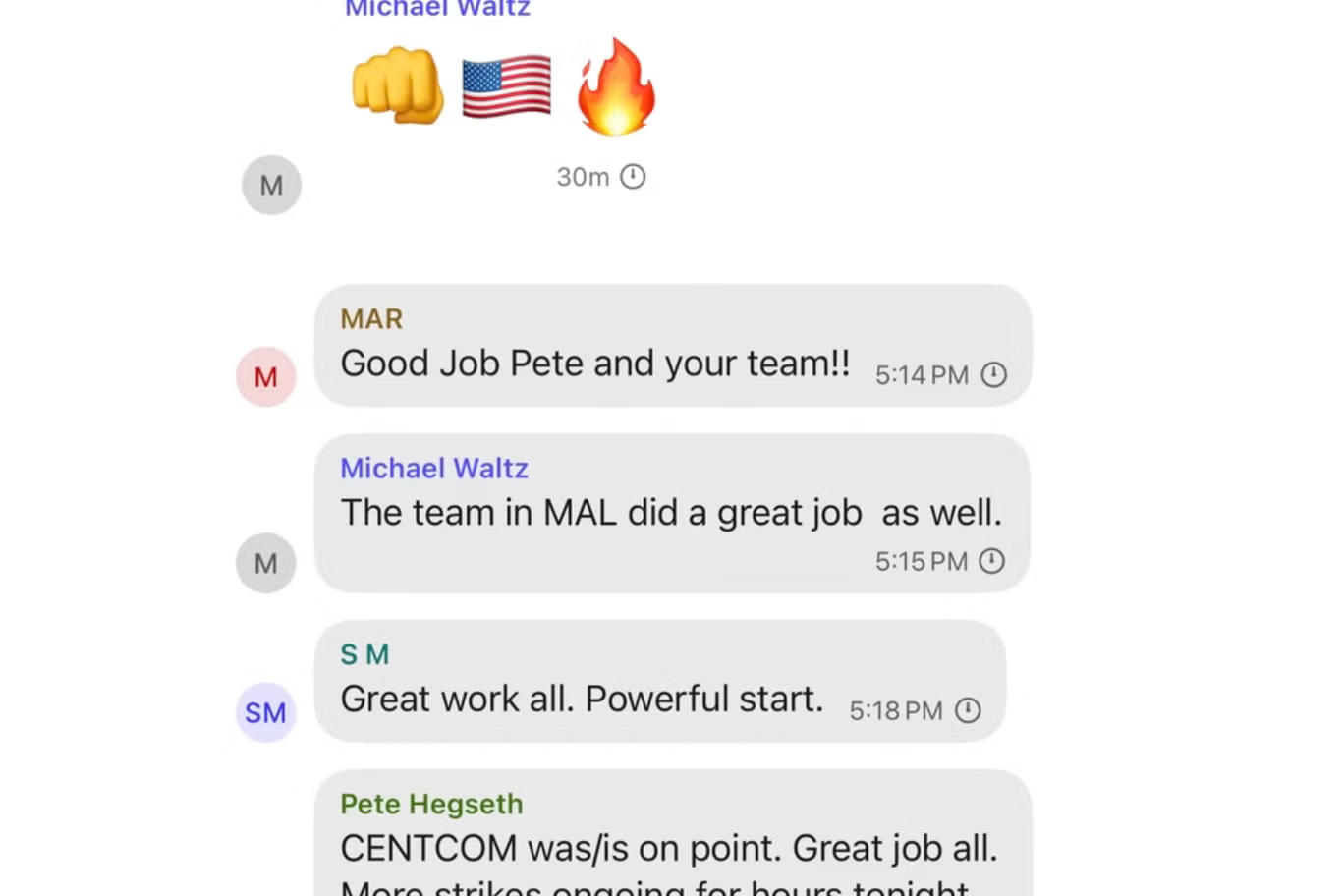
Shortly after Vance’s message, the chat’s settings began to shift. Treasury Secretary Scott Bessent activated an auto-delete setting, wiping any message eight hours after it was sent. Another participant — known in the chat as “MAR” — changed their display name to “MR,” an adjustment investigators believe was an attempt to limit their identifiable presence as scrutiny intensified.
CIA Director John Ratcliffe also updated his profile name to simply “John.” These small but telling shifts contributed to what investigators described as a “pattern of reactive concealment” following the public exposure of the chat.
According to the report, officials were aware that investigators had only partial records of the Signal thread, making the version obtained through the accidentally added journalist one of the primary sources of the timeline.
The Core Violation: Shared Operational Intel
Halfway through the Pentagon report, investigators identify the central figure whose actions ultimately triggered the scandal. The document concludes that Defense Secretary Pete Hegseth violated department policy by using a personal phone and encrypted app to transmit operational information to the group.
Hegseth had received an update at 9 p.m. on March 14 from U.S. Central Command regarding imminent strikes on Houthi targets in Yemen. This email, according to the report, was marked “SECRET//NOFORN,” meaning classified and not to be shared with any foreign nationals.
The secretary then forwarded key details into the Signal chat at 11:44 p.m. on March 15, just before the strikes were carried out.
The unauthorized sharing of operational details on a personal device and an encrypted platform with nonstandard controls presented what the Pentagon called “a substantial risk to DoD personnel and mission objectives.”
Hegseth’s Defense — and Critics’ Outrage
In public comments, Hegseth has vehemently denied any wrongdoing, insisting,
“No classified information. Total exoneration. Case closed.”
But his statement has done little to quiet critics. Senator Mark Warner, the top Democrat on the Senate Intelligence Committee, issued a scathing response after the report’s release. He argued that the Pentagon’s findings prove the secretary endangered pilots and mishandled sensitive intelligence.
Warner said the report reflects “a broader pattern of recklessness and poor judgment from a secretary who has repeatedly shown he is in over his head.” With bipartisan concern growing, pressure is mounting for Hegseth’s removal.
A Scandal Within a Larger Crisis
The Pentagon report situates Signalgate within an already volatile geopolitical environment. The Yemen strikes had unfolded amid escalating military tensions and increasing threats against U.S. aircraft. At the same time, the administration was grappling with accusations of mismanagement related to a separate incident: an alleged “double tap” strike on a suspected Venezuelan drug boat.
According to reports cited in the investigation, the secretary allegedly ordered military officials to “kill everybody” aboard the vessel. The order reportedly led to a second strike on survivors from the initial hit. Critics have accused the department of committing a war crime, a claim Hegseth dismissed as “fake news,” insisting the actions complied with U.S. and international law.
Taken together, these controversies deepen the significance of the Signalgate revelations. The Pentagon emphasizes that mishandling sensitive communications — especially during ongoing operations — poses real-world risks, not theoretical ones.
Why Vance’s Message Matters
Though investigators concluded that Vance did not break any rules and was not responsible for the disclosure of sensitive information, his 2:30 a.m. message stands out as a moment that encapsulates the disconnect and chaos that filled the hours following the public exposure of the chat.
The Pentagon did not assign wrongdoing to the vice president, but it did note that his message reflected the “informal environment” in which senior officials were conducting discussions that should have occurred through secure channels.
In political terms, the revelation has prompted both curiosity and criticism. Supporters insist his message was harmless and irrelevant. Critics, however, argue that it highlights lax communication practices within the administration and shows the vice president engaging casually with a thread already known to be compromised.
The Accidental Journalist Who Unraveled Everything
One of the most remarkable aspects of the scandal is that the entire investigation began because a journalist was added to the chat by mistake. That accidental addition provided investigators with access to parts of the thread they would otherwise never have obtained.
Throughout the report, the Pentagon emphasizes that Goldberg withheld all operational details when breaking the story and did nothing to endanger U.S. troops. Instead, his presence served as a catalyst for understanding how senior officials were communicating about sensitive operations — and how vulnerable that system was.
A Scandal That Won’t Fade Quickly
The Signalgate scandal has already reshaped public understanding of how the administration handles sensitive information. It raises deep concerns about operational security and the ways encrypted apps — while useful — can become dangerous when misused.
With congressional pressure growing and the Pentagon’s findings now public, the fallout is expected to continue for weeks, if not months. Questions remain about whether any further disciplinary actions will be taken and whether the administration will revise its communication protocols to prevent similar incidents in the future.
What is clear is that a single accidental addition to a group chat ultimately exposed a chain of behaviors stretching across multiple agencies — behaviors that officials now acknowledge carried significant risk.

Emily Johnson is a critically acclaimed essayist and novelist known for her thought-provoking works centered on feminism, women’s rights, and modern relationships. Born and raised in Portland, Oregon, Emily grew up with a deep love of books, often spending her afternoons at her local library. She went on to study literature and gender studies at UCLA, where she became deeply involved in activism and began publishing essays in campus journals. Her debut essay collection, Voices Unbound, struck a chord with readers nationwide for its fearless exploration of gender dynamics, identity, and the challenges faced by women in contemporary society. Emily later transitioned into fiction, writing novels that balance compelling storytelling with social commentary. Her protagonists are often strong, multidimensional women navigating love, ambition, and the struggles of everyday life, making her a favorite among readers who crave authentic, relatable narratives. Critics praise her ability to merge personal intimacy with universal themes. Off the page, Emily is an advocate for women in publishing, leading workshops that encourage young female writers to embrace their voices. She lives in Seattle with her partner and two rescue cats, where she continues to write, teach, and inspire a new generation of storytellers.