Holiday Jazz Performance Cancellation Sparks Legal Threat at National Arts Venue
What was expected to be a low-key Christmas Eve celebration in Washington, D.C. has turned into a legal and political dispute involving one of the nation’s most prominent cultural institutions. A canceled holiday jazz concert has now escalated into a lawsuit threat, highlighting deep tensions between artistic expression, political protest, and public responsibility.
The incident has drawn national attention not because of what was performed, but because of what was not.
A Seasonal Event Meant for the Public
The performance had been scheduled as part of the venue’s annual holiday programming. Promoted as a free jazz concert open to the public, the event was intended to offer a relaxed and accessible Christmas Eve experience for residents and visitors alike.
Free performances at the venue have long been viewed as a way to broaden access to the arts, particularly for audiences who might not otherwise attend ticketed shows. The concert was advertised in advance, and audience members were expected to arrive with the understanding that the event would proceed as planned.
Instead, the evening took an unexpected turn.
A Last-Minute Cancellation
Only hours before the concert was set to begin, venue officials were informed that the scheduled performer would not appear. The sudden withdrawal left organizers scrambling and effectively canceled the event.
No health emergency or logistical issue was cited at the time. The reason, it later became clear, was political.
Audience members who arrived expecting a Christmas Eve jazz performance were left disappointed, and the venue faced immediate criticism for failing to deliver the advertised program.
A Protest Rooted in a Name Change
The musician later explained that the cancellation was a deliberate act of protest tied to recent changes at the venue.
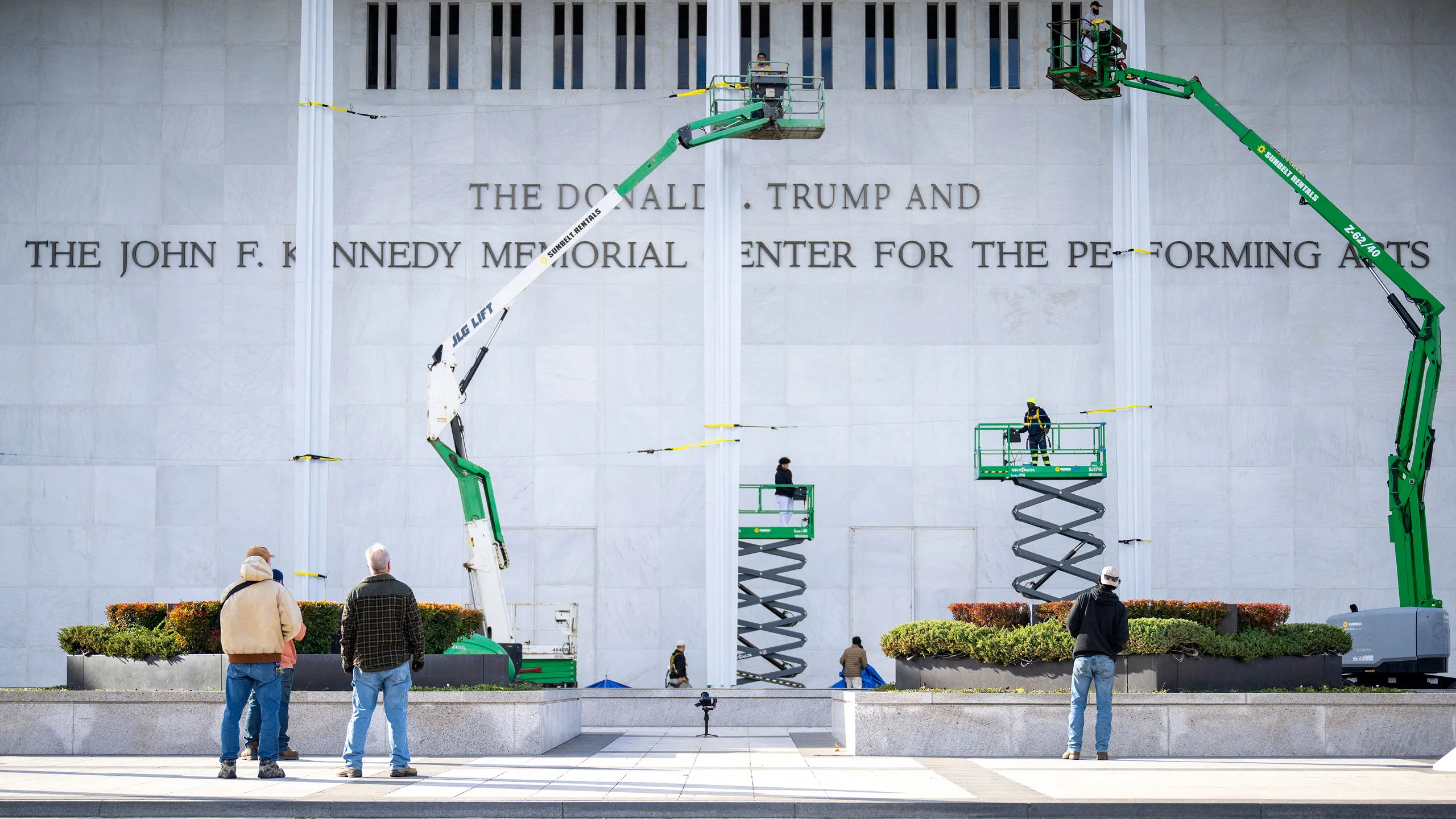
Earlier this month, the board of trustees voted unanimously to rename the Kennedy Center to The Donald J. Trump and The John F. Kennedy Memorial Center for the Performing Arts. The change was reflected first on the institution’s website and soon after on the building itself.
Seeing the new name displayed publicly prompted the performer to withdraw from the show, citing objection to the renaming decision.
Strong Reaction From Venue Leadership
The response from venue officials was swift and severe.
In statements issued after the cancellation, leadership criticized the decision as irresponsible and argued that artists who accept public engagements have an obligation to follow through, regardless of personal political views.
Officials emphasized that the event was free and framed the cancellation as a failure to serve the public. They argued that holiday performances, in particular, carry an expectation of reliability and goodwill.
The tone of the response made clear that the institution viewed the matter as more than a disagreement — it was, in their view, a breach of duty.
Legal Action Enters the Picture
Soon after, the venue announced it intended to pursue legal action.
Officials said they plan to file a lawsuit seeking $1 million in damages, arguing that the cancellation caused reputational harm, disrupted publicly funded programming, and undermined the institution’s mission.
The lawsuit has not yet been filed, but venue representatives indicated it would proceed after the holiday period.
At that point, the dispute shifted from a cultural controversy into a legal one.
The Musician Identified
Midway through the unfolding controversy, the performer at the center of the dispute was identified as Chuck Redd.
Redd is a veteran jazz vibraphonist and drummer with a long career in American jazz. He is not a vocalist, but an instrumentalist known for his work in ensembles and orchestras.
He spent 15 years as a member of the Smithsonian Jazz Masterworks Orchestra and has performed extensively at jazz festivals and clubs across the country.
Redd had been scheduled to perform at the venue’s “Christmas Eve Jazz Jam,” which was promoted as a free event in the Terrace Theater.

Silence From the Artist
Following the announcement of the planned lawsuit, attempts were made to contact Redd for comment. As of publication, he has not publicly responded to the legal threat or issued further statements beyond his initial explanation for canceling the performance.
His silence has left questions unanswered about whether he intends to contest the lawsuit, seek mediation, or respond through legal counsel.
A Broader Transformation at the Kennedy Center
The incident comes amid significant changes at the Kennedy Center.
Earlier this year, Donald Trump was elected chairman of the center after replacing the former board of trustees. At the time, Trump said the previous board did not align with his vision for what he described as a “Golden Age in arts and culture.”
He subsequently appointed more than a dozen new board members, including senior administration officials and political allies. The reconstituted board moved quickly to implement changes reflecting its priorities.
One of the most consequential decisions was the renaming of the institution.
Justification for the Renaming
According to representatives for the newly formed board, the decision to add Trump’s name to the building was intended as recognition.
Officials stated that the renaming acknowledges what they described as Trump’s role in stabilizing the institution financially and preventing long-term decline. They argued that the decision was bipartisan and focused on preserving the center’s future.
Trump addressed the renaming publicly, saying he was surprised by the decision and honored by it.
Legal Challenges Extend Beyond the Concert
The musician’s cancellation is not the only legal challenge facing the institution.
On December 22, Joyce Beatty filed a lawsuit against Trump and the Kennedy Center’s board of trustees, arguing that only Congress has the authority to rename the federally chartered cultural institution.
That lawsuit remains pending and raises broader questions about governance, authority, and precedent.
Art, Politics, and Public Obligation
At the heart of the controversy is a larger debate about the role of artists in public institutions.
Supporters of the venue argue that publicly funded cultural organizations must remain accessible to all audiences and that artists who accept engagements have a responsibility to perform regardless of political disagreement.
Critics counter that artists retain the right to protest institutional decisions, particularly when those decisions carry political symbolism.
The clash between those perspectives has now moved from the realm of opinion into the courts.
A Small Concert With Large Implications
What began as a single canceled holiday performance has become a flashpoint in a broader cultural struggle. It touches on questions of free expression, public funding, political identity, and the obligations of artists working within national institutions.
Whether the lawsuit proceeds — and how it is resolved — could influence how artists and cultural organizations navigate political disagreement in the future.
For now, a Christmas Eve jazz concert that never took place continues to echo far beyond the stage where it was meant to be performed.

Emily Johnson is a critically acclaimed essayist and novelist known for her thought-provoking works centered on feminism, women’s rights, and modern relationships. Born and raised in Portland, Oregon, Emily grew up with a deep love of books, often spending her afternoons at her local library. She went on to study literature and gender studies at UCLA, where she became deeply involved in activism and began publishing essays in campus journals. Her debut essay collection, Voices Unbound, struck a chord with readers nationwide for its fearless exploration of gender dynamics, identity, and the challenges faced by women in contemporary society. Emily later transitioned into fiction, writing novels that balance compelling storytelling with social commentary. Her protagonists are often strong, multidimensional women navigating love, ambition, and the struggles of everyday life, making her a favorite among readers who crave authentic, relatable narratives. Critics praise her ability to merge personal intimacy with universal themes. Off the page, Emily is an advocate for women in publishing, leading workshops that encourage young female writers to embrace their voices. She lives in Seattle with her partner and two rescue cats, where she continues to write, teach, and inspire a new generation of storytellers.