A fast-moving, multi-state investigation that began with a shocking act of violence on a university campus has now come to a close, though many of the most difficult questions remain unanswered. Law enforcement officials say the case, which unfolded over several days and across New England, involved a complex trail of movements, missed connections, and crucial tips from the public.
Authorities from Rhode Island, Massachusetts, New Hampshire, and federal agencies worked around the clock as pressure mounted to locate a suspect believed to be responsible for multiple violent acts. For much of the week, officials shared limited information, citing the need to protect the integrity of the investigation and ensure public safety.
By Thursday evening, however, the search reached a definitive—if deeply troubling—end.
A Weekend That Shook a Campus
The investigation began last weekend with a sudden outbreak of violence at Brown University. What was initially described as an active-shooter incident inside a lecture hall left two students dead and several others injured, sending shockwaves through the campus community and beyond.
Classes were suspended, counseling services were expanded, and students and faculty struggled to process what had happened in a place normally associated with learning and intellectual exchange. University officials worked closely with local police, urging anyone with information to come forward.
At the time, authorities emphasized that they were pursuing multiple leads but declined to identify a suspect publicly.
Expanding the Scope of the Case
As investigators pieced together evidence from the Brown University shooting, the scope of the case widened. Just days later, a separate killing in a Boston-area suburb drew the attention of federal and state authorities, raising the possibility that the two incidents might be connected.
Officials initially stopped short of confirming any link, stating only that they were exploring “all possibilities.” Behind the scenes, however, task forces were coordinating across jurisdictions, sharing surveillance footage, license-plate data, and witness statements.
The growing complexity of the investigation heightened concern among the public, particularly as it became clear the suspect had not yet been apprehended.
A Public Tip Changes the Trajectory
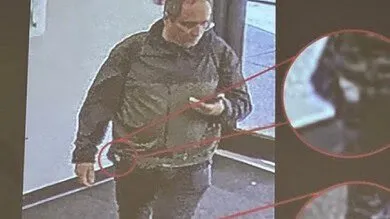
A key breakthrough came not from traditional investigative methods alone, but from a member of the public. After police released images of a person of interest, an individual who had previously encountered the suspect recognized him and shared suspicions online.
That information eventually reached investigators and proved pivotal. According to officials, the tip helped identify a specific vehicle associated with the suspect, providing a concrete lead after days of uncertainty.
Using a network of automated license-plate readers operated by a private surveillance company, police were able to track the vehicle’s movements through Providence and beyond.
A Trail Across State Lines
Data collected from traffic cameras showed the suspect leaving Rhode Island and traveling north. Investigators later determined that steps had been taken to obscure the vehicle’s identity, complicating the search but not stopping it.
Video footage placed the suspect at an apartment building near the home of a Massachusetts Institute of Technology professor in a Boston suburb. About an hour later, the same individual was recorded entering a storage facility in Salem, New Hampshire.
It was there that authorities would make a discovery that fundamentally altered the case.
The Mid-Investigation Revelation
On Thursday evening, law enforcement officers located the suspect inside the New Hampshire storage facility. Officials later confirmed that he was found dead.
Only at that point did authorities publicly identify the suspect and reveal the full scope of the allegations. According to officials, the man was believed to be responsible not only for the Brown University shooting, but also for the killing of an MIT professor two days later.
Police said there was no indication that anyone else was involved.
Who Investigators Say He Was
Authorities identified the suspect as Claudio Neves Valente, 48, a Portuguese national and former student at Brown University. University officials said he had been enrolled as a graduate student studying physics for one academic year more than two decades ago and had no current affiliation with the institution.
Federal officials said Neves Valente entered the United States on a student visa and later obtained lawful permanent resident status in 2017. His most recent known residence was in Miami, though large portions of his life between the early 2000s and that time remain unclear.
Investigators acknowledged there are still significant gaps in their understanding of his movements and circumstances during those years.
A Connection to the MIT Victim
Authorities also disclosed a prior academic connection between Neves Valente and the MIT professor who was killed. Both had participated in the same physics program at a university in Portugal in the late 1990s.
The MIT professor, Nuno F. G. Loureiro, later built a distinguished academic career in the United States. He joined MIT in 2016 and was named last year to lead the Plasma Science and Fusion Center, one of the institute’s largest research laboratories.
Loureiro was widely respected for his work explaining complex plasma physics and astronomical phenomena. Colleagues described him as a dedicated scientist and mentor.
Cause of Death and Unanswered Motives
Officials said Neves Valente’s death was self-inflicted. They did not provide further details and emphasized that there was no ongoing threat to the public.
Despite the case’s resolution, authorities stressed that many questions remain. Investigators have not identified a clear motive linking the attacks, nor have they determined why the suspect targeted those specific locations or individuals.
“We still have a lot of unknowns,” Rhode Island Attorney General Peter Neronha said, noting that investigators do not yet understand why the violence occurred when it did, or why those victims were chosen.
How Technology and Timing Intersected
The investigation highlighted both the power and the limits of modern surveillance. While Providence police relied on dozens of street cameras to track the suspect’s vehicle, officials at Brown University acknowledged that the shooting occurred in an older section of campus with limited camera coverage.
Investigators believe the suspect entered and exited through a door facing a residential street, potentially avoiding the university’s existing surveillance systems.
Authorities credited the combination of public vigilance, license-plate technology, and interagency cooperation with ultimately resolving the case.
Federal Response and Policy Implications
Following the public identification of the suspect, President Donald Trump announced the suspension of the green card lottery program through which Neves Valente had remained in the United States. The decision immediately sparked debate over immigration policy and public safety, with supporters calling it a necessary precaution and critics warning against drawing broad conclusions from a single case.
Federal officials emphasized that the investigation is ongoing in terms of reconstructing the suspect’s history and evaluating whether warning signs were missed.
Communities Left to Mourn
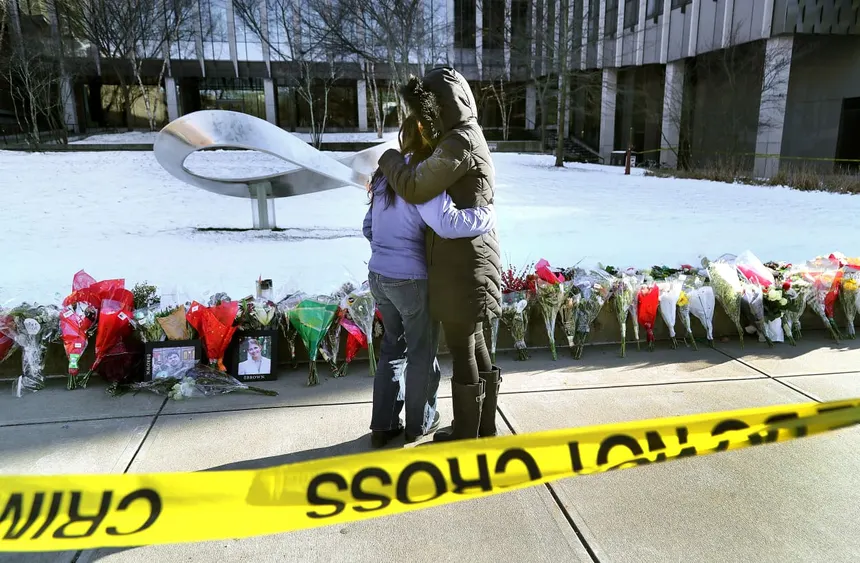
As investigators close one chapter of the case, communities in Providence, Cambridge, and beyond are left grappling with grief and uncertainty. Vigils have been held for the students killed at Brown and for Professor Loureiro, whose death has deeply affected the MIT community.
University leaders have pledged to review security measures and expand mental health resources, while law enforcement agencies continue to analyze how the suspect evaded detection for as long as he did.
The investigation may be over, but its impact will be felt for a long time—both by those who lost loved ones and by institutions now forced to confront difficult questions about safety, awareness, and prevention.

Emily Johnson is a critically acclaimed essayist and novelist known for her thought-provoking works centered on feminism, women’s rights, and modern relationships. Born and raised in Portland, Oregon, Emily grew up with a deep love of books, often spending her afternoons at her local library. She went on to study literature and gender studies at UCLA, where she became deeply involved in activism and began publishing essays in campus journals. Her debut essay collection, Voices Unbound, struck a chord with readers nationwide for its fearless exploration of gender dynamics, identity, and the challenges faced by women in contemporary society. Emily later transitioned into fiction, writing novels that balance compelling storytelling with social commentary. Her protagonists are often strong, multidimensional women navigating love, ambition, and the struggles of everyday life, making her a favorite among readers who crave authentic, relatable narratives. Critics praise her ability to merge personal intimacy with universal themes. Off the page, Emily is an advocate for women in publishing, leading workshops that encourage young female writers to embrace their voices. She lives in Seattle with her partner and two rescue cats, where she continues to write, teach, and inspire a new generation of storytellers.