A new Amazon documentary following the first lady in the run-up to Donald Trump’s second inauguration promises unprecedented access—but as with many celebrity-backed projects, much of its subtext is found off-screen.
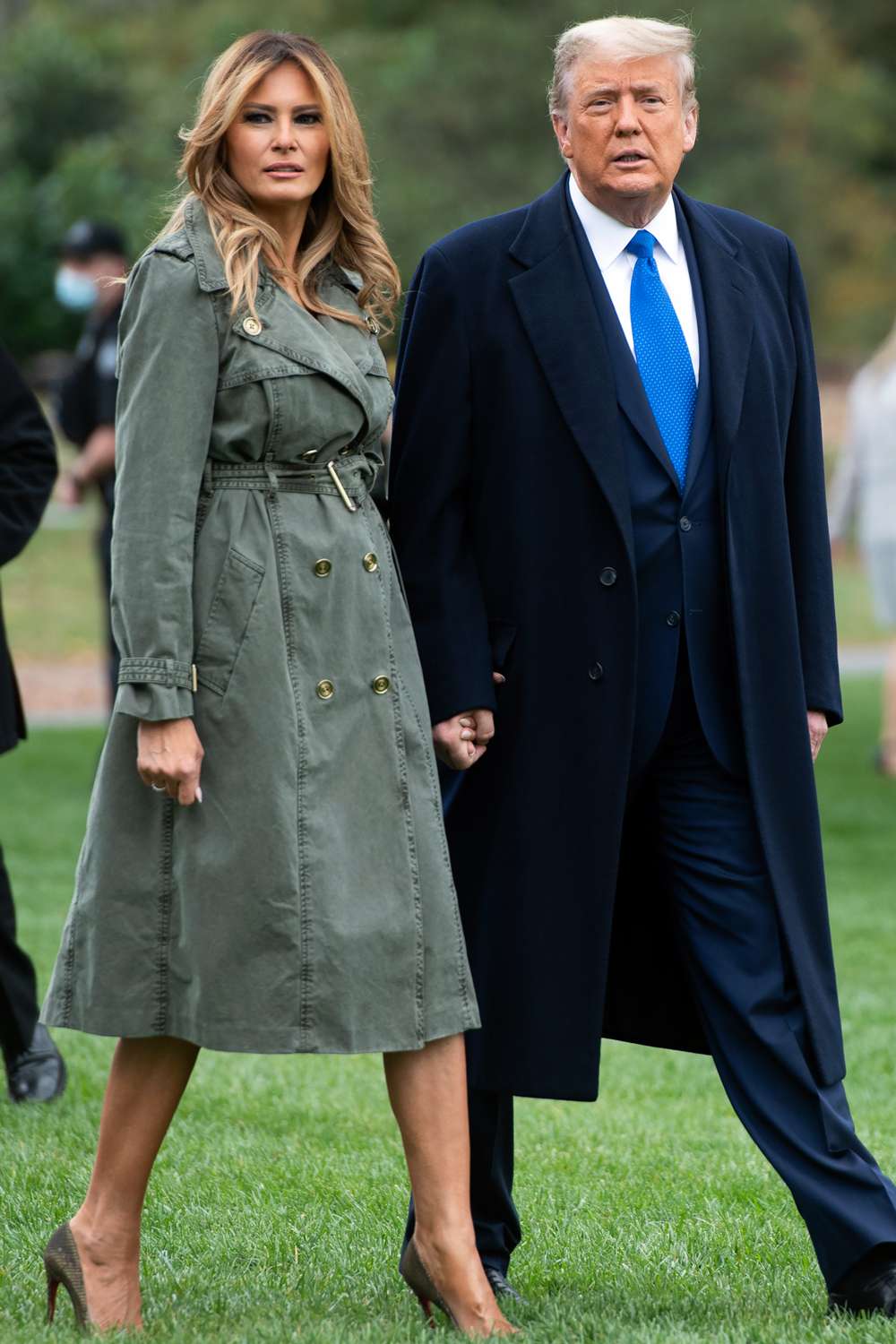
The trailer opens with a flourish of theatrics: Melania Trump glances from beneath her widely memed wide-brimmed black hat and quips, “Here we go again.” It’s a line that seems to anticipate both her audience’s skepticism and the film’s own inflated sense of importance. The footage, shot during her husband’s second inauguration, teases viewers with meticulously framed shots of her pointy-shoed feet boarding Air Force One and gliding through ceremonial spaces. And while the film is billed as a behind-the-scenes look at her life, much of what is presented feels curated for effect rather than insight.
White, caps-locked text flashes on screen: “Witness history in the making. Twenty days to become First Lady of the United States of America.” The messaging is blunt, bordering on absurd: a woman who has already been first lady—twice—needs a promotional tagline to remind us of the obvious. These over-the-top stylistic cues suggest a narrative crafted more for spectacle than substance.
Moments of potential revelation are fleeting. In one exchange, the former president asks his wife if she has watched one of his speeches. Her reply, “I did not—I will see it on the news,” is immediately cut to a shiny, promotional portrait. The juxtaposition is telling: the film’s editing privileges style and image over genuine insight.
Unsurprisingly, social media reaction has split predictably along political lines. Republican and MAGA-adjacent commentators have hailed the documentary as a rare glimpse into the first lady’s private life, calling it “incredible” and “must-see.” Critics, however, have been more skeptical. Rhonda Elaine Foxx, a former campaign director for Joe Biden, tweeted, “People literally cannot afford food. And the ‘First Lady’ is making a movie.” Other users have mocked the project’s commercial viability, suggesting it could be “the first-ever movie to sell zero tickets.”
Yet Melania Trump’s film is less an anomaly than part of a broader entertainment trend. The streaming era has given rise to a proliferation of so-called “vanity documentaries,” in which celebrities, athletes, and political figures attempt to control their own narratives under the guise of unfiltered access. Platforms such as Netflix and Prime Video have increasingly capitalized on the public’s appetite for behind-the-scenes glimpses, knowing that intimate portrayals of public figures attract both viewership and prestige. The David Beckham documentary series, for instance, drew 3.8 million UK viewers in its first week, demonstrating the appetite for these highly managed portrayals.
The challenge for audiences—and critics—is discerning substance from spectacle. Despite promises of unprecedented access, such documentaries often feel more like extended advertising campaigns than explorations of character or legacy. Executive producer credits, creative oversight, and heavy editorial control mean the subject frequently dictates the story. That is particularly relevant here, given that Melania Trump herself has a significant stake in shaping her public image.
Recent examples in this vein reinforce the trend. Netflix followed its David Beckham-focused series with a Victoria Beckham-centered program, which critics described as “about as intimate as a Pret sandwich,” filled with motivational soundbites and curated “girlboss” messaging. Similarly, the platform’s Simon Cowell documentary offered limited insight into his music industry influence, prioritizing spectacle over interrogation. Even Meghan Markle’s lifestyle-focused series, With Love, Meghan, leaned heavily on curated moments, offering little in the way of candid reflection despite framing itself as revealing the “real” duchess.
In many cases, what is excluded from the documentary speaks louder than what is included. The Beckhams, for example, largely ignored controversies surrounding David Beckham’s ambassadorship for the Qatar World Cup and family tensions with their eldest son, Brooklyn. These absences signal the controlled narrative being presented to audiences.
For Melania, some of the most telling details lie not in what the camera captures but in the broader context. Amazon reportedly paid $40 million to license the film mere weeks after Melania and her husband dined with Jeff Bezos and then-fiancée Lauren Sánchez at Mar-a-Lago, a timing that raises questions about corporate positioning and political alignment. Reports suggest the first lady will receive roughly 70% of the licensing fee, highlighting both her leverage and her approach to monetizing her public persona.
Another noteworthy detail is the choice of director: Brett Ratner, whose career was shadowed by multiple allegations of sexual assault during the #MeToo movement in 2017. Ratner has consistently denied these allegations, but the decision to work with him signals a broader cultural tolerance within the MAGA-adjacent entertainment world for figures previously “cancelled” in other spheres. It is a provocative choice, one that underscores the film’s alignment with certain political and social signals as much as it does with storytelling.
Even as the film promises access, the first lady herself has long maintained a reputation for detachment from political spectacle. Earlier this year, The New York Times reported that she had spent fewer than 14 of the initial 108 days of Trump’s second presidency inside the White House, reinforcing a perception of distance from her husband’s agenda. This aura of mystery, however, is unlikely to be pierced by a project framed largely as image management.
Melania is scheduled to premiere in cinemas in January before streaming on Prime Video. While the documentary may offer surface-level glimpses into the life of one of the most scrutinized figures in contemporary politics, viewers should approach it with an understanding that, as with many modern “vanity documentaries,” the most revealing insights often reside off-screen, in the context surrounding production choices, financing, and editorial control.
In the end, audiences may find that the film says far more about the machinery of image-making, celebrity branding, and political signaling than it does about Melania Trump herself. For those seeking to understand her private persona, it may be the spaces between the frames—the absences, the cutaways, the highly curated moments—that tell the truest story.

Emily Johnson is a critically acclaimed essayist and novelist known for her thought-provoking works centered on feminism, women’s rights, and modern relationships. Born and raised in Portland, Oregon, Emily grew up with a deep love of books, often spending her afternoons at her local library. She went on to study literature and gender studies at UCLA, where she became deeply involved in activism and began publishing essays in campus journals. Her debut essay collection, Voices Unbound, struck a chord with readers nationwide for its fearless exploration of gender dynamics, identity, and the challenges faced by women in contemporary society. Emily later transitioned into fiction, writing novels that balance compelling storytelling with social commentary. Her protagonists are often strong, multidimensional women navigating love, ambition, and the struggles of everyday life, making her a favorite among readers who crave authentic, relatable narratives. Critics praise her ability to merge personal intimacy with universal themes. Off the page, Emily is an advocate for women in publishing, leading workshops that encourage young female writers to embrace their voices. She lives in Seattle with her partner and two rescue cats, where she continues to write, teach, and inspire a new generation of storytellers.