The Table That Stretched
“Thanksgiving’s full, maybe next year,” my dad texted.
I texted back, “No problem,” wiped the coffee off the kitchen table in Seattle, and booked a plane ticket to a $5 million Montana ranch they didn’t even know I owned—where, 24 hours later, I hosted 200 strangers at a long table, and when the photos were posted on Facebook, my family went crazy.
Part One: The Pattern
My name is Amelia Hart, 32. For most of my life, Thanksgiving meant one thing: my parents’ house in Portland, my sister Lena smiling through every conversation, and me sitting in a folding chair at the “extra” end of the table, pretending not to notice the tilt.
I was the silent one, the helper, the potato masher, the dishwasher, and the listener to unspoken hierarchies. When there wasn’t enough room in the photo, somehow my shoulder was always cropped out. When there weren’t enough chairs at the main table, somehow I was the one moved to the kitchen island. When someone needed to miss dessert to handle cleanup, somehow that someone was always me.
“Amelia doesn’t mind,” my mother would say with that practiced smile. “She’s always so understanding.”
Understanding. That was the word they used when they meant invisible.
This year was supposed to be different. I’d built a logistics technology company from a basement office and sold it eighteen months ago. The sale was quiet, private—not the kind of thing that makes headlines, but the kind of thing that makes you wealthy. Very wealthy.
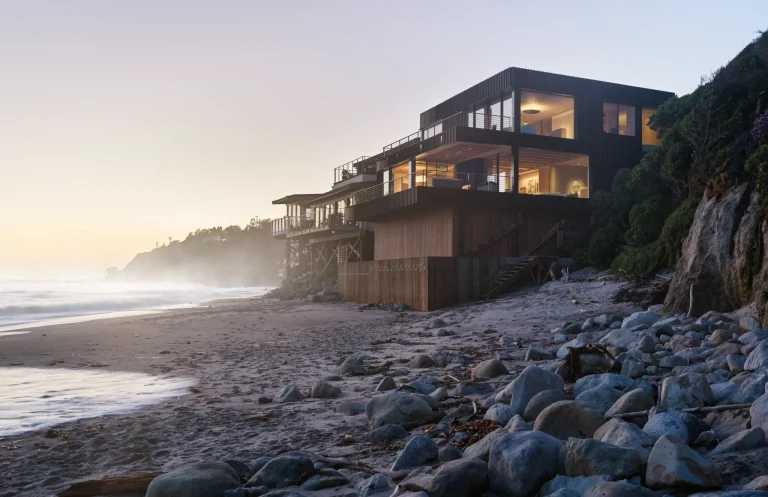
I’d signed the papers to buy a 260-acre ranch in White Valley, Montana—cedar houses, a massive barn, a kitchen that could feed a small town, and views that stretched to mountains I could barely name. The closing happened three weeks ago. My parents didn’t know. To them, I was still “busy with work in Seattle,” still living in my modest apartment, still the daughter who wore thrift store sweaters and drove a ten-year-old Subaru.
When Dad’s text message arrived—“Thanksgiving’s full. Maybe next year.”—I stared at it for a full minute.
Not an invitation with a caveat. Not “We’re tight on space but we’ll make it work.” Just… full. Like a restaurant that had run out of tables. Like I was a reservation they could cancel without consequence.
I replied like a good daughter: “No problem.”
Then I pulled up the ranch’s closing papers, stared at the number on the bottom line—$5,000,000—and made a decision.
If there was no room for me at their table, I would build a bigger table somewhere else.
Part Two: The Call
By noon that day, I was on the phone with Chief Rodriguez, the White Valley police chief I’d met during the ranch closing. She’d helped me navigate some local zoning questions and had mentioned, almost offhandedly, that the valley had a lot of folks who spent holidays alone.
“Chief Rodriguez,” I said when she answered. “This is Amelia Hart. We met a few weeks ago about the Hart Ranch property.”
“Of course! How’s the ranch treating you?”
“It’s beautiful. But it’s also empty, and I have a proposition. If you know anyone who doesn’t have anywhere to go for Thanksgiving—anyone at all—send them to Hart Ranch. No questions asked. There will be a plate of food waiting.”
There was a pause. “Anyone?”
“Anyone. Families, singles, people just passing through. I don’t care. If they’re alone on Thanksgiving, they have a place at my table.”
“How many people are we talking about?”
I looked around my Seattle apartment—the place I was about to leave, the life I was about to step out of. “As many as show up.”
“You’re serious.”
“Completely. Spread the word however you can. Church bulletins, the community center, word of mouth. Hart Ranch. Thursday at 5 PM. Everyone’s welcome.”
Another pause. “Ms. Hart, that’s… that’s incredibly generous. Are you sure you can handle—”
“I’ll handle it. Just send them.”
I hung up and immediately started making more calls. Catering companies. Restaurant supply stores. Rental companies for tables and chairs. By midnight, I’d spent $40,000 on food, supplies, and logistics.
By Thursday morning, I’d spent closer to $80,000.
And I didn’t care about a single dollar of it.
Part Three: The Preparation
The next morning, Montana was blanketed in fresh snow. Inside the ranch, the air was chaotic and hot with purpose.
I’d put out a call through the local Facebook groups: “Need help preparing Thanksgiving dinner for the community. Will pay $50/hour plus meals.” Within hours, I had more volunteers than I needed.
Retired chefs were rolling pie crusts on the long granite counter. A nurse, fresh from her night shift, still in scrubs, was tying on an apron. Teenagers from the high school were peeling potatoes while someone’s grandmother stirred cider into a pot of broth big enough to bathe in.
Eight turkeys were in the industrial ovens I’d had installed specifically for this. Forty pumpkin pies were cooling on the windowsills. The smell was overwhelming—sage and butter and cinnamon and wood smoke from the massive stone fireplace.
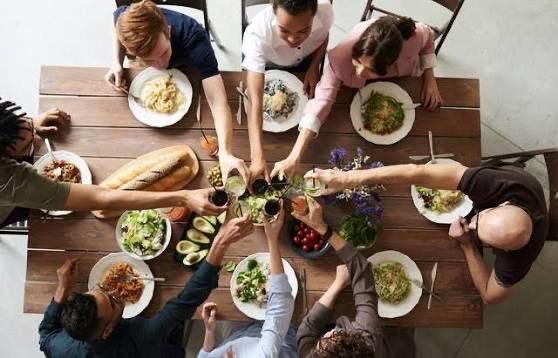
We had set up an endless oak table that stretched across the entire great room—no “kids’ corner,” no separate table for the “extras.” Everyone would sit together.
A woman named Margaret, maybe seventy, with flour in her gray hair, looked at me while crimping pie edges. “Honey, how many people are you expecting?”
“I have no idea,” I said honestly. “Could be twenty. Could be two hundred.”
“And if it’s two hundred?”
“Then we’ll need more chairs.”
She laughed—a real, warm laugh that filled the kitchen. “I like you. You’re crazy, but I like you.”
By three in the afternoon, we were ready. The table was set with mismatched plates and silverware I’d bought from every thrift store within fifty miles. Mason jars filled with wildflowers served as centerpieces. The food was ready—more food than I’d ever seen in one place.
At five, headlights began lighting up the long driveway.
Part Four: The Guests
They arrived in old boots and work uniforms, thrift-store jackets and hospital scrubs, beat-up trucks and cars held together with prayer and duct tape.
A veteran in an Army jacket who told me he hadn’t spent Thanksgiving with anyone in ten years.
A truck driver who’d planned to sleep in his cab at a rest stop and eat vending machine sandwiches.
A single mother with two children wearing mismatched gloves, all three of them crying when they saw the table.
A group of farmworkers who’d just finished harvest season and had nowhere to go.
A couple of nurses who’d drawn the short straw for the holiday shift and were grabbing a meal before heading in.
Teenagers whose families had kicked them out.
Elderly folks from the assisted living facility in town whose families were “too busy” to visit.
And more faces than I could count, more stories than I could hear, more people than I’d ever imagined.
By six, we had filled every chair at the table. By six-thirty, we were adding folding chairs. By seven, people were sitting on the stairs, on the floor, anywhere there was space.
I stood at the head of that massive table—the table my parents said was “full,” the table that somehow never had room for me—and I looked at two hundred faces looking back.
“Welcome to Hart Ranch,” I said, my voice carrying across the room. “I don’t know all your stories. I don’t know why you’re here instead of somewhere else. But I do know this: you have a place at this table. You belong here. And I’m grateful you came.”
A man in the back—the veteran in the Army jacket—started clapping. Then someone else joined. Then everyone.
We ate until we couldn’t eat anymore. We told stories. We laughed. We cried. The kids taped little notes to a board by the fireplace—”I’m grateful for…” in shaky handwriting. One read, “Someone remembered me.”
That note broke something in my chest that had been cracked for years.
Around nine, someone pulled out a guitar. We sang—badly, joyfully, loudly. The single mother’s kids fell asleep on the couch. The veteran told me about his daughter who he hadn’t seen in five years. The truck driver asked if he could come back next year.
“Yes,” I told him. “Everyone can come back. This is happening every year.”
Part Five: The Photos
The next morning, as the cell phone signal stabilized after the storm, my phone started exploding.
The local radio station had shared a photo: “When your table is full, build a bigger one. Hart Ranch in White Valley opens its doors to everyone for Thanksgiving.”
Then the press got involved. Then friends of friends. Then strangers tagging strangers.
There I was, in hundreds of posts—the woman my parents always described as “quiet, reserved, unremarkable”—standing in the middle of a table that stretched nearly the entire length of the great room, laughing with people they’d never met, serving food with my own hands, looking happier than I’d looked in any family photo ever taken.
The pictures were everywhere. Local news picked it up. Then regional news. Then someone from Good Morning America called asking for an interview.
By nine a.m., I had twelve missed calls from Mom, nine from Dad, and a long, panicked text from Lena:
“Why didn’t you tell us you were doing this? Everyone’s asking why you weren’t with your family for Thanksgiving. This is SO embarrassing. People think we excluded you! Call me. We need to talk. NOW.”
I didn’t call.
I was too busy helping clean up, packing leftovers for people to take home, exchanging phone numbers with the volunteers who wanted to help plan next year.
Around noon, my phone rang. Dad. I let it go to voicemail.
He called again. And again. On the fourth call, I answered.
“Amelia, what the hell is going on?” His voice was sharp, angry, the voice he used when things weren’t going according to his plan. “Your mother and I have been trying to reach you all morning. Everyone’s calling us about this… this Thanksgiving thing you did. Why didn’t you tell us?”
“Tell you what?” I asked calmly, watching Margaret help load pies into someone’s car.
“That you were hosting some kind of… public charity event! That you bought a ranch! That you—where did you even get the money for this?”
“I sold my company.”
Silence.
“You what?”
“I sold my company. Eighteen months ago. For quite a bit of money.”
“How much money?”
“Enough to buy a ranch and feed two hundred people without thinking twice about it.”
More silence. I could hear my mother in the background asking questions I couldn’t make out.
“Why didn’t you tell us?” Dad’s voice had changed. The anger was gone, replaced by something else. Confusion? Hurt? Fear?
“Because you never asked. In eighteen months, you never once asked how work was going. You never asked if anything had changed. You just assumed I was still the same struggling kid in Seattle.”
“That’s not—we didn’t—”
“Dad, you told me Thanksgiving was full. You didn’t say ‘we’re tight on space’ or ‘maybe we can figure something out.’ You just said full. Like I was a reservation you could cancel.”
“Amelia, that’s not what I meant. Your mother and I—we thought—”
“What did you think? That I wouldn’t care? That I was used to being the backup plan?”
“Your sister’s in-laws were coming, and space was tight, and we thought—”
“You thought I’d understand. Like I always understand. Like I always disappear when it’s inconvenient to make room for me.”
I could hear him breathing on the other end of the line, and I realized something: he wasn’t angry anymore. He was scared.
“What are you scared of?” I asked quietly.
Part Six: The Admission
“I’m scared,” my dad said finally, his voice barely above a whisper, “that we lost you. That we’ve been losing you for years and we didn’t even notice.”
I sat down on the porch steps, snow crunching under my boots. In the driveway, people were still leaving, waving, thanking me, promising to come back next year.
“You didn’t lose me, Dad. You just never made room for me. There’s a difference.”
“Your mother and I—we didn’t realize—”
“That I was successful? That I’d built something? That I wasn’t just the quiet kid who mashed potatoes and did dishes while everyone else took photos?”
“We knew you were working hard, but—”
“But you never asked. You never wanted to know. Because as long as I was the one folding the chairs and washing the dishes, everything worked. The family ran smoothly. Lena got to be the star. You and Mom got to be proud. And I got to be… what? The helper? The one who didn’t need attention?”
“That’s not fair.”
“Isn’t it? When’s the last time you asked about my life? When’s the last time you actually listened when I tried to tell you something?”
Silence again. Long and heavy.
“I don’t know,” he finally admitted.
“That’s what I thought.”
“Amelia, please. Can we—can we fix this? Can we start over?”
I watched the truck driver—Jim, I’d learned his name was Jim—drive away with a container of leftovers and a smile that had been absent when he arrived yesterday.
“I don’t know if you can fix it,” I said honestly. “But I know I’m done trying to fit into spaces that were never meant for me. I’m done being the one who understands. I’m done making myself smaller so everyone else can be comfortable.”
“So what does that mean?”
“It means if you want me in your life, you need to make actual room. Not the folding chair at the end of the table. Not the shoulder that gets cropped out of photos. Real room. Real effort. Real interest in who I actually am.”
“We do care—”
“Then prove it. Don’t call me because you’re embarrassed by Facebook photos. Don’t call me because people are asking questions. Call me because you actually miss me. Because you want to know how I’m doing. Because you see me as a person, not a role.”
“Okay,” he said, and his voice was shaking now. “Okay. I hear you. I… I’m sorry, Amelia. I’m really sorry.”
“I know you are. But sorry isn’t enough anymore. Sorry is what you say when you’re caught, not when you’re changing.”
“What do you want from us?”
“I want you to do the work. I want you to think about why you always had room for everyone except me. I want you to figure out why you never asked about my life. I want you to decide if you actually want a relationship with me or if you just want the helper back.”
“That’s not—”
“That’s exactly what it is. And until you can admit that, until you can really look at how you’ve treated me for thirty-two years, we’re not going to get anywhere.”
I heard my mother’s voice in the background, getting louder. Dad covered the phone, muffled conversation I couldn’t hear.
“Your mother wants to talk to you,” he said finally.
“Tell her I’ll call her when I’m ready. Right now, I have a ranch to take care of and two hundred people who are more family than you’ve been in years.”
“Amelia—”
“I love you, Dad. But love isn’t enough when there’s no respect. Figure out which one you actually want to give me.”
I hung up.
Part Seven: Thanksgiving Morning, One Year Later
I’m standing in the same kitchen, one year later, and the scene is even more chaotic than before.
Margaret is back, this time with her daughter and three grandchildren, all wearing matching aprons that say “Hart Ranch Thanksgiving Crew.” Jim the truck driver is here, helping set up tables, and he brought five other drivers who were going to spend the holiday in their cabs. The veteran in the Army jacket—his name is Marcus—reconnected with his daughter, and they’re both here, volunteering in the kitchen together.
The single mother, Sarah, got a job at the local hospital and bought a house. Her kids made decorations for every table. The nurses are back. The farmworkers are back. And this year, we’re expecting closer to three hundred people.
My parents are not here.
They tried. I’ll give them that. They called once a month for the first six months. They sent Christmas cards. They invited me to Easter dinner and promised it would be different.
I went to Easter. It wasn’t different.
I was still at the folding chair. Still cropped out of the photo. Still the one who did dishes while everyone else had coffee and dessert.
I left after an hour. I haven’t been back.
Lena called last week. “Mom and Dad are really hurt that you’re doing Thanksgiving at the ranch again instead of coming home.”
“Tell them they’re welcome to come here,” I said. “Everyone’s welcome.”
“That’s not the same as family Thanksgiving.”
“You’re right. It’s better.”
She hung up on me.
But you know who did show up? My college roommate, who I hadn’t seen in five years. My old boss from my first job, who heard about the ranch and wanted to volunteer. Three of my employees from the company I sold, who said this was the best Thanksgiving they’d ever had.
Chief Rodriguez is here, off-duty, helping serve food. The mayor came by with his family. The local news is doing a follow-up story.
And in my pocket, I have a letter that arrived this morning. From a woman in Texas who saw the story last year and was inspired to start her own community Thanksgiving. She fed sixty people. “You gave me permission to build a bigger table,” she wrote. “Thank you.”
That letter means more than any family photo ever did.
Epilogue: The Call I Didn’t Expect
At seven p.m., after most people have eaten and the kitchen is starting to wind down, my phone rings. Unknown number. I almost don’t answer.
“Hello?”
“Amelia?” It’s my dad’s voice, but different. Quieter. Uncertain.
“Dad.”
“I’m… I’m calling because I wanted to say something. And I wanted to say it before Thanksgiving ended.”
I wait.
“You were right. About all of it. We didn’t make room for you. We took you for granted. We treated you like a role instead of a person. And I’m not calling because I’m embarrassed or because people are asking questions. I’m calling because I miss my daughter.”
My throat tightens.
“I’ve been going to therapy,” he continues. “Your mother too. We’re trying to understand why we did what we did. Why we couldn’t see what was right in front of us. And I’m not calling to ask you to forgive us or to come home. I’m just calling to say I’m sorry. Really, truly sorry. And I’m proud of you. So proud of what you’ve built. Not the ranch, not the money—you. The person you’ve become. The person you always were that we were too blind to see.”
I’m crying now, standing in my industrial kitchen with flour on my apron and strangers-turned-family all around me.
“Thank you,” I manage to say.
“Can I ask you something?” he says.
“Okay.”
“Next year… could we come? To the ranch? Not as your parents expecting special treatment. Just as two more people who need a place at the table.”
I look around the great room. At the tables that stretch forever. At the faces laughing and eating and belonging.
“Everyone’s welcome at Hart Ranch,” I say. “Even you. But you sit where everyone else sits. You help where everyone else helps. And you leave room for everyone, not just the people you think deserve it.”
“Deal,” he says, and I can hear him crying too. “Thank you, Amelia. For building a bigger table. For showing us what we were missing.”
“You’re welcome. But Dad?”
“Yeah?”
“Don’t thank me yet. Come next year. Show up. Do the work. Then we’ll see.”
“We will. I promise.”
I hang up and walk back to my table—the table that was never full, the table that always has room, the table where everyone belongs.
Margaret looks at me, flour still in her hair. “Everything okay?”
“Yeah,” I say, smiling through tears. “Everything’s going to be okay.”
And for the first time in thirty-two years, I actually believe it.
Sarah Mitchell is a bestselling novelist recognized for her insightful and emotionally resonant stories that explore the complexities of human relationships. Originally from Denver, Colorado, Sarah grew up in a family of teachers who nurtured her curiosity and love for storytelling. She studied psychology at Stanford University, where she became fascinated by the intricacies of human behavior—an interest that would later shape her writing career. Sarah’s novels are praised for their nuanced characters, intricate plots, and ability to capture the subtle tensions that define love, friendship, and family ties. Her breakthrough novel, The Spaces Between Us, became an instant bestseller, lauded for its honest portrayal of strained family relationships and the fragile bonds that hold people together. Since then, she has published several works that continue to captivate audiences around the world. Outside of her writing career, Sarah is passionate about mental health advocacy and often partners with organizations to promote awareness and support for those struggling with emotional well-being. Her personal life is quieter—she enjoys hiking in the Colorado mountains, practicing yoga, and spending time with close friends. With each new book, Sarah Mitchell cements her reputation as a writer who illuminates the beauty and struggles of human connection.