NOTE: VIDEO OF THE INTERVIEW INSIDE THE ARTICLE.
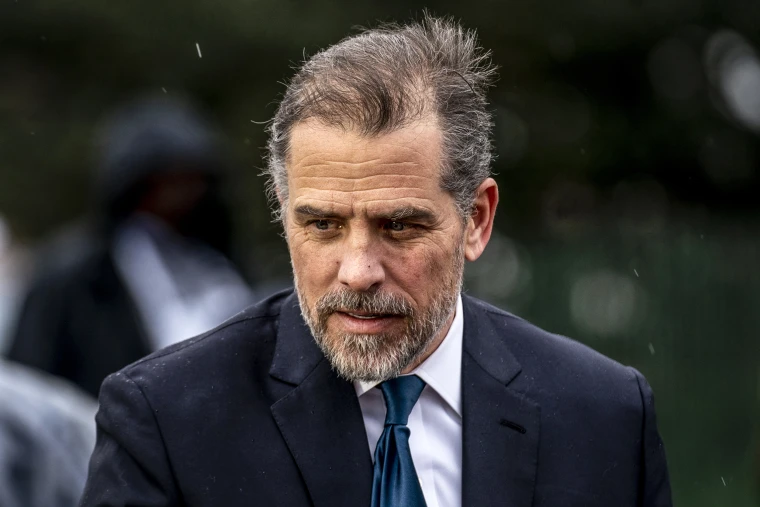
In a remarkable and candid podcast interview this week, Hunter Biden, the 55-year-old son of President Joe Biden, openly criticized his father’s administration, labeling key decisions on immigration policy and the Afghanistan withdrawal as failures. The conversation, which spanned over five-and-a-half hours on “The Shawn Ryan Show,” highlighted deep concerns within the Biden family about the consequences of the 46th president’s policy choices and offered rare insight into the first son’s unfiltered views.
Immigration Policies Under Fire
Hunter Biden focused much of the discussion on the United States’ immigration policies during his father’s presidency, calling the approach “an obvious failure” that prioritized illegal immigrants over veterans, first responders, and citizens who had served the nation.
“We need vibrant immigration,” Hunter said, “but we don’t want immigrants that are coming here illegally, draining us of resources, and being prioritized above people that are actual, literal heroes — people who are still recovering from 20 or 21 years of endless war — or anybody else in our society.”
According to the Congressional Budget Office, an estimated 2.4 million immigrants entered the U.S. annually during President Biden’s term, with roughly 60% reportedly crossing the border without authorization, based on a Goldman Sachs analysis. Hunter Biden argued that the administration’s approach, which often relied on congressional legislation rather than executive action, contributed to chaotic border enforcement.
He specifically referenced a proposed sweeping border bill negotiated by Sens. James Lankford (R-Okla.), Kyrsten Sinema (I-Ariz.), and Chris Murphy (D-Conn.). Hunter said the legislation initially had bipartisan support but was effectively derailed when former President Donald Trump intervened months before the 2024 election, threatening to primary Republicans who supported the measure.
“And then Donald Trump stepped in six months before the election, and told [Republicans] that he was gonna primary every single one of them that voted for that, because we’re addicted to the problem,” Hunter said.
The younger Biden contrasted his father’s reliance on legislative solutions with Trump’s use of executive authority, noting that the former president aggressively implemented immigration policies without waiting for Congress, including border security measures and workplace enforcement actions.
Reflections on Afghanistan Withdrawal
Hunter Biden also spoke at length about the U.S. withdrawal from Afghanistan in 2021, describing the execution of the exit as “an obvious f—ing failure.” He acknowledged that while he believes leaving Afghanistan was ultimately the correct decision, the rushed nature of the withdrawal and the resulting chaos exposed significant flaws in planning and execution.
“I think that there was a better way to do it,” Hunter said. “And … I can blame it on his generals, I can blame it on [other] people [for] the way in which we did it, but — and my dad always knew this also — the buck stops with him.”
The withdrawal culminated in a tragic ISIS-K suicide bombing at Kabul’s Hamid Karzai International Airport, which claimed the lives of 13 U.S. service members who were assisting Afghans fleeing Taliban control. Hunter Biden expressed empathy for the loss of life, while emphasizing that the administration believed remaining in Afghanistan indefinitely was not in the national interest.
“I hear your anger about that,” he responded when interviewer Shawn Ryan criticized the manner in which the U.S. exit unfolded. “And I don’t have any response to it other than the fact that I know that my dad came from a position that 20 years was enough, and it was not in the interest of anyone in the United States [to remain there].”
Hunter noted that the Biden administration attempted to minimize risks through coordination with allied nations and U.S. forces, but logistical and security challenges, combined with the speed of the Taliban takeover, made the situation highly volatile.
Candid Critique of the Administration
Beyond immigration and Afghanistan, Hunter’s comments reflected frustration with what he described as a broader lack of effective governance. While he did not provide a comprehensive list of failures, his tone suggested disillusionment with certain foreign policy and domestic priorities of the Biden administration.
Hunter also criticized previous administrations, including the Obama White House, for their handling of foreign influence and corruption concerns, citing a so-called “viper’s den” in Ukraine. He painted a picture of a government often reactive rather than proactive in addressing major national security and domestic challenges.
The interview revealed Hunter Biden’s awareness of public perception regarding his family, acknowledging that his commentary could attract significant media attention. Nevertheless, he expressed a sense of responsibility to speak openly about decisions he viewed as harmful or poorly managed, particularly when they impacted U.S. military personnel, veterans, and the broader public.
Context and Public Reaction
The remarks come amid ongoing debates over immigration policy in the U.S., particularly concerning the balance between humanitarian considerations and border enforcement. Hunter Biden’s critique adds a unique perspective, as it comes not from a political opponent, but from a member of the president’s own family who has witnessed the administration’s internal deliberations firsthand.
Political analysts noted that while Hunter’s comments may resonate with certain segments of the public frustrated with border security challenges, they also carry the risk of amplifying partisan divides. Republicans have often criticized the Biden administration for perceived lax enforcement at the southern border, while Democrats generally support a more measured, legislative approach to immigration reform.
Similarly, the Afghanistan withdrawal remains a contentious issue. While many Americans supported ending U.S. military involvement after two decades, the chaotic nature of the evacuation, combined with the loss of American and Afghan lives, continues to spark debate. Hunter Biden’s frank acknowledgment of the failure in execution may fuel both criticism and sympathy, as he sought to clarify that the decision to leave was strategically sound despite operational shortcomings.
Hunter’s Personal Perspective
Throughout the interview, Hunter Biden’s tone oscillated between candid critique, self-reflection, and loyalty to his father. While he criticized policy execution, he did not question the underlying intentions behind the Biden administration’s decisions. He repeatedly emphasized that President Biden acted with the belief that these choices were in the national interest, even if the outcomes were imperfect.
The former first son also reflected on the public perception of the Biden family, including controversies surrounding his own personal life and business dealings. He described a sense of responsibility to speak honestly about policy matters, suggesting that familial loyalty does not preclude constructive criticism.
Implications for Biden Administration
Hunter Biden’s remarks could have several political implications. By publicly criticizing his father, he introduces a narrative that the administration itself acknowledges failures in high-stakes policy areas. This could be leveraged by political opponents in upcoming elections or debates over U.S. immigration and foreign policy.
On the other hand, the interview may also serve to humanize the Biden administration, showing that leaders are willing to accept accountability, even from within their own family. Analysts note that this type of candid assessment is rare in modern politics and can shape public discourse about executive responsibility and decision-making.
Conclusion
Hunter Biden’s interview on “The Shawn Ryan Show” provides an unfiltered window into his perspective on key challenges facing the United States during his father’s presidency. From immigration to the U.S. withdrawal from Afghanistan, he offered a rare critique of policies that have long been subjects of national debate, emphasizing both the human and operational consequences of governmental decisions.
While his comments are certain to spark further discussion and analysis, they underscore the complexities of governing a nation facing global and domestic challenges simultaneously. The interview also highlights the tension between strategic decision-making and the real-world outcomes of policy execution, particularly when lives and national security are at stake.
Hunter Biden’s willingness to publicly critique his father reflects a broader cultural shift in American politics, where personal and familial perspectives increasingly intersect with public discourse, offering insight into the difficult balance leaders face between intention and impact.
PLAY:

Emily Johnson is a critically acclaimed essayist and novelist known for her thought-provoking works centered on feminism, women’s rights, and modern relationships. Born and raised in Portland, Oregon, Emily grew up with a deep love of books, often spending her afternoons at her local library. She went on to study literature and gender studies at UCLA, where she became deeply involved in activism and began publishing essays in campus journals. Her debut essay collection, Voices Unbound, struck a chord with readers nationwide for its fearless exploration of gender dynamics, identity, and the challenges faced by women in contemporary society. Emily later transitioned into fiction, writing novels that balance compelling storytelling with social commentary. Her protagonists are often strong, multidimensional women navigating love, ambition, and the struggles of everyday life, making her a favorite among readers who crave authentic, relatable narratives. Critics praise her ability to merge personal intimacy with universal themes. Off the page, Emily is an advocate for women in publishing, leading workshops that encourage young female writers to embrace their voices. She lives in Seattle with her partner and two rescue cats, where she continues to write, teach, and inspire a new generation of storytellers.