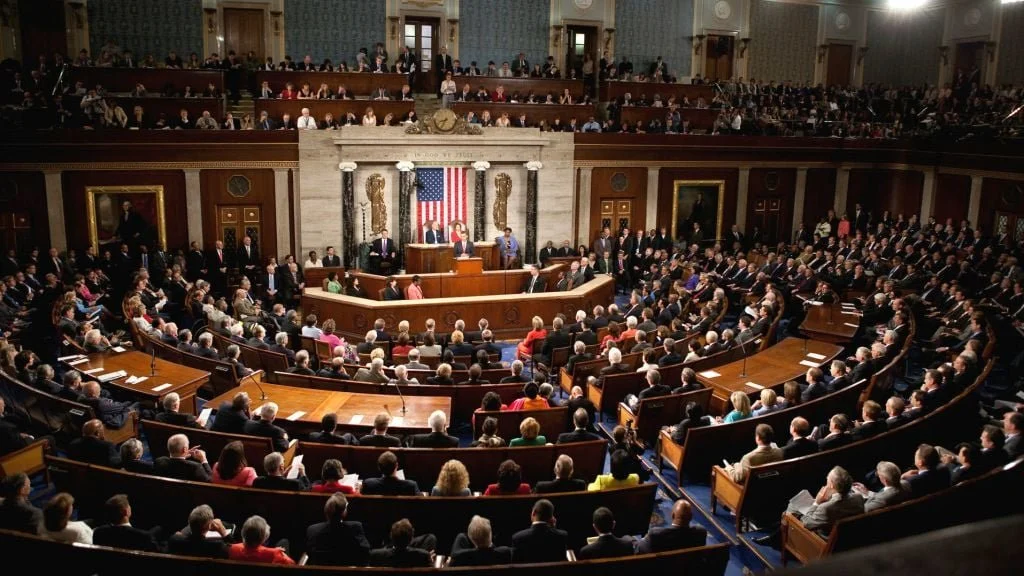
WASHINGTON—A sharply divided House of Representatives passed a major piece of legislation this week, reigniting a long-running debate over the federal government’s role in health care markets and how best to lower costs for American families. The vote exposed fault lines not only between Democrats and Republicans, but also within the Republican Party itself.
At issue was whether Congress should prioritize broad market reforms designed to affect all consumers or extend targeted assistance that benefits a narrower segment of Americans. Lawmakers on both sides framed their arguments as efforts to protect affordability, yet their visions for achieving that goal diverged dramatically.
The result was a narrow vote that underscored the fragile balance of power in the House and foreshadowed a contentious path ahead in the Senate.
A Narrow Margin and an Unusual Coalition
The measure passed on December 17 by a vote of 216–211, reflecting the House’s slim majority and the intensity of disagreement surrounding the bill. One Republican lawmaker broke with party leadership to oppose it, joining all Democrats in voting no.
While the bill ultimately cleared the chamber, the process leading up to the vote was marked by internal disputes among Republicans, procedural maneuvering, and public disagreement over strategy. For party leaders, the outcome was framed as a necessary step toward meaningful reform. For critics, it represented a missed opportunity—and a risky gamble.
The tension was visible even after the gavel fell, as lawmakers continued to argue over what the vote would mean for consumers in the coming year.
Competing Approaches to Affordability
At the core of the debate was a fundamental question: how should Congress lower health insurance costs?
Some lawmakers argued that systemic changes to the insurance market would benefit everyone by driving down premiums across the board. Others countered that without extending existing financial assistance, millions of Americans could see their costs spike, regardless of broader reforms.
This disagreement spilled into public view as several Republicans sided with Democrats on procedural efforts to force a vote on extending temporary financial assistance that is set to expire.
Party leaders, however, insisted that focusing on subsidies alone would leave deeper structural problems unresolved.
Leadership Defends the Strategy
Following the vote, House Speaker Mike Johnson defended the bill as a more comprehensive solution than simply extending existing assistance programs. He argued that the legislation would reduce premiums for all Americans, not just those who qualify for federal help.
According to Johnson, the reforms included in the bill would lower premiums by approximately 11 percent—nearly double the reduction he said would result from extending the temporary assistance.
“We did something bigger and more important,” Johnson said, emphasizing that the bill aims to affect the entire insurance market rather than a small subset of enrollees.
For leadership, the vote was framed as a choice between short-term relief and long-term reform.
Internal Republican Disagreement
Despite leadership’s confidence, the bill revealed notable divisions within the GOP conference. Several Republican lawmakers had previously supported bipartisan efforts to extend temporary assistance, arguing that allowing it to expire could destabilize coverage for millions.
Those lawmakers attempted to attach amendments to the bill that would extend the assistance for one or two years while also adding safeguards to reduce fraud and control costs. When those amendments were blocked, they turned to a rarely used procedural tool—a discharge petition—to force a separate vote.
The move placed party leaders in a difficult position, highlighting how slim majorities empower individual lawmakers to exert outsized influence.
What the Bill Actually Does
Only midway through the debate did lawmakers clearly define what the legislation itself would change.
The bill, formally titled the Lower Health Care Premiums for All Americans Act, is designed to reduce health insurance costs by reshaping how plans are priced, purchased, and regulated. Rather than extending enhanced premium tax credits created under the Affordable Care Act, the bill focuses on market-based reforms.
Among its key provisions are measures to increase transparency in prescription drug pricing, reduce deductibles and copayments for certain exchange customers, and make it easier for self-insured employers to purchase stop-loss insurance.
The bill also expands access to association health plans, allowing small businesses and self-employed individuals to pool together to gain bargaining power typically reserved for larger employers.
Why Subsidies Were Left Out
The absence of an extension for enhanced premium tax credits became the bill’s most controversial element. Those subsidies, expanded in recent years, have helped millions of Americans afford insurance through Affordable Care Act exchanges.
Supporters of the bill argued that the subsidies distort the market and fail to address underlying cost drivers. They claimed that premiums under Obamacare have risen dramatically since its inception, with deductibles and out-of-pocket maximums placing increasing burdens on patients.
Republican lawmakers cited data showing average deductibles reaching thousands of dollars and out-of-pocket caps exceeding $20,000 in some cases.
From their perspective, structural reform—not temporary assistance—was the only sustainable solution.
Democrats Sound the Alarm
Democrats sharply disagreed, warning that allowing the enhanced subsidies to expire would have immediate and severe consequences for millions of Americans. They argued that premiums would rise sharply for more than 20 million people, potentially pushing families out of coverage altogether.
During floor debate, Democratic lawmakers described the bill as ineffective at lowering costs and accused Republicans of promoting inadequate insurance plans with fewer protections.
In their view, the bill prioritizes ideology over practicality and risks undermining coverage gains achieved over the past decade.
A Broader Fight Over Obamacare’s Future
The debate over this bill reflects a larger, unresolved argument about the Affordable Care Act itself. More than a decade after its passage, Obamacare remains a central—and polarizing—feature of the American health care system.
Republicans argue that it has failed to deliver on its promise of affordability, while Democrats contend that it has expanded access and requires reinforcement rather than replacement.
This vote did little to settle that argument. Instead, it reinforced how deeply entrenched both sides remain and how difficult bipartisan health care reform continues to be.
What Happens in the Senate
The bill now heads to the Senate, where its future is uncertain. Recent efforts to either replace the enhanced subsidies with alternative mechanisms or extend them outright have failed to advance.
Several Republican senators have expressed openness to subsidies in principle while questioning their effectiveness in isolation. Others have indicated hope that a compromise could still emerge.
Whether the House-passed bill moves forward, is amended, or stalls entirely will depend on delicate negotiations in a divided chamber.
A Sign of What’s to Come
Beyond its immediate policy implications, the House vote offers a glimpse into the challenges Congress will face moving forward. Narrow margins, internal party divisions, and high-stakes social policy debates are likely to define the legislative landscape for the foreseeable future.
For now, the passage of the bill marks a clear statement of Republican priorities—and a clear warning from Democrats about the risks they believe lie ahead.
As the Senate takes up the issue, millions of Americans will be watching closely, aware that the outcome could directly affect both their coverage and their costs.

Emily Johnson is a critically acclaimed essayist and novelist known for her thought-provoking works centered on feminism, women’s rights, and modern relationships. Born and raised in Portland, Oregon, Emily grew up with a deep love of books, often spending her afternoons at her local library. She went on to study literature and gender studies at UCLA, where she became deeply involved in activism and began publishing essays in campus journals. Her debut essay collection, Voices Unbound, struck a chord with readers nationwide for its fearless exploration of gender dynamics, identity, and the challenges faced by women in contemporary society. Emily later transitioned into fiction, writing novels that balance compelling storytelling with social commentary. Her protagonists are often strong, multidimensional women navigating love, ambition, and the struggles of everyday life, making her a favorite among readers who crave authentic, relatable narratives. Critics praise her ability to merge personal intimacy with universal themes. Off the page, Emily is an advocate for women in publishing, leading workshops that encourage young female writers to embrace their voices. She lives in Seattle with her partner and two rescue cats, where she continues to write, teach, and inspire a new generation of storytellers.