


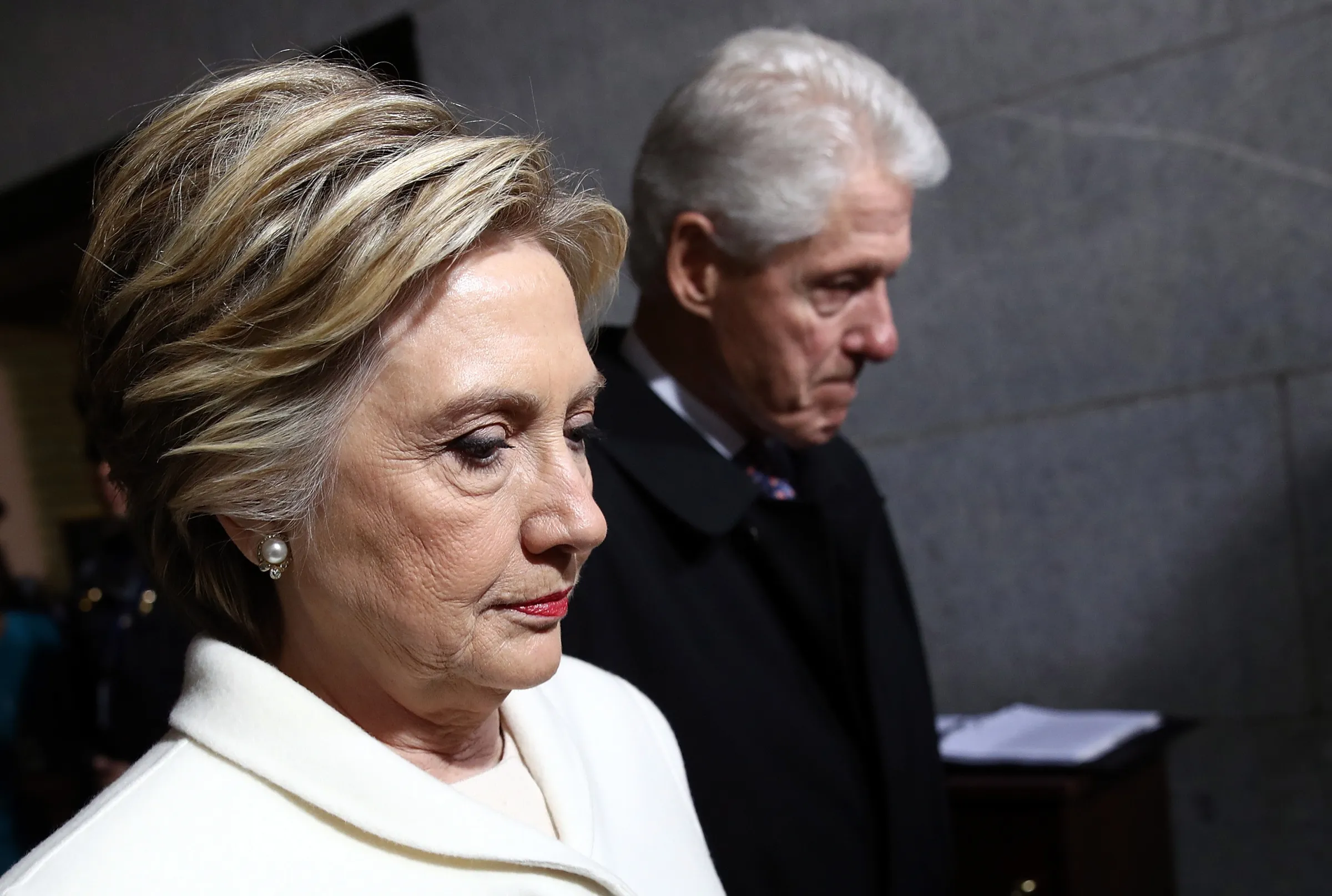
In an unprecedented move that has deepened political tensions in Washington, the Republican‑controlled House Committee on Oversight and Government Reform has formally advanced and passed votes to hold former President Bill Clinton and former Secretary of State Hillary Clinton in contempt of Congress. The action stems from the couple’s refusal to comply with subpoenas issued as part of the committee’s ongoing investigation related to financier and convicted sex offender Jeffrey Epstein.
The committee’s resolutions, which cleared the panel with bipartisan support in some cases, now head to the full House of Representatives for consideration. If adopted by the full chamber, the measures could be referred to the Department of Justice for potential enforcement or prosecution, though that phase of the process would unfold over subsequent weeks or months.
Background: The Epstein Investigation and Congressional Subpoenas
The House Oversight Committee’s inquiry grew out of broader scrutiny of how federal authorities conducted investigations into Epstein and his network, including possible political and social connections that have drawn the attention of lawmakers across the ideological spectrum. In mid‑2025, the committee authorized subpoenas for a wide range of witnesses and documents, including unredacted materials from the Epstein estate, records of individuals connected to Epstein, and deposition testimony from key figures believed to possess relevant information.
Epstein, who was arrested in 2019 on charges of sex trafficking minors and conspiracy, died by suicide while in federal custody. His death and the handling of related criminal cases have fueled public controversy and multiple investigations into how agencies and influential individuals intersected with his activities.
Bill and Hillary Clinton were issued subpoenas for deposition testimony, meaning they were legally required to appear before the committee under oath to answer questions. The committee’s leadership has argued that their deposition testimony could shed light on aspects of Epstein’s relationships, how federal authorities responded, and whether reforms are needed to improve oversight of sex‑trafficking investigations.
Clintons’ Response: Defiance and Legal Objections
Instead of complying with the subpoenas, the Clintons’ legal team took a firm stance that the congressional demands were invalid and legally unenforceable. Their lawyers argued that they had already provided all relevant information and that the committee’s approach risked unnecessary legal confrontation and political distraction. According to public and legal filings, the Clintons’ counsel challenged the requirement for in‑person appearances and questioned the committee’s motives, signaling a determination to resist what they described as a “politically driven process.”
The couple’s attorneys sent letters rejecting immediate deposition dates and sought alternative arrangements — including offers of remote interviews or limited testimony — that the committee ultimately deemed insufficient or unacceptable. Republican chair James Comer said that the committee had acted in good faith for months but would no longer tolerate further delays. “Given their history with Jeffrey Epstein and Ghislaine Maxwell, any attempt by the Clintons to avoid sitting for a deposition would be in defiance of lawful subpoenas and grounds to initiate contempt of Congress proceedings,” Comer wrote in correspondence to the Clintons’ counsel.
Democrats on the committee were initially expected to oppose contempt proceedings, but several ultimately broke ranks, joining Republicans in supporting the measures. According to vote tallies reported by multiple outlets, nine Democrats voted with Republicans to recommend holding Bill Clinton in contempt, while a smaller number supported the measure against Hillary Clinton. These cross‑aisle votes underscore both the political sensitivity of the issue and concerns among some lawmakers about ensuring accountability and oversight.
Committee Action and the Contempt Resolutions
On January 21, 2026, the House Oversight Committee voted to recommend that the full House find the Clintons in contempt of Congress. The measure against Bill Clinton passed with a stronger majority than the one against Hillary Clinton. According to reports, the votes were 34–8 for Bill Clinton and 28–15 for Hillary Clinton — showing notable, if not overwhelming, support across party lines.
The contempt resolution documents filed with Congress outline the committee’s determination that both former officials “willfully failed to comply with deposition subpoenas” after months of negotiation and rescheduling efforts. They describe testimony as necessary to the investigation and point to the committee’s efforts to accommodate the Clintons’ scheduling requests — including postponements and multiple opportunities to appear — before concluding that their refusal constituted contempt.
The committee’s action is historically notable. Contempt of Congress resolutions are rarely advanced against prominent public figures, particularly former presidents and secretaries of state, underscoring the political and legal weight of the underlying dispute. Should the full House adopt the resolutions, it would mark an unusual escalation in congressional oversight proceedings.
Political Reactions and Broader Debate
The developments have prompted strong reactions on both sides of the political spectrum. Republicans have emphasized the principle that no individual, including high‑profile former officials, is above the law. In justifying the contempt votes, lawmakers cited the need to uphold the authority of congressional subpoenas and ensure compliance with oversight responsibilities.
Some Democrats also voiced concern, with several ultimately voting in support of the contempt measures. A small group of lawmakers said they believed accountability and transparency were paramount, especially given the seriousness of the subject matter involving Epstein and alleged systemic failures in past investigations.
However, others in the party expressed discomfort or opposition, arguing that contempt proceedings against the Clintons risked further politicizing investigations and could undermine bipartisan cooperation. Reports indicate that former House Speaker Nancy Pelosi privately criticized the decision by members of her party to support the contempt votes, arguing that negotiations were ongoing and that the committee should wait for additional documents from the Department of Justice before escalating matters.
Critics of the committee’s approach have also argued that the focus on the Clintons could overshadow other aspects of the Epstein inquiry, including compliance by the Justice Department and testimony from other individuals with known connections to Epstein’s operations. In the contempt report itself, minority views suggested that the proceedings were politicized and diverted attention from broader investigative needs.
What Happens Next
With the committee’s recommendations now before the full House, the next major step is a floor vote on the contempt resolutions. If a majority of representatives agree to hold the Clintons in contempt, the measures could be referred to the Department of Justice. At that point, prosecutors could decide whether to pursue enforcement actions — including criminal charges — under federal contempt statutes. Such decisions are at the discretion of the Justice Department and would likely involve extended legal proceedings.
Even without a full House vote, the proceedings have already intensified spotlight on the relationship between the Clintons and Jeffrey Epstein, raising questions in the public sphere about transparency, accountability, and the ability of Congress to compel testimony from powerful figures. The unfolding dispute may also have broader political ramifications as the country moves further into an election cycle, with both Clinton figures remaining influential voices in national politics despite no longer holding public office.
Conclusion
The decision by the House Oversight Committee to hold Bill and Hillary Clinton in contempt of Congress marks a significant escalation in a politically charged and legally complex dispute tied to the Jeffrey Epstein investigation. As the matter moves to the full House for further consideration, it underscores ongoing tensions between congressional oversight powers and established defenses put forth by prominent former officials. How the full House acts, and whether the Department of Justice chooses to pursue enforcement, will be key developments to watch in the coming weeks and months.

Emily Johnson is a critically acclaimed essayist and novelist known for her thought-provoking works centered on feminism, women’s rights, and modern relationships. Born and raised in Portland, Oregon, Emily grew up with a deep love of books, often spending her afternoons at her local library. She went on to study literature and gender studies at UCLA, where she became deeply involved in activism and began publishing essays in campus journals. Her debut essay collection, Voices Unbound, struck a chord with readers nationwide for its fearless exploration of gender dynamics, identity, and the challenges faced by women in contemporary society. Emily later transitioned into fiction, writing novels that balance compelling storytelling with social commentary. Her protagonists are often strong, multidimensional women navigating love, ambition, and the struggles of everyday life, making her a favorite among readers who crave authentic, relatable narratives. Critics praise her ability to merge personal intimacy with universal themes. Off the page, Emily is an advocate for women in publishing, leading workshops that encourage young female writers to embrace their voices. She lives in Seattle with her partner and two rescue cats, where she continues to write, teach, and inspire a new generation of storytellers.