



Washington, D.C.’s most prominent performing arts institution is undergoing a transformation that extends well beyond bricks and mortar. Long regarded as a symbol of national culture and artistic excellence, the city’s premier venue has in recent years become the focus of sweeping changes—financial, structural, and administrative—that have reshaped both its operations and its public profile.
What was once a relatively quiet, behind-the-scenes effort to stabilize a struggling institution has evolved into a broader conversation about leadership, stewardship, and the intersection of culture and politics. Supporters describe the changes as a long-overdue rescue of a deteriorating landmark. Critics argue that the direction represents an unprecedented politicization of an institution meant to transcend partisan divides.
At the center of the debate is a question that goes beyond budgets and renovations: how a national cultural institution defines its identity in a moment of intense political polarization.
A Landmark Facing Serious Challenges
For years, the Kennedy Center stood as an architectural and cultural icon, hosting performances ranging from ballet and opera to symphonies and contemporary theater. Yet behind the curtain, the 54-year-old complex faced mounting problems that were largely invisible to the public.
According to current leadership, the building suffered from aging infrastructure, failing systems, and structural deterioration that posed real safety and financial risks. Engineers reportedly warned that parts of the complex—including sewer systems and concrete ceilings—were in serious decline.
In some cases, drivers passing beneath the structure allegedly experienced falling debris, prompting lawsuits and urgent calls for intervention. Internally, the conversation turned grim: whether renovation was even viable, or whether demolition and complete reconstruction would be the only solution.
A Different Approach to Preservation
Faced with these warnings, Kennedy Center leadership sought outside expertise. The decision would prove pivotal. Rather than pursuing demolition, a plan emerged centered on restoration, modernization, and aggressive fundraising.
The strategy hinged on convincing Congress and private donors that the venue was not only worth saving, but irreplaceable. With its three massive stages—dedicated to theater, dance, and music—the Center was described as a facility that could not realistically be rebuilt in today’s regulatory and financial climate.
Supporters of the plan argued that preserving the existing structure was not merely cost-effective, but culturally essential.
Funding, Fundraising, and a Turnaround Narrative
The push to save the Center gained momentum with the passage of a sweeping funding package that included $250 million earmarked for renovations. The money was framed as an investment not just in infrastructure, but in the long-term viability of a national institution.
At the same time, fundraising efforts accelerated dramatically. Signature events tied to the Center’s programming became key opportunities to attract donors, sponsors, and benefactors from across the country.
According to reports provided by the Center’s leadership, recent fundraising totals have broken records. This year’s Kennedy Center Honors alone raised $23 million—nearly double the amount raised the previous year. Additional galas and events brought in millions more, contributing to a reported $131 million raised under the current leadership team.
These figures have been central to the argument that the institution has not only been stabilized, but revitalized.
A Shift That Sparked Broader Attention
While renovation and fundraising drew praise in some quarters, the Center’s transformation began attracting national attention for another reason. As leadership changes took hold and high-profile figures became more visibly involved in the institution’s direction, the Center increasingly found itself at the center of political discussion.
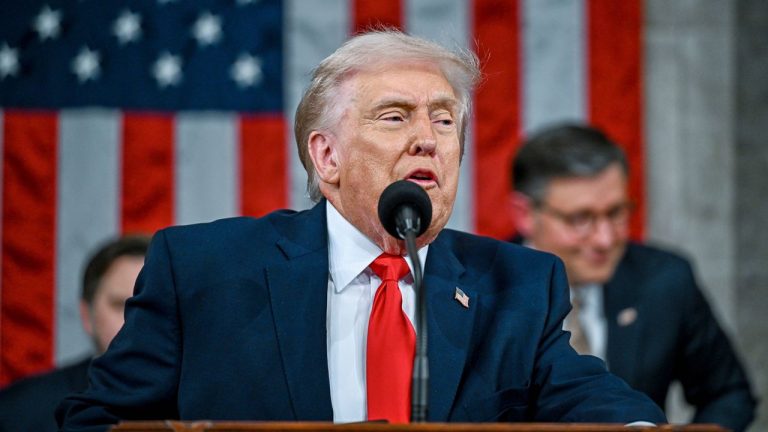
This shift was most visible during the most recent Kennedy Center Honors, when the sitting president hosted the ceremony—marking the first time a president had done so while in office. The event was widely viewed as a signal that the institution had entered a new era, one in which the White House played a more direct role in its public life.
Only after these developments did the most consequential announcement emerge.
A New Name, Approved Unanimously
Midway through the unfolding changes, it was revealed that the Kennedy Center’s board had voted unanimously to approve a new name for the institution.
According to White House Press Secretary Karoline Leavitt, the board—composed of prominent figures from business, culture, and public life—agreed to rename the venue The Donald J. Trump and The John F. Kennedy Memorial Center for the Performing Arts.
The decision, leadership said, was intended to recognize the role played by the current chairman in preventing what they described as financial ruin and physical destruction of the building.
Kennedy Center Vice President of Public Relations Roma Daravi described the vote as a reflection of “unequivocal bipartisan support” for the institution’s future, emphasizing continuity rather than replacement.
Reactions From Leadership
Kennedy Center President Richard Grenell has been among the most vocal defenders of the decision. He has repeatedly stated that without decisive intervention, the building would have been torn down entirely.
“When I arrived, people told us to demolish it and start over,” Grenell said in earlier remarks. “But that would have erased something that could never truly be replaced.”
Grenell described taking President Trump on a tour of the facility, showing him collapsing systems and structural damage that had gone largely unreported for years. According to Grenell, Trump made a swift decision to pursue renovation instead of demolition, pledging to secure the funding needed to save the landmark.
That choice, supporters argue, laid the groundwork for the Center’s financial rebound.
Trump’s Public Stance
President Trump himself has been careful to frame the name change as a decision made by the institution rather than by the White House. When asked earlier this month whether the entire Center should bear his name, he responded that the matter was for the board to decide.
At the Kennedy Center Honors, Trump emphasized the uniqueness of the venue, noting that its scale and design could never realistically be replicated today. He described it as a national treasure deserving preservation rather than replacement.
Those remarks were later cited by supporters as evidence that the president viewed his role as that of a steward rather than a rebrander.
Ongoing Debate in the Arts Community
Despite the unanimous board vote, reaction within Washington’s arts community has been mixed. Some artists and patrons have welcomed the infusion of funding and attention, arguing that financial stability is essential to artistic freedom.
Others worry that the Center’s evolving identity risks alienating performers and audiences who see the institution as a neutral cultural space. Concerns have been raised about leadership changes, programming priorities, and the broader symbolism of naming decisions.
These debates have played out publicly, reflecting broader national tensions over culture, politics, and public institutions.
Possible Additional Name Changes
The conversation may not be over. An amendment attached to pending funding legislation proposes renaming the Center’s opera house after First Lady Melania Trump, who serves as the Honorary Chair of the Board of Trustees.
The proposal, introduced by Rep. Mike Simpson of Idaho, passed committee by a narrow margin. Simpson described the move as recognition of the first lady’s appreciation for the arts.
However, the broader appropriations bill has not yet been finalized, leaving the proposal uncertain.
A Cultural Institution at a Crossroads
As renovations continue and fundraising efforts expand, the Kennedy Center stands at a pivotal moment in its history. Supporters see a revived institution, financially stronger and structurally secure. Critics see an unprecedented merging of culture and politics.
What remains clear is that the Center is no longer simply a backdrop for performances—it has become a symbol of how cultural institutions evolve in response to leadership, funding, and national debate.
Whether the changes will be viewed decades from now as preservation or transformation is a question that history has yet to answer.

Emily Johnson is a critically acclaimed essayist and novelist known for her thought-provoking works centered on feminism, women’s rights, and modern relationships. Born and raised in Portland, Oregon, Emily grew up with a deep love of books, often spending her afternoons at her local library. She went on to study literature and gender studies at UCLA, where she became deeply involved in activism and began publishing essays in campus journals. Her debut essay collection, Voices Unbound, struck a chord with readers nationwide for its fearless exploration of gender dynamics, identity, and the challenges faced by women in contemporary society. Emily later transitioned into fiction, writing novels that balance compelling storytelling with social commentary. Her protagonists are often strong, multidimensional women navigating love, ambition, and the struggles of everyday life, making her a favorite among readers who crave authentic, relatable narratives. Critics praise her ability to merge personal intimacy with universal themes. Off the page, Emily is an advocate for women in publishing, leading workshops that encourage young female writers to embrace their voices. She lives in Seattle with her partner and two rescue cats, where she continues to write, teach, and inspire a new generation of storytellers.