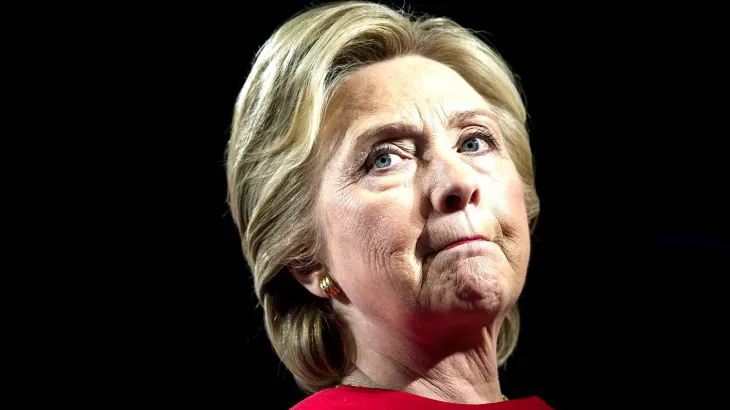
Hillary Clinton is sounding an alarm about the influence of TikTok and other social media platforms on young Americans’ views of the Israel–Palestine conflict, warning that fabricated or misleading videos are shaping public opinion and making constructive dialogue increasingly difficult.
Speaking at a New York City summit hosted by the Israeli newspaper Israel Hayom, the former secretary of state argued that a growing number of young people — including many she described as educated and politically aware — are forming their perspective on the Middle East based on content that is unreliable, distorted, or intentionally deceptive.
Clinton, who served as secretary of state under Barack Obama and remained a prominent figure in Democratic politics after her 2016 presidential run, said she has witnessed a major shift in how younger generations consume news. According to her, TikTok now sits at the center of that transformation.
“Smart, well-educated young people from our own country, from around the world—where were they getting their information?” she asked the audience. “They were getting their information from social media, particularly TikTok.”
Her remarks reflect growing concerns among policymakers, media analysts, and national security officials about the role of short-form video platforms in driving political narratives, especially during times of war or rapidly unfolding international crises. Clinton pointed specifically to the aftermath of the October 7 attacks and the subsequent Israeli military operations in Gaza as a moment when social media—rather than traditional news outlets—became the dominant information source for millions of young people.
She argued that this shift is not simply an evolution of media habits but a “serious problem” for both democratic societies and the ability of the public to understand historical context. According to Clinton, many of the videos circulating about Gaza are not just biased or incomplete but “totally made up.”
She pointed to the speed, visual intensity, and emotional charge of TikTok videos as key factors shaping perception, arguing that young viewers often accept such content at face value without questioning its authenticity, origins, or context.
“It’s a serious problem for democracy, whether it’s Israel or the United States,” she said. “It’s a serious problem for our young people.”
Struggling to Have a ‘Reasonable Discussion’
Clinton said she has attempted to engage young Americans in conversations about the conflict and the history behind it but has found those discussions increasingly difficult.
She did not name specific individuals she spoke with, but described repeated instances in which younger people lacked foundational historical knowledge, had little understanding of the events leading up to the conflict, and relied heavily on social media videos as their primary source of information.
“What they were being told on social media was not just one-sided,” she said. “It was pure propaganda.”
She added that misinformation was influencing not only students and activists but also young Jewish Americans, many of whom she said are viewing the conflict through online narratives rather than historical or political frameworks.
“It’s not just the usual suspects,” Clinton said. “It’s a lot of young Jewish Americans who don’t know the history and don’t understand.”
Her comments come at a time when polling has shown widening generational divides on U.S. policy toward Israel and Palestine. Young adults, particularly those under 30, have shown higher levels of sympathy toward Palestinians and stronger criticism of Israeli actions than older generations. Analysts have attributed this in part to social media trends, where raw images of destruction, casualties, and humanitarian crises in Gaza frequently go viral.
The Power—and Risk—of Short-Form Video
Clinton referenced recent research showing that more than half of young Americans now get their news primarily from social media. Short-form video platforms, with their fast-paced content and algorithm-driven feeds, have become a central source of political information.
“So just pause on that for a second,” she said. “They are seeing short-form videos, some of them totally made up, some of them not at all representing what they claim to be showing, and that’s where they get their information.”
Though she did not provide specific examples of videos she believed were fabricated or misleading, her comments echoed broader concerns expressed by national security officials about the platform’s susceptibility to misinformation, doctored footage, AI-generated content, and coordinated propaganda campaigns.
Clinton emphasized that the issue extends beyond individual videos to the way platform algorithms prioritize highly emotional or sensational content. This dynamic, she argued, makes it harder for factual or nuanced reporting to gain traction.
Echoes from Other Former Officials
Clinton is not the only former Obama administration official expressing concerns about TikTok’s influence on perceptions of the conflict. Sarah Hurwitz, a former White House speechwriter, recently made similar comments at a separate summit hosted by the Jewish Federations of North America.
“You have TikTok just smashing our young people’s brains all day long with video of carnage in Gaza,” Hurwitz said. “And this is why so many of us can’t have a sane conversation with younger Jews.”
Her remarks highlighted a growing frustration among older policymakers and community leaders who feel their attempts to provide context are being drowned out by emotionally charged online narratives.
A Growing Divide in Media Consumption
Clinton cited statistics from research published earlier this year indicating that 54 percent of Americans now consume news through platforms like TikTok, Facebook, YouTube, and X — surpassing television and approaching parity with traditional news sites and apps.
Media analysts argue that this shift marks one of the most significant transformations in the information ecosystem in decades. The Reuters Institute, which conducted the study, described the trend as both a natural evolution of digital habits and a potential vulnerability.
The study’s lead author, Nic Newman, said the rise of social video creates an environment where click-driven and algorithmic content is easily manipulated. According to Newman, bad actors can bypass traditional journalism in favor of partisan personalities and influencers who provide simplified, opinionated interpretations rather than verified facts.
This dynamic, Clinton suggested, is contributing to a public increasingly shaped by fragmented and unreliable information sources, making it harder to build consensus or even agree on basic facts.
A Broader Debate About TikTok’s Role
Clinton’s remarks also intersect with broader debates in Washington about TikTok’s ownership, data practices, and susceptibility to foreign influence. Lawmakers across the political spectrum have expressed concern that the platform’s algorithms can be manipulated to shape public opinion on sensitive geopolitical issues.
While her comments focused specifically on the Israel–Palestine conflict, they add fuel to ongoing questions about the impact of social media on democratic societies, civic engagement, and national security.
For Clinton, the core concern is not merely misinformation but the erosion of historical literacy and contextual thinking among younger generations. When the most emotionally provocative videos become the primary source of information, she argued, meaningful dialogue becomes nearly impossible.
“We are losing the ability to talk to each other,” she warned.
The Challenge Ahead
Clinton did not propose specific policy solutions during her remarks, but her warnings underscore the challenges facing educators, political leaders, and journalists as they attempt to navigate a rapidly changing media landscape.
Her comments point to a growing intergenerational divide — not only in foreign policy views but also in the sources trusted to understand the world.
As the conflict in Gaza continues to dominate global headlines and digital platforms, the debate over social media’s influence is likely to intensify. For Clinton and others raising the alarm, the question is no longer whether TikTok shapes opinion, but how deeply—and with what consequences for the future of public discourse.

Emily Johnson is a critically acclaimed essayist and novelist known for her thought-provoking works centered on feminism, women’s rights, and modern relationships. Born and raised in Portland, Oregon, Emily grew up with a deep love of books, often spending her afternoons at her local library. She went on to study literature and gender studies at UCLA, where she became deeply involved in activism and began publishing essays in campus journals. Her debut essay collection, Voices Unbound, struck a chord with readers nationwide for its fearless exploration of gender dynamics, identity, and the challenges faced by women in contemporary society. Emily later transitioned into fiction, writing novels that balance compelling storytelling with social commentary. Her protagonists are often strong, multidimensional women navigating love, ambition, and the struggles of everyday life, making her a favorite among readers who crave authentic, relatable narratives. Critics praise her ability to merge personal intimacy with universal themes. Off the page, Emily is an advocate for women in publishing, leading workshops that encourage young female writers to embrace their voices. She lives in Seattle with her partner and two rescue cats, where she continues to write, teach, and inspire a new generation of storytellers.