In an era marked by geopolitical uncertainty, fractured alliances, and growing distrust in democratic institutions, a packed audience at a prestigious Ivy League campus gathered for a rare moment of reflection on leadership, diplomacy, and the cost of political life. The event was framed not as a partisan rally, but as a candid conversation about power, mistakes, and the long arc of public service in a rapidly changing world.
The discussion unfolded during a long-running lecture series focused on international affairs, where global challenges such as disinformation, authoritarianism, and the erosion of trust between nations took center stage. With humor and frankness, the speaker addressed how modern politics has shifted from deliberation to constant conflict, warning that democracies are increasingly vulnerable when truth itself becomes contested.
Early in the conversation, the audience was drawn in by a reflection on regret — not the kind rooted in personal failure, but one shaped by history. Asked what she would change if given the opportunity to revisit her career, the speaker paused briefly before offering a sharp, self-aware response that immediately energized the crowd: she would change the outcome of the 2016 U.S. presidential election — specifically, by winning it. The remark, delivered with levity, acknowledged the enduring impact of that moment while underscoring the unresolved questions it left behind.
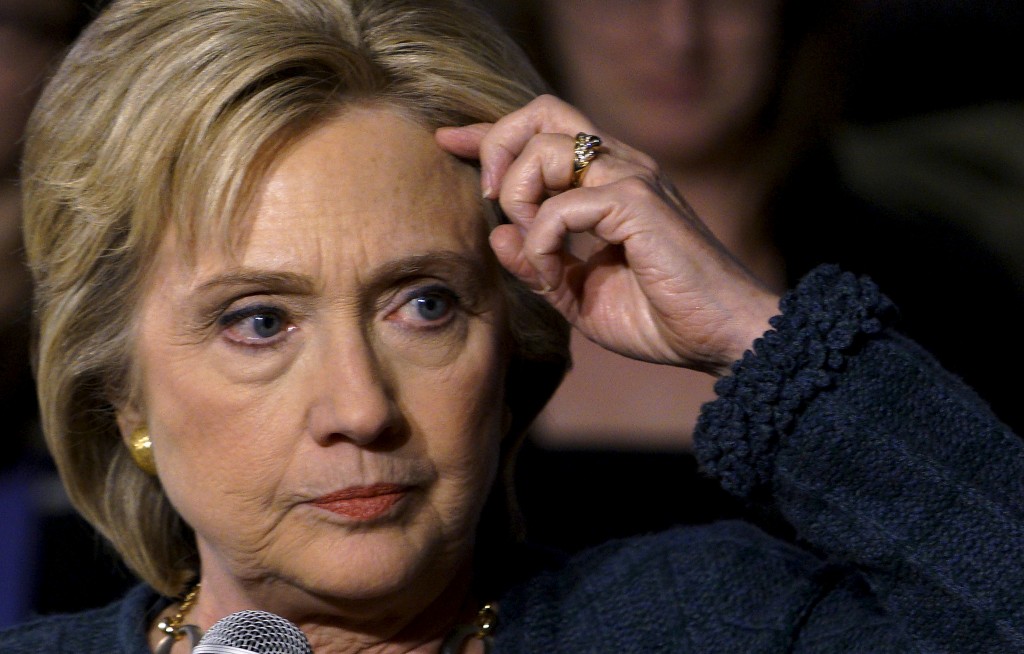
Only midway through the event did the full weight of the speaker’s identity come into focus. The lecture was delivered by Hillary Rodham Clinton, former U.S. secretary of state, U.S. senator, first lady, and Democratic presidential nominee — a figure whose career spans more than five decades at the highest levels of American and global politics.
Clinton, appearing as part of Brown University’s 104th Ogden Memorial Lecture on International Affairs, used the platform not to relitigate old campaigns, but to emphasize the importance of diplomacy as a human endeavor rather than a transactional one. She stressed that relationships between nations, much like relationships between people, require patience, empathy, and sustained engagement — especially across ideological divides.
“Everything cannot be treated like a deal to be won or lost,” she said, arguing that diplomacy depends on understanding motivations, history, and cultural context. She urged students and young leaders to talk about politics not in terms of winners and losers, but in terms of what is truly at stake for societies and institutions.
Her reflections on foreign policy were grounded in personal experience, including encounters with world leaders whose values sharply conflicted with her own. Clinton spoke candidly about her interactions with Russian President Vladimir Putin, describing him as dangerous and deeply resistant to democratic norms. Despite those challenges, she said she still attempted to build channels of communication, recalling a moment during a visit to his residence outside Moscow that briefly humanized an otherwise rigid relationship.
That anecdote served as a broader lesson: dialogue does not guarantee success, but the absence of dialogue guarantees failure.
Turning to current global conflicts, Clinton addressed the fragile ceasefire between Israel and Hamas, praising diplomatic efforts that brought temporary calm while cautioning that long-term peace would require sustained international cooperation. She emphasized that inconsistent U.S. policy — shifting from week to week — weakens alliances and creates opportunities for adversaries to exploit uncertainty.
“When allies don’t know where you stand, they start hedging,” she warned, noting that strategic ambiguity may serve short-term politics but undermines long-term stability.
A significant portion of the discussion focused on disinformation, which Clinton described as one of the most dangerous threats facing modern democracies. She warned that coordinated campaigns — both foreign and domestic — are deliberately designed to inflame divisions, erode trust in elections, and destabilize democratic systems from within.
“Disinformation is the successor to propaganda,” she said, adding that societies have not yet developed adequate defenses against its scale and sophistication. She argued that combating it requires not only government action, but civic responsibility, media literacy, and institutional accountability.
Clinton also spoke directly to women considering careers in public service, acknowledging the unique pressures they face in an era of relentless online scrutiny. She advised them to take criticism seriously, but not personally, and to recognize that attacks often say more about the attacker than the target.
Throughout the lecture, Clinton balanced realism with cautious optimism. While she acknowledged democratic backsliding and global instability, she expressed confidence in the next generation’s ability to confront those challenges — provided they remain committed to truth, dialogue, and institutional integrity.
The event concluded with sustained applause, reflecting not just admiration for a singular career, but recognition of the broader questions raised about leadership in turbulent times. Rather than offering simple answers, the lecture left the audience with a clear message: democracy is not self-sustaining, alliances require care, and the pursuit of truth remains a responsibility — not a given.
In a political climate often dominated by outrage and immediacy, the evening served as a reminder that history is shaped not only by victories and defeats, but by the willingness to engage, reflect, and persist.