“My Son Sold My Husband’s Rolex”: How a Stolen Watch Revealed My $3 Million Fortune
My son told me to stop whining the same morning I discovered my husband had been hiding almost three million dollars from me.
I was standing at the sink in my tiny Chicago bungalow, hands still wet from dishwater, when the truth dropped between us like a plate shattering on tile. Mike leaned against my refrigerator like a bored teenager instead of a forty-two-year-old man and said it as casually as commenting on the weather:
“Quit whining, Mom. It’s already sold. I needed that money for my trip.”
The fluorescent light buzzed. The radiator hissed. Somewhere a Blue Line train rattled past on tracks three blocks over. My husband Frank’s favorite coffee mug trembled in my soapy grip.
That was the moment everything tilted.
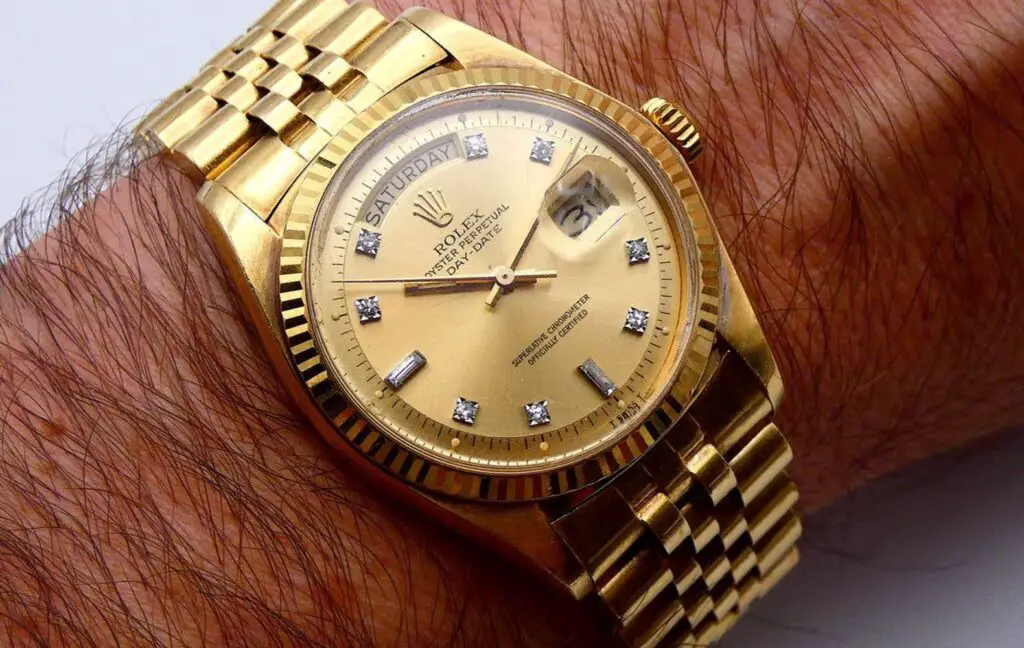
Six months earlier, I had buried my husband of forty-three years. Frank left me two things: a silence so loud it rang in my ears at night, and his 1970s Rolex Submariner—steel worn smooth from decades on his wrist, bought with overtime pay when Mike was born.
When the hospital handed me his things in a plastic bag, I slipped that watch on and never took it off. Every morning I wound it the way he’d taught me, doing that ritual while the same cheap coffee maker sputtered to life.
It was the last piece of him that moved.
And my son had pawned it.
The Watch That Started Everything
“You sold your father’s watch?” My voice came out thin, like it belonged to someone else.
Mike rolled his eyes. “God, Mom, don’t make this a thing. It was just sitting there in the dish next to your keys.”
“Because I take it off when I do dishes,” I said. “Because I don’t want bleach on the band.”
He shrugged. “You kept forgetting to put it back on. I figured you were finally moving on.”
Behind Mike, Ashley—my daughter-in-law with highlighted hair and manicured nails that screamed spa packages—didn’t look up from her phone.
“Honestly, Dorothy,” she said, still scrolling. “Clinging to material stuff isn’t healthy. Frank wouldn’t want you stuck in the past.”
Since the funeral, Ashley had been telling me what Frank would or wouldn’t want. Every sentence started with his name and ended with me giving something up.
“How much?” I asked.
Mike checked his gleaming Apple watch. “Eight hundred. Not bad for something that old.”
Eight hundred dollars. Frank had worn that watch through layoffs and promotions, through parent-teacher conferences and the morning he died at his desk, thinking he had the rest of the week.
“It was worth at least three thousand,” I said.
Ashley snorted. “In what universe? It wasn’t even keeping time.”
Because Frank wasn’t here to wind it.
“Where?” I asked. “Which pawn shop?”
Mike sighed like I was asking for a kidney instead of basic information. “Golden State Pawn, over on Milwaukee. Guy practically kissed my hand when he saw the brand.”
“I’m going to get it back,” I said.
“Good luck with that.” Mike grabbed his keys. “We fly out tomorrow. Ashley’s been planning this Italy thing forever.”
After they left, the house went quiet—not the sad, soft hush of an empty recliner, but a hard, heavy quiet. I had been a bank manager for forty years. I’d spent my life reading fine print and telling grown men they couldn’t withdraw from accounts that didn’t belong to them.
I knew the difference between letting go and being robbed.
The Pawn Shop Discovery
Golden State Pawn looked exactly like you’d expect—glass cases crowded with guitars, cameras, tarnished jewelry, and a sad row of wedding rings that looked like they’d heard every story in the city.
Danny behind the counter had sleeve tattoos and tired eyes. “You here about the Rolex?” he asked when I walked in.
The question knocked the breath out of me. “How did you know?”
“Your son warned me you might show up. Said you were having a hard time letting go.”
Of course he had.
“That watch belonged to my husband,” I said. “He wore it for forty-three years.”
Danny held up his hands. “Lady, he had ID, knew the serial number, signed for it. Far as Illinois is concerned, that made it his to sell.”
“How much to buy it back?”
His shoulders slumped. “That’s the thing. I can’t sell it to you. Because it’s gone. A guy came in first thing this morning. Paid cash. Took it right off the display.”
A stranger was walking around Chicago with my husband’s watch.
“I’m really sorry,” Danny said. “But when I was cleaning it for display, I found something weird.”
He disappeared into the back and returned with a small manila envelope.
“When I popped the back off to check the movement, I found this. Someone had a jeweler put in a false panel years ago. There was a little cavity between the metal and the mechanism.”
He slid the envelope across the glass.
Inside was a single piece of yellowed paper, folded into a neat rectangle. The handwriting hit me first—Frank’s careful block letters that had filled out insurance forms and tucked notes into my purse before doctor appointments.
At the top: Dorothy’s birthday — July 15, 1955. The day I knew I’d marry her.
My actual birthday was in May. July 15th was the night we met at a summer dance in Grant Park when he spilled his drink on my shoes.
Under that was a string of letters and numbers: SS4457 CH0815DS
It looked like nonsense. Or a password.
The Digital Trail
That night, instead of watching crime shows, I sat at Frank’s old laptop. After forty years in banking, I knew patterns when I saw them.
I typed the code into a search engine and found Secure Solutions Investment Management—a clean, quiet site with a client login box.
With fingers that didn’t feel connected to my hands, I typed SS4457CH0815DS into the Client Number field.
Client number recognized. Please enter password.
What would Frank have chosen? I tried our anniversary, our address, his Social Security number. All declined.
Then I looked at the paper again: The day I knew I’d marry her.
Not my birthday. His memory of watching me dance in soda-stained sandals and deciding he wanted to spend his life apologizing.
I typed 071555 and hit enter.
The screen flickered, then a dashboard appeared:
Account Holder: Frank Sullivan Primary Beneficiary: Dorothy Sullivan Current Balance: $2,847,093.67
Two million, eight hundred forty-seven thousand, ninety-three dollars and sixty-seven cents.
My first reaction wasn’t joy. It was fury.
Forty-three years of clipping coupons, buying store-brand cereal, patching Frank’s work shirts instead of replacing them. Sleepless nights when the plant cut hours, careful conversations about whether we could afford to help Mike with car payments.
All while my husband stashed away nearly three million dollars.
Frank’s Final Message
The account history went back decades. The first deposit was 1982—$5,000 labeled “Initial inheritance investment.” Frank’s father had died the year before, leaving us what I thought was a small inheritance.
Apparently there had been another, much bigger portion.
Small, regular deposits followed for twenty-five years. Then bigger numbers: ten thousand, twenty-five thousand, fifty thousand, with memos like “Real estate liquidation” and “Property sale.”
Beneath the transactions was a tab I hadn’t noticed: Messages. One unread.
For Dorothy — emergency only.
I clicked. A video player loaded, and frame by frame, my husband’s face appeared.
“Dottie,” he said, and my heart clenched. “If you’re watching this, it means I’m not there to tell you over spaghetti like I planned. And it means something has gone very wrong with Mike.”
The room tilted.
“I always hoped you’d never need to know about this account,” Frank continued. “The money isn’t really mine. It started with my father—he lived through the Depression, lost everything twice. When he died, he left me money he hadn’t told anyone about. For emergencies. For protecting the family if the bottom fell out.”
He looked straight into the camera. “I used my training to grow it. Nothing illegal. But I kept it separate so it would always be there if you needed it. And I think you’re going to need it because of Mike.”
Frank leaned closer. “I’m not ready to put everything in this video, but I’ve hired someone I trust—a private investigator named Thomas Chen. If you ever feel like Mike is pushing too hard, like Ashley is speaking for you more than with you, call Thomas. He has everything.”
My husband’s final warning: “You weren’t holding me down. You were holding up the ceiling. I built all of this using information he bragged about when he thought we weren’t listening. If Mike ever turns on you, remember: you are not paranoid. You are not crazy. You are paying attention.”
The Investigation
Frank’s filing cabinet revealed Thomas Chen’s business card and a stack of reports clipped together behind a folder marked PRIVATE in red ink.
The first line made me sit down: Per your request, I have completed a preliminary investigation into the financial activities of your son, Michael Sullivan.
Online gambling accounts. Offshore betting sites. Approximate debt: $180,000.
Multiple high-interest loans using inflated income statements.
Inquiries to estate attorneys about contesting wills, power of attorney, elder care facilities.
Frank hadn’t been paranoid. He’d been careful.
When I called Thomas Chen, he was younger than expected—clean suit, clean haircut, the look of someone who’d seen it all.
“The short version?” he said in his downtown office. “Your husband was smart to be worried.”
Thomas spread photos and documents across his desk like a doctor with X-rays. Screenshots of gambling accounts. Credit reports with red flags. Email transcripts of Mike asking attorneys about challenging wills and proving an elderly parent incompetent.
“I recorded audio the last time they were at your house,” Thomas said. “Frank had cameras installed in common areas last year.”
He pressed play on his laptop. My kitchen appeared on screen, slightly warped from a ceiling camera angle. There I was washing dishes, then leaving the room.
As soon as the door closed, Ashley leaned in: “It’s getting worse. She asked me twice what day it was.”
“I told you she’s slipping,” Mike replied. “If we don’t get ahead of this, some court-appointed stranger will control everything.”
“Better you than some random guardian,” Ashley agreed. “The more confused she sounds, the easier it is to prove she can’t manage her money.”
They both laughed.
Thomas paused the recording. “Frank compiled enough evidence to shut down any competency challenge before it started.”
The Hidden Truth About the Money
Frank had left one more envelope with Thomas—a letter explaining everything:
Every apartment complex, every warehouse I bought in the last twenty years? I only knew about them because Mike bragged. He’d come over after a “big deal” and tell us about neighborhoods about to turn, insider tips from buddies, sure-thing properties he’d flip.
I used that information with Dad’s inheritance money. If Mike was right about a neighborhood, I bought there too. When he made profit and rolled it into the next thing, I took my profit and stashed it in Secure Solutions.
Mike thought he was the shark. He never noticed the remora.
This money is yours to live on, yours to give away, yours to use however you see fit. What you do with that fact is up to you.
The Confrontation and Consequences
Two days after Mike and Ashley returned from Italy, my doorbell rang at 8 AM. A woman in an expensive navy suit and a man with a tablet stood on my porch—attorneys representing my son in “family legal matters.”
“Your son would like to help shoulder the burden,” the woman said smoothly. “We’ve prepared a document granting Michael power of attorney over your finances.”
There it was. “And if I say no?”
Her eyes cooled. “Michael is prepared to file a petition to evaluate your competency. Judges take elder financial abuse very seriously.”
“You know what’s interesting about threats?” I asked. “They only work if the person you’re threatening doesn’t have better lawyers than you do.”
I closed the door and called Thomas. “It’s time. Let’s use the wall.”
The next week was signatures and notarized stamps. We updated my will, created a bypass trust, filed preemptive affidavits from my doctor and neighbors attesting to my mental competence.
Thomas forwarded his reports to the FBI and state’s attorney.
The morning three black SUVs pulled up at Mike’s house, I was making oatmeal. Through my window, I watched agents in bright yellow jackets walk up his driveway with purpose.
My phone rang. Mike.
“What did you do?” he demanded, voice high and panicked.
“I protected myself,” I said, stirring oatmeal. “Something you should have done instead of betting our family on football games.”
“You turned me in? To the feds?”
“Frank gathered the evidence. Thomas delivered it. I just signed my name.”
In my window, I watched agents carry out computers and file boxes. Ashley came down in handcuffs, still yelling about lawyers.
“How much is there?” Mike blurted. “In the account.”
Two point eight million. A number that had been a secret and now felt like a shield.
“Enough,” I said. “Enough that I never have to sign anything over to a man who looked at me and saw a walking ATM.”
Justice and Rebuilding
The trials were swift. Bank fraud, tax evasion, attempted elder financial exploitation. Ashley got eighteen months. Mike got two years in federal prison.
I split the Secure Solutions money in half. Half stayed in my name. The other half funded something Frank had been quietly planning—a new pediatric wing at Chicago Children’s Hospital.
When they unveiled the plaque reading “The Frank and Dorothy Sullivan Pediatric Wing,” I thought about purpose versus revenge. Standing there watching nurses wheel little patients past fish tanks paid for by that money, it felt like Frank’s final gift had found its proper home.
The Long Road Back
Mike wrote from prison—three pages of notebook paper that didn’t apologize until the third page. He talked about feeling lied to, discovering his parents had money they’d never mentioned, convincing himself he was taking what he deserved.
I’m sorry. Not because I got caught. I’m sorry because I looked at my own mother and saw a problem to solve instead of a person to protect.
When visiting day came, I brought my granddaughter Melissa. Mike looked smaller in the orange jumpsuit, the cocky swagger sanded down.
“I heard myself on those recordings,” he said quietly. “Talking about you like you were in the way. I didn’t recognize that man, but I made him.”
I set boundaries that day: “I’m not taking you out early. I’m not putting you back in my will. But I will write you sometimes. Not about money—about the Cubs, about Melissa’s students, about whatever book I’m reading.”
“You will not ask me for money, ask me to talk to lawyers, or ask me to feel sorry for you. If you start down that path, the letters stop.”
He nodded. “Yes, ma’am.”
The ma’am made my eyes sting in a way sorry hadn’t.
The Watch Returns
Three weeks later, Thomas called me downtown to meet someone—Richard Torres, a man in his sixties with military posture and eyes that had seen too much.
“Your husband hired me twenty years ago,” he said, setting a blue velvet box on the desk.
Inside was Frank’s watch.
“Frank anticipated someone might try to get to the watch after he died,” Thomas explained. “He set up an alert with Golden State. If anything matching its serial number came through, they’d call Richard.”
Richard had bought it before anyone else could. But there was more—he pressed a tiny spot near the band, and a second hidden panel opened, revealing a micro SD card.
“Your husband’s second safety net,” Richard said.
The card contained drafts of legal documents, audio recordings, video files, and a folder labeled “If Mike Files”—everything needed to automatically transfer Mike’s assets to charity if he challenged my competency.
Frank had built a wall so solid that when Mike tried to climb it, he would only succeed in destroying himself.
Healing and Moving Forward
Today, I live in a lakefront condo with a view of Chicago’s skyline. I volunteer at the hospital wing Frank and I funded together. My granddaughter Melissa visits every Sunday with her fiancé Jacob, a resident who works in the same pediatric ward.
Mike was released after serving his time. He works maintenance now, fixing boilers and painting walls. We have dinner once a month—takeout on paper plates while we talk about weather and baseball. He shows up when he says he will. The trust is rebuilding slowly.
I wear Frank’s watch every day, winding it each morning like a prayer. Sometimes I think about the stranger who briefly owned it, who had no idea he was carrying a key to a three-million-dollar fortress built from love and careful planning.
The Real Lesson
If you’ve read this far, there’s something I need you to hear: You are not paranoid. You are not crazy. You are not “overreacting” because you notice when something in your life stops adding up.
If your partner’s stories don’t match their patterns, pay attention. If your heart races when they pick up their phone, pay attention.
If family members start speaking for you more than with you, pay attention.
Frank spent two years building a wall of legal protection around me because he saw what I couldn’t—that the son we raised was planning to treat me like a problem to solve rather than a person to protect.
The greatest love stories aren’t about fireworks and violins. They’re about paperwork and contingency plans and a worn steel watch that hides a map to safety.
Sometimes the most loving thing you can do is refuse to be anyone’s emergency fund—financial or emotional. Sometimes the kindest boundary is the one that lets someone hit the bottom they’ve been digging toward.
My name is Dorothy Sullivan. I am seventy-four years old. This is my story of how a stolen watch revealed not just hidden money, but hidden strength I never knew I had.
If any part of this sounds familiar—if you’ve ever had someone look at you and see an obstacle instead of a person—know this: you are allowed to protect yourself. You are allowed to set boundaries so strong that even blood can’t cross them without permission.
And if you’re lucky enough to discover that someone loved you enough to build a safety net you never knew about, walk into whatever room it bought and remember: you were always worth that kind of planning.
The watch still keeps perfect time.

Emily Johnson is a critically acclaimed essayist and novelist known for her thought-provoking works centered on feminism, women’s rights, and modern relationships. Born and raised in Portland, Oregon, Emily grew up with a deep love of books, often spending her afternoons at her local library. She went on to study literature and gender studies at UCLA, where she became deeply involved in activism and began publishing essays in campus journals. Her debut essay collection, Voices Unbound, struck a chord with readers nationwide for its fearless exploration of gender dynamics, identity, and the challenges faced by women in contemporary society. Emily later transitioned into fiction, writing novels that balance compelling storytelling with social commentary. Her protagonists are often strong, multidimensional women navigating love, ambition, and the struggles of everyday life, making her a favorite among readers who crave authentic, relatable narratives. Critics praise her ability to merge personal intimacy with universal themes. Off the page, Emily is an advocate for women in publishing, leading workshops that encourage young female writers to embrace their voices. She lives in Seattle with her partner and two rescue cats, where she continues to write, teach, and inspire a new generation of storytellers.