NOTE: VIDEO AT THE END OF ARTICLE
House Minority Leader Hakeem Jeffries sparked controversy this week after pledging to expose the identities of Immigration and Customs Enforcement (ICE) agents involved in recent deportation efforts—despite mounting concerns over their safety.
During a press briefing on Thursday, Jeffries criticized what he called “aggressive overreach” by federal immigration authorities. “ICE agents participating in these actions cannot expect to remain anonymous. The American people deserve transparency,” he declared.
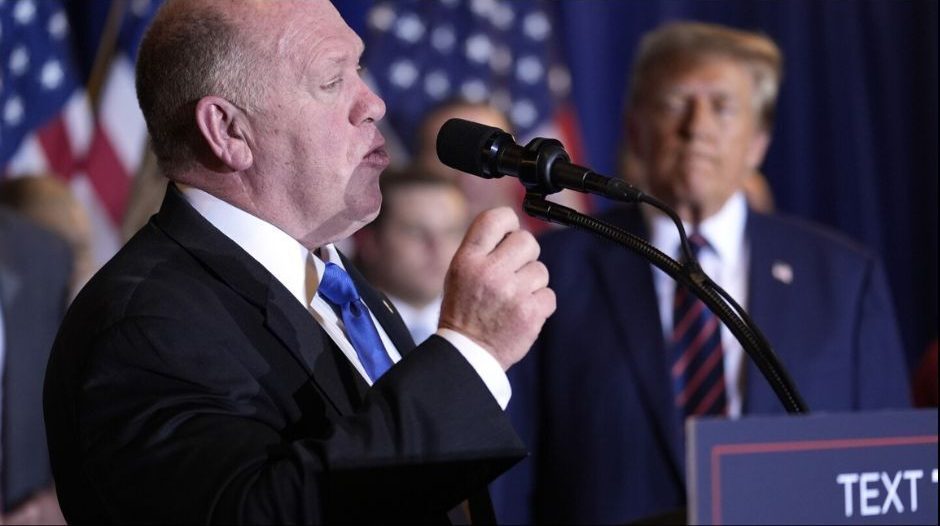
Many ICE agents wear masks during field operations, a precaution taken to protect themselves and their families from harassment and threats—some of which have included credible death threats. Former ICE Director and current White House border advisor Tom Homan addressed the issue last week.
“The doxing of ICE officers is at an all-time high,” Homan warned. “They wear masks not to intimidate, but to protect themselves. This job is dangerous, and it’s only getting worse.”
Despite those warnings, Jeffries dismissed safety concerns and compared ICE tactics to historical examples of authoritarian force. “This isn’t the 1930s. These actions resemble those of secret police in authoritarian regimes,” he said, drawing parallels to groups like the Gestapo and Soviet NKVD.
Jeffries’ remarks come amid growing political tension over immigration enforcement. He specifically referenced the recent arrest of Rep. LaMonica McIver (D-NJ), who faces felony charges after allegedly assaulting agents during an altercation at an ICE facility. Video footage from the incident shows McIver and others forcing their way inside the building, escalating a standoff that led to her arrest.
Jeffries defended McIver’s actions, framing them as a response to federal misconduct. “We have to deal with the human consequences of these policies before we can address broader reforms,” he said.
The Minority Leader’s vow to name masked agents has alarmed law enforcement advocates and civil liberties groups alike, many of whom argue that doxing government personnel—regardless of political disagreement—puts lives at risk and undermines the rule of law.
As deportation enforcement ramps up across the country, Jeffries’ statement is likely to intensify the debate over how far elected officials should go in challenging federal immigration policy—and whether transparency should ever come at the cost of safety.
https://twitter.com/Bubblebathgirl/status/1930000645286965400
James Jenkins is a celebrated Pulitzer Prize-winning author whose work has reshaped the way readers think about social justice and human rights in America. Raised in Atlanta, Georgia, James grew up in a community that instilled in him both resilience and a strong sense of responsibility toward others. After studying political science and creative writing at Howard University, he worked as a journalist covering civil rights issues before dedicating himself fully to fiction. His novels are known for their sharp, empathetic portraits of marginalized communities and for weaving personal stories with broader political realities. Jenkins’s breakout novel, Shadows of Freedom, won national acclaim for its unflinching look at systemic inequality, while his more recent works explore themes of identity, resilience, and the fight for dignity in the face of oppression. Beyond his novels, James is an active public speaker, lecturing at universities and participating in nonprofit initiatives that support literacy and community empowerment. He believes that storytelling is a way to preserve history and inspire change. When not writing, James enjoys jazz music, mentoring young writers, and traveling with his family to explore cultures and stories around the world.