NOTE: VIDEO AT THE END OF ARTICLE
Climate activist Greta Thunberg was among several individuals detained by Israeli forces after participating in a humanitarian mission aimed at delivering aid to Gaza. The vessel, organized by the Freedom Flotilla Coalition (FFC), was intercepted by the Israeli navy in international waters, citing security concerns related to the ongoing blockade of Gaza.
Thunberg and other passengers—including journalists, European Parliament member Rima Hassan, and international aid workers—were detained and later released. The activist released a video statement beforehand, accusing Israeli forces of forcibly boarding the ship and describing the incident as a “kidnapping.” The FFC echoed this claim, condemning the interception as a violation of international law and stating that vital supplies such as food, medical kits, and baby formula were confiscated.
Israel’s Foreign Ministry defended the operation, referencing its long-standing naval blockade of Gaza and emphasizing that all individuals on board were treated appropriately. The blockade has been in place since 2007, following Hamas’s rise to power in Gaza, and has been further tightened since a deadly Hamas-led attack on Israel in October 2023.
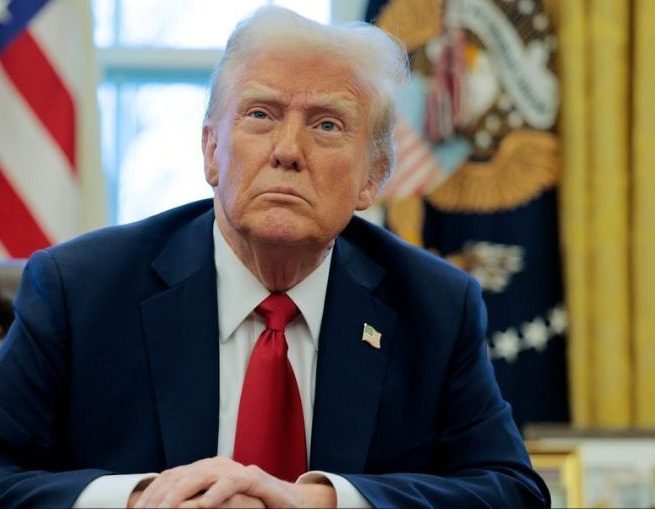
Former President Donald Trump addressed the situation during a press appearance. He questioned Thunberg’s version of events and expressed skepticism about the kidnapping claim. Describing Thunberg as “a peculiar individual,” Trump stated:
“I think Israel has enough problems without having to kidnap Greta Thunberg.”
His remarks were met with backlash from some human rights advocates and Thunberg supporters, who argued the former president downplayed the humanitarian nature of the flotilla’s mission.
Israel’s government issued a brief public response online, asserting that passengers had been treated humanely and that the “show is over,” dismissing the criticism surrounding the operation.
In contrast, Thunberg used her social media platform to renew calls for international attention on Gaza, referring to the ongoing conflict as a “livestream genocide.” She urged global leaders and civil society to take stronger action in defense of civilians affected by the conflict.
The incident has reignited global debate about humanitarian access to Gaza, the legality of the blockade, and the broader ethics of political responses to activism. As international observers continue to monitor the region, this episode underscores the complex and deeply polarized nature of the Israeli-Palestinian conflict.

James Jenkins is a celebrated Pulitzer Prize-winning author whose work has reshaped the way readers think about social justice and human rights in America. Raised in Atlanta, Georgia, James grew up in a community that instilled in him both resilience and a strong sense of responsibility toward others. After studying political science and creative writing at Howard University, he worked as a journalist covering civil rights issues before dedicating himself fully to fiction. His novels are known for their sharp, empathetic portraits of marginalized communities and for weaving personal stories with broader political realities. Jenkins’s breakout novel, Shadows of Freedom, won national acclaim for its unflinching look at systemic inequality, while his more recent works explore themes of identity, resilience, and the fight for dignity in the face of oppression. Beyond his novels, James is an active public speaker, lecturing at universities and participating in nonprofit initiatives that support literacy and community empowerment. He believes that storytelling is a way to preserve history and inspire change. When not writing, James enjoys jazz music, mentoring young writers, and traveling with his family to explore cultures and stories around the world.