A senior figure long associated with the MAGA movement has issued a rare rebuke of federal authorities following the fatal shooting of a protester during an immigration enforcement operation in Minneapolis, warning Americans on both sides of the political divide that they are being driven toward violent conflict by selective outrage and partisan loyalty.
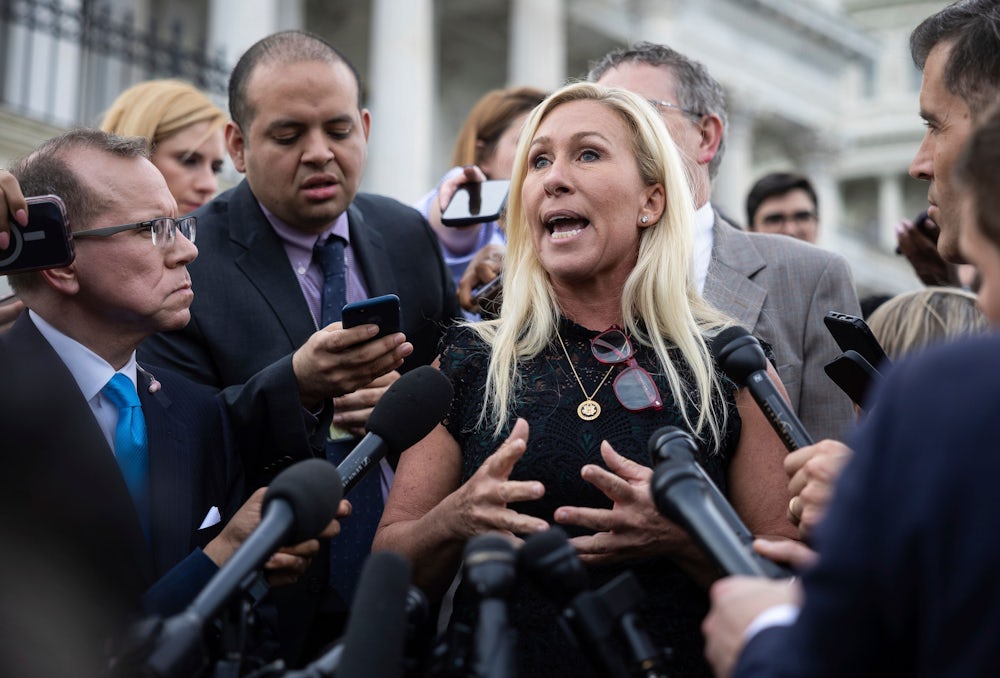
In a series of statements posted Sunday, the former Georgia congresswoman urged supporters of former President Donald Trump — as well as critics of federal immigration policy — to “take off their political blinders” and examine the facts of the case without ideological filters. She argued that deeply polarized reactions to the killing reflected a dangerous pattern in which Americans excuse or condemn violence based solely on who the victim is perceived to be.
Her comments came amid escalating tensions in Minneapolis, where protests, clashes with law enforcement, and disputes between state and federal officials have intensified following the second fatal shooting involving federal agents in less than three weeks.
The Shooting and Competing Narratives
The individual at the center of the controversy was Alex Pretti, a 37-year-old Minneapolis resident who was shot and killed by a Department of Homeland Security officer during a protest connected to federal immigration enforcement operations.
Video footage from multiple angles shows Pretti filming federal officers in the street as tensions escalated between agents and demonstrators. In the recordings, officers are seen deploying pepper spray against a woman who falls to the ground. Pretti appears to move toward her, attempting to help her up, before being sprayed himself and forced to the pavement by several officers.
Seconds later, a gunshot is heard, followed by a rapid succession of additional shots. Pretti collapses and does not get back up.
Despite the footage, the Trump administration has characterized the incident as an attempted assassination of federal agents, labeling the act “domestic terrorism.” Officials have stated that Pretti was carrying a firearm at the time of the encounter, though they have not publicly demonstrated that the weapon was drawn or pointed at officers before the shooting.
Greene Breaks With MAGA Orthodoxy
In her statement, Marjorie Taylor Greene made clear that her criticism did not represent opposition to border enforcement or law enforcement in general. She reiterated her long-held support for strict immigration policy and for police officers performing their duties.
However, she emphasized that support for law enforcement does not require abandoning constitutional principles.
“I unapologetically support the Second Amendment,” Greene wrote. “Legally carrying a firearm is not the same as brandishing a firearm.”
She also rejected the notion that filming police or federal agents constitutes criminal behavior, stating that peaceful protest and documentation of law enforcement actions are protected rights.
“There is nothing wrong with legally, peacefully protesting and videoing,” she added.
A Hypothetical That Cut Across Party Lines
Greene went further, asking her audience — particularly fellow MAGA supporters — to imagine the incident occurring under reversed political circumstances.
She referenced the federal response to the January 6 Capitol riot, during which hundreds of Trump supporters were arrested in subsequent FBI investigations. Greene argued that many on the right reacted with outrage to what they viewed as overly aggressive tactics against individuals they considered peaceful participants.
She then posed a hypothetical scenario in which a conservative supporter was filming a federal arrest, attempted to help a woman who had been pushed to the ground, was forcibly restrained, disarmed, and ultimately shot dead by federal agents.
“What would have been our reaction?” Greene asked.
Her conclusion was stark: Americans are being manipulated into reflexive outrage based on identity rather than facts, creating conditions ripe for widespread civil unrest.
“You are all being incited into civil war,” she warned. “Yet none of it solves the real problems we all face, and tragically people are dying.”
Growing Tensions in Minneapolis
Pretti’s death has further destabilized an already volatile situation in Minneapolis. Earlier this month, another 37-year-old woman, Renee Nicole Good, was killed in a separate incident involving federal agents, making this the second fatal encounter in under three weeks.
Protests have grown larger and more confrontational, with demonstrators accusing federal authorities of operating without transparency or accountability. State officials, meanwhile, have expressed frustration over being sidelined during critical moments following the shooting.
Minneapolis Police Chief Brian O’Hara said Sunday that both residents and his department are exhausted by the ongoing unrest.
“This police department has only about 600 officers,” O’Hara said in a televised interview. “We are stretched incredibly thin trying to manage this chaos while still policing a major city.”
Breakdown Between Federal and Local Authorities
O’Hara revealed that his department received little to no information from federal officials following Saturday’s shooting, a departure from standard protocol in officer-involved deaths.
“Even when our officers initially responded to the scene, our watch commander was not given the most basic information that is typical in a law enforcement-involved shooting,” he said.
The Minnesota Bureau of Criminal Apprehension was initially denied access to the scene by federal authorities, further inflaming tensions. State investigators were eventually allowed to canvas the area for witnesses the following day, but questions remain about jurisdiction, cooperation, and oversight.
A Shifting Political Figure
Greene’s comments represent a notable shift from her earlier role as one of Donald Trump’s most vocal congressional allies. In recent months, she has publicly broken with the president on several issues, including transparency around the Epstein files and aspects of U.S. foreign policy.
She formally stepped down from Congress earlier this month, freeing her from party discipline and allowing her to speak more openly on issues that cut across ideological lines.
While some MAGA supporters have praised her remarks as principled, others have accused her of undermining law enforcement or giving ammunition to political opponents.
An Unsettled City, an Unsettled Nation
As investigations continue, the death of Alex Pretti has become more than a single tragic incident. It has emerged as a symbol of deep fractures in American society — over policing, immigration, gun rights, protest, and the power of federal authority.
Whether Greene’s warning will resonate beyond her base remains unclear. But her message reflects a growing unease even among hardened partisans that political loyalty may be blinding Americans to uncomfortable truths.
In Minneapolis, where anger and grief continue to spill into the streets, the question now is whether accountability and transparency can arrive before mistrust hardens into something far more dangerous.

Emily Johnson is a critically acclaimed essayist and novelist known for her thought-provoking works centered on feminism, women’s rights, and modern relationships. Born and raised in Portland, Oregon, Emily grew up with a deep love of books, often spending her afternoons at her local library. She went on to study literature and gender studies at UCLA, where she became deeply involved in activism and began publishing essays in campus journals. Her debut essay collection, Voices Unbound, struck a chord with readers nationwide for its fearless exploration of gender dynamics, identity, and the challenges faced by women in contemporary society. Emily later transitioned into fiction, writing novels that balance compelling storytelling with social commentary. Her protagonists are often strong, multidimensional women navigating love, ambition, and the struggles of everyday life, making her a favorite among readers who crave authentic, relatable narratives. Critics praise her ability to merge personal intimacy with universal themes. Off the page, Emily is an advocate for women in publishing, leading workshops that encourage young female writers to embrace their voices. She lives in Seattle with her partner and two rescue cats, where she continues to write, teach, and inspire a new generation of storytellers.