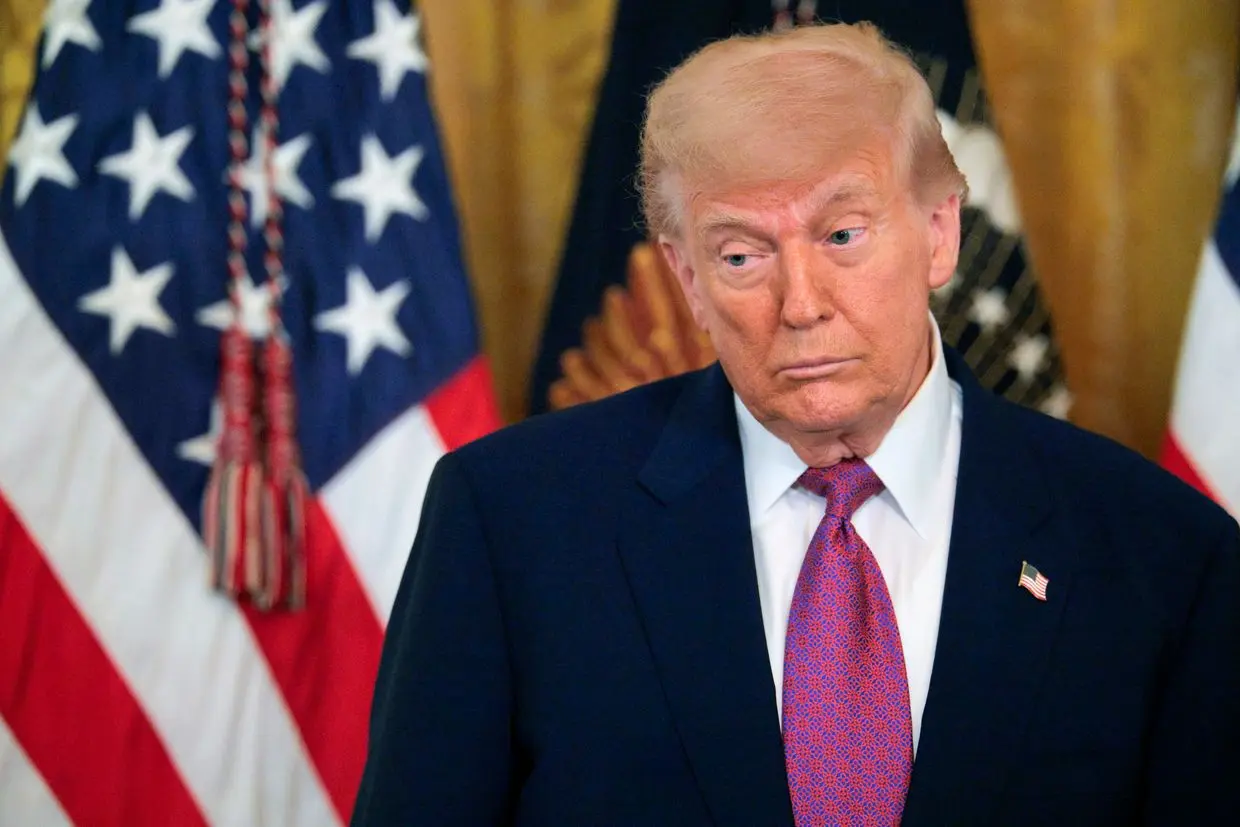
A tense political confrontation is unfolding after a prominent Fox News personality publicly questioned President Donald Trump’s assertion that he had been “totally exonerated” by the release of documents tied to Jeffrey Epstein. The dispute has renewed attention on the contents of the files, the legal and political ramifications surrounding them, and the president’s own longstanding claims of innocence.
The drama escalated after Trump, 79, insisted in a series of public statements that the newly released documents absolved him of any wrongdoing. His declaration was met with an unusually direct rebuke from a host on one of the network’s signature programs, highlighting the rare instance of internal scrutiny from a media outlet generally considered supportive of the president.
Trump Declares Himself “Totally Exonerated”
Speaking to reporters aboard Air Force One on Thursday, Trump addressed the renewed spotlight on the Epstein files, particularly following reports that Andrew Mountbatten-Windsor, the former royal, had been arrested in connection with his ties to the late financier and convicted sex offender.
“Well, you know, I’m the expert in a way, because I’ve been totally exonerated,” Trump said. “It’s really interesting, because nobody used to speak about Epstein when he was alive, but now they speak, but I’m the one that can talk about it, because I’ve been totally exonerated. I did nothing.”
The president’s comments reflect a longstanding pattern of publicly framing himself as vindicated, even in matters where investigations and legal proceedings continue to generate debate and scrutiny.
Jessica Tarlov Issues Public Challenge
However, not everyone was convinced. Jessica Tarlov, 41, co-host of The Five, issued a pointed response to Trump’s claims, using social media to call for transparency. In a succinct post on X, the platform formerly known as Twitter, she wrote:
“Then release all the files.”
Tarlov’s message underscored growing concerns among media figures, legal experts, and lawmakers that, despite millions of pages having been made public, questions remain about the completeness and accuracy of the documents now available.

Epstein Files Transparency Act Sparks Ongoing Debate
The controversy dates back to November, when Trump signed the Epstein Files Transparency Act into law. The legislation was designed to compel the Department of Justice to release documents related to Epstein, the wealthy financier whose extensive network of associates and alleged criminal activity had long drawn scrutiny.
Since the law’s enactment, the DOJ has released millions of pages of records. Attorney General Pam Bondi stated publicly that “all” relevant files had been made available. Yet not all parties involved in drafting the legislation agree that the public has received a full accounting.
Kentucky Republican Representative Thomas Massie, a co-author of the law, expressed skepticism about whether the released documents meet the intended scope of transparency. “The problem with that is the bill that Ro Khanna and I wrote says that they must release internal memos and notes and emails about their decisions on whether to prosecute or not prosecute, whether to investigate or not investigate,” Massie said.
Bondi’s office submitted a detailed report to Congress over the weekend outlining the legal rationale for redactions in the documents, citing “deliberative-process privilege.” This legal principle allows government agencies to withhold documents reflecting internal decision-making processes, which are deemed sensitive to the functioning of government operations.
Massie and others have pushed back, arguing that the law explicitly requires that even internal deliberations related to prosecutorial or investigative decisions should be made public. The tension highlights a persistent debate over government transparency and the public’s right to understand decisions made in high-profile investigations.
The Epstein Files Illuminate Influential Figures
The released files have cast a wide spotlight on several influential individuals. The documents contain information about social circles, business dealings, and personal associations that intersected with Epstein, generating public interest and scrutiny across political and social strata.
This scrutiny intensified when Andrew Mountbatten-Windsor, 66, was arrested in connection with his alleged links to Epstein. The former royal lost his title and was removed from his Windsor estate prior to his detention. The development added a global dimension to what had largely been viewed as a U.S.-centric legal and political issue.
King Charles issued a formal statement addressing the arrest, emphasizing procedural fairness and the role of proper authorities in investigating allegations. “I have learned with the deepest concern the news about Andrew Mountbatten-Windsor and suspicion of misconduct in public office,” the monarch said. “What now follows is the full, fair, and proper process by which this issue is investigated in the appropriate manner and by the appropriate authorities. In this, as I have said before, they have our full and wholehearted support and cooperation.”
The international ramifications of the Epstein files underscore the enduring reach of Epstein’s network, and the way new releases of information continue to prompt legal and political consequences both domestically and abroad.
Legal and Political Implications
Legal experts note that the ongoing debate over redactions and document releases highlights significant questions about the balance between transparency and governmental discretion. Redacted documents often complicate public understanding, and critics argue that incomplete disclosure can foster mistrust and speculation.
Politically, the controversy places Trump in a delicate position. While he maintains that the released files vindicate him, media scrutiny—including from allies in conservative media—challenges the certainty of his assertions. Tarlov’s public call for complete disclosure represents a rare instance of intra-network criticism that could shape public perception and political discourse.
The situation also reflects broader partisan tensions over oversight, accountability, and the role of elected officials in shaping public narratives. Some Democrats argue that the files and their release highlight systemic failures in prosecutorial and investigatory processes, while many Republicans emphasize the symbolic vindication of high-profile figures.
Public Perception and Media Coverage
Coverage of the Epstein files and Trump’s comments has been extensive across multiple media outlets, with debates often centering on whether the president’s statements about exoneration are legally or factually justified. The contrasting interpretations of the files’ contents fuel ongoing discourse about the nature of accountability, evidence, and political communication in high-stakes cases.
Public reaction has also been divided. Some supporters of Trump view his claims as a validation of long-held positions, while critics question the credibility of a narrative that hinges on partial document releases and selective interpretation. Media analysts note that the combination of legal complexity and high-profile personalities contributes to a volatile and polarized public conversation.
Global Fallout
The international dimensions of the Epstein files—highlighted by Mountbatten-Windsor’s arrest—have drawn attention to the global scope of Epstein’s connections. Legal authorities in multiple jurisdictions continue to investigate the networks surrounding Epstein, emphasizing that the consequences of his criminal activities extend well beyond U.S. borders.
Observers note that the files have implications for diplomatic relations, media coverage, and public trust in both domestic and international institutions. The arrest of a former royal underscores how revelations within the Epstein network can intersect with political, legal, and societal dynamics in ways that are difficult to predict.
Looking Ahead
As discussions continue, several questions remain unresolved. Will the DOJ release additional internal documents to satisfy the requirements of the Epstein Files Transparency Act? How will public opinion respond to competing narratives about Trump’s exoneration? And what further legal or political consequences might emerge from the ongoing scrutiny of individuals tied to Epstein?
Legal scholars suggest that the dispute may continue for months, as attorneys, lawmakers, and media outlets analyze both the released materials and the limitations imposed by redactions. At the same time, Trump’s insistence on exoneration ensures that the president’s position remains a central focus of the public debate, while internal criticism from conservative media figures adds an unexpected layer of tension.
Ultimately, the unfolding confrontation between Trump and media critics like Tarlov highlights the complex intersection of law, politics, and media in contemporary American life. The Epstein files serve as a touchstone for ongoing questions about transparency, accountability, and the ways in which high-profile figures navigate public perception amidst intense scrutiny.

Emily Johnson is a critically acclaimed essayist and novelist known for her thought-provoking works centered on feminism, women’s rights, and modern relationships. Born and raised in Portland, Oregon, Emily grew up with a deep love of books, often spending her afternoons at her local library. She went on to study literature and gender studies at UCLA, where she became deeply involved in activism and began publishing essays in campus journals. Her debut essay collection, Voices Unbound, struck a chord with readers nationwide for its fearless exploration of gender dynamics, identity, and the challenges faced by women in contemporary society. Emily later transitioned into fiction, writing novels that balance compelling storytelling with social commentary. Her protagonists are often strong, multidimensional women navigating love, ambition, and the struggles of everyday life, making her a favorite among readers who crave authentic, relatable narratives. Critics praise her ability to merge personal intimacy with universal themes. Off the page, Emily is an advocate for women in publishing, leading workshops that encourage young female writers to embrace their voices. She lives in Seattle with her partner and two rescue cats, where she continues to write, teach, and inspire a new generation of storytellers.