California’s upcoming gubernatorial primary is shaping up to be one of the most unpredictable contests in recent history. Recent polling indicates that Republican candidates are gaining unexpected traction in a state long dominated by Democrats, while a crowded Democratic field has yet to coalesce around a clear frontrunner. Political analysts say that this combination of factors could dramatically reshape expectations for the June primary and the general election in November.
A survey conducted by Emerson College from February 13 to 14, 2026, canvassing 1,000 likely voters, revealed a striking trend: a Republican candidate previously known primarily for his work outside traditional electoral politics now leads the statewide field. The poll found that this candidate garnered 17 percent support among likely voters, slightly ahead of other Republican contenders and the leading Democrats.
The Republican field includes former Riverside County Sheriff Chad Bianco, who has long been considered a leading contender for the party’s nomination. Bianco tied in the survey with Representative Eric Swalwell (D-CA), both polling at 14 percent. Other Democratic candidates include former U.S. Representative Katie Porter at 10 percent and billionaire philanthropist Tom Steyer at 9 percent, while 21 percent of voters remain undecided. Emerson College’s survey also noted that the Republican frontrunner has experienced a five-point rise in support since the December 2025 edition of the poll, signaling growing momentum as the primary approaches.
This candidate, revealed in the midsection of the campaign analysis, is Steve Hilton, a British-born political strategist and former media personality. Hilton served as director of strategy for former UK Prime Minister David Cameron from 2005 to 2012 before relocating to California in 2012. Since moving to the United States, he has taught at Stanford University and co-founded the political crowdfunding platform Crowdpac. Hilton also hosted the Fox News program “The Next Revolution” until 2023, building a significant media profile and public recognition among American audiences.
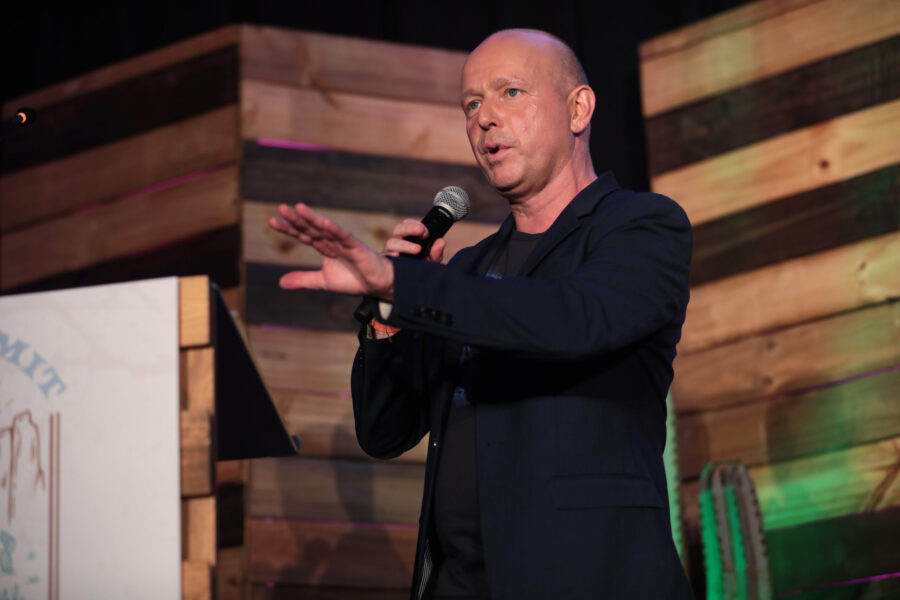
Hilton launched his gubernatorial campaign in April 2025, emphasizing key issues such as housing affordability, homelessness, and challenging what he describes as the entrenched Democratic dominance in California. Among Republican voters, Hilton slightly edges out Bianco, polling at 38 percent compared to Bianco’s 37 percent. He has also performed well with independent voters, capturing 22 percent support—the highest of any candidate surveyed in that group.
On the Democratic side, the field remains fragmented. Swalwell leads with 24 percent among Democratic respondents, followed by Porter at 17 percent and Steyer at 15 percent. Other announced Democratic candidates—including former U.S. Health and Human Services Secretary Xavier Becerra, San Jose Mayor Matt Mahan, and former Los Angeles Mayor Antonio Villaraigosa—each received less than five percent in the poll. Analysts note that this division among Democrats, combined with a consolidated Republican vote, could result in a surprising outcome in the state’s “jungle” primary.
California’s primary system, established under Proposition 14 in 2010, is nonpartisan, meaning all candidates from any party appear on the same ballot. The top two vote-getters advance to the general election regardless of party affiliation. This structure can produce same-party matchups in the general election if one party consolidates support while the other remains divided, making the June primary particularly consequential.
Spencer Kimball, executive director of Emerson College Polling, commented on the implications of the primary system: “California’s jungle primary favors candidates who can consolidate a base early and appeal to undecided voters. With Democrats divided and a unified Republican candidate rising, the dynamics of the race are shifting.”
Hilton’s combination of media presence, political experience, and policy messaging has allowed him to capitalize on these conditions. His platform emphasizes pragmatic solutions for pressing state issues, such as addressing the housing crisis, improving affordability, and reforming state bureaucracy. By leveraging both his recognition among voters and his strategic policy positions, Hilton has positioned himself as a credible alternative to the Democratic candidates, despite California’s traditional partisan leanings.
Republican candidate Chad Bianco remains a strong contender within the party, appealing to law enforcement supporters and traditional conservatives. His campaign has focused on public safety, fiscal management, and reducing regulatory burdens. While Bianco benefits from name recognition and long-standing party support, Hilton’s broader appeal to independents and moderate voters may give him an edge in California’s open primary format.
Aggregated polling averages, including those compiled by RealClearPolitics, indicate a tightly contested race. Hilton and Bianco are tied for the top spot at 15.5 percent each, while Swalwell trails with 12.5 percent. Internal polls conducted by other Democratic campaigns suggest that Republican momentum is continuing, even as Democrats attempt to consolidate their messaging and base support.
Campaign strategies will become increasingly important as the primary approaches. Democrats may need to unify around a single candidate to overcome the Republican surge, while Republican campaigns are likely to focus on maximizing voter turnout and maintaining momentum. Analysts stress that voter engagement among independents will be a critical factor, as Hilton’s ability to appeal across party lines could be decisive.
The crowded Democratic field highlights another significant factor: vote fragmentation. With more than a dozen Democrats competing, no candidate has exceeded 21 percent in recent polls. This division not only reduces the likelihood of a Democratic candidate securing a dominant share of the primary vote but also enhances the opportunity for a unified Republican candidate to advance. If current trends continue, the race may see a scenario where the general election pits a Republican candidate against one of multiple Democratic contenders, an outcome considered unlikely just a few months ago.
The current landscape underscores a broader shift in California politics. While the state has historically leaned heavily Democratic in statewide contests, the combination of voter dissatisfaction, economic concerns, and a fragmented field may open the door for Republicans to challenge the status quo. Hilton’s rise in the polls illustrates how strategic campaigning, media exposure, and cross-party appeal can influence electoral outcomes even in states with entrenched partisan leanings.
As the June primary nears, both parties are expected to intensify outreach, refine messaging, and attempt to consolidate support among undecided voters. The outcome will not only determine the November gubernatorial contest but could also signal larger trends for statewide and national elections in the coming years.
By mid-article, it becomes clear that the media personality and former political strategist leading the polls is none other than Steve Hilton, whose combination of media presence, political experience, and campaign messaging has positioned him at the forefront of California’s 2026 gubernatorial contest.

Emily Johnson is a critically acclaimed essayist and novelist known for her thought-provoking works centered on feminism, women’s rights, and modern relationships. Born and raised in Portland, Oregon, Emily grew up with a deep love of books, often spending her afternoons at her local library. She went on to study literature and gender studies at UCLA, where she became deeply involved in activism and began publishing essays in campus journals. Her debut essay collection, Voices Unbound, struck a chord with readers nationwide for its fearless exploration of gender dynamics, identity, and the challenges faced by women in contemporary society. Emily later transitioned into fiction, writing novels that balance compelling storytelling with social commentary. Her protagonists are often strong, multidimensional women navigating love, ambition, and the struggles of everyday life, making her a favorite among readers who crave authentic, relatable narratives. Critics praise her ability to merge personal intimacy with universal themes. Off the page, Emily is an advocate for women in publishing, leading workshops that encourage young female writers to embrace their voices. She lives in Seattle with her partner and two rescue cats, where she continues to write, teach, and inspire a new generation of storytellers.