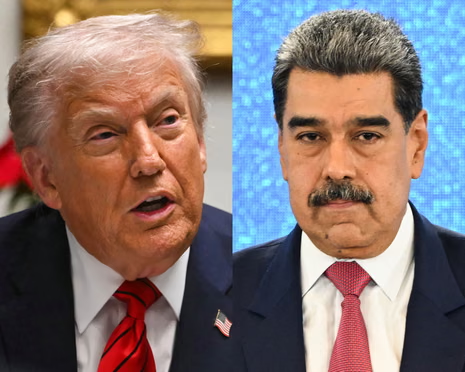
The U.S. attorney general has revealed the criminal charges now facing Venezuelan leader Nicolás Maduro following extraordinary reports that he was captured during a U.S. military operation that struck the capital city of Caracas in the early hours of Saturday.
The dramatic escalation marks one of the most aggressive foreign interventions by the United States in recent decades and has sent shockwaves through Latin America and the wider international community. Videos circulating on social media appear to show explosions and military strikes across parts of Caracas, though independent verification of the footage remains limited.
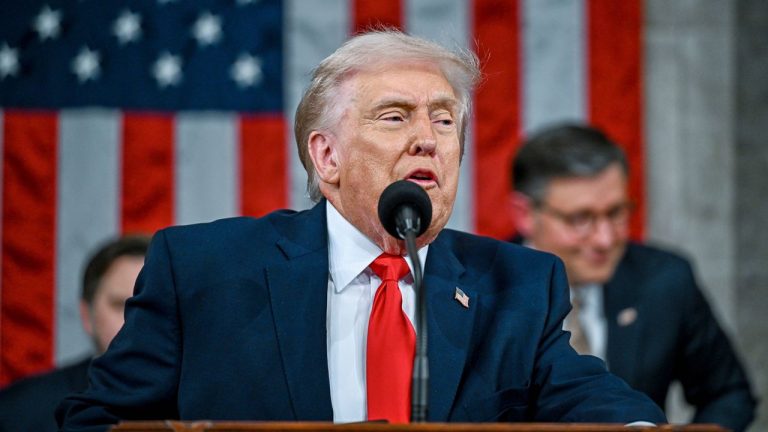
Not long after reports of the strikes began to emerge, President Donald Trump confirmed U.S. involvement in a post on Truth Social, announcing that Maduro and his wife, Cilia Flores, had been captured and removed from Venezuela.
“The United States of America has successfully carried out a large-scale strike against Venezuela and its leader, President Nicolas Maduro, who has been, along with his wife, captured and flown out of the Country,” Trump wrote.
“This operation was done in conjunction with U.S. Law Enforcement. Details to follow. There will be a News Conference today at 11 A.M., at Mar-a-Lago,” the president added.
The announcement represented a stunning development in a long-running standoff between Washington and Caracas, following years of sanctions, diplomatic isolation, and allegations that Maduro’s government had become deeply entwined with international criminal networks.
Attorney General Pam Bondi later confirmed that both Maduro and Flores have been indicted in the Southern District of New York. In a statement, Bondi outlined a sweeping list of charges against the Venezuelan leader, describing him as a central figure in what U.S. prosecutors allege is a narco-terrorist enterprise operating at the highest levels of the Venezuelan state.
According to Bondi, Maduro has been charged with narco-terrorism conspiracy, cocaine importation conspiracy, possession of machine guns and destructive devices, and conspiracy to possess machine guns and destructive devices against the United States.
“They will soon face the full wrath of American justice on American soil in American courts,” Bondi said. “This case represents years of investigation and coordination between U.S. law enforcement and our national security partners.”
She praised the U.S. military operation that led to the alleged capture of Maduro and his wife, calling it “an incredible and highly successful mission.”
“A huge thank you to our brave military who conducted the mission to capture these two alleged international narco traffickers,” Bondi said.
Bondi did not specify what charges Flores faces, nor did she clarify whether additional indictments against other Venezuelan officials are expected. However, legal experts say the scope of the charges against Maduro alone could result in multiple life sentences if he is convicted.
The Venezuelan government reacted swiftly and angrily to the reports, denying any confirmation of Maduro’s status and demanding proof that the president and his wife are alive. Vice President Delcy Rodríguez said the government had received no official notification regarding Maduro’s whereabouts and accused the United States of carrying out an illegal act of aggression.
“We demand immediate proof of life for the president of the republic and the first lady,” Rodríguez said in a televised address. “The United States must take full responsibility for the consequences of this reckless escalation.”
Defense Minister Vladimir Padrino López echoed those sentiments, describing the military strikes as the “worst aggression” Venezuela has ever faced. He called on the nation to unite in resistance and announced that all branches of the armed forces had been placed on full alert.
“We are following President Maduro’s orders,” López said. “All military units are being deployed to defend the sovereignty and dignity of our nation.”
The situation inside Venezuela remains tense, with reports of increased military presence in major cities and communications disruptions in some areas. It is unclear whether pro-Maduro forces retain full control of government institutions following the alleged capture of the president.
The operation represents a dramatic departure from previous U.S. policy toward Venezuela, which for years relied on sanctions, diplomatic pressure, and support for opposition movements rather than direct military action. Successive U.S. administrations accused Maduro of rigging elections, suppressing dissent, and overseeing widespread corruption, but stopped short of direct intervention.
Trump, however, has repeatedly framed Venezuela as a national security threat, alleging that the country has become a hub for drug trafficking, terrorism, and hostile foreign influence. During his second term, the president signaled a more aggressive posture, warning that “all options remain on the table” if the Maduro government continued to defy U.S. demands.
The charges announced by the Justice Department are rooted in long-standing allegations that Maduro and his inner circle used Venezuela’s institutions to facilitate cocaine trafficking into the United States while partnering with designated terrorist organizations. U.S. authorities have previously accused the regime of transforming state agencies into tools of organized crime.
Legal analysts note that prosecuting a sitting—or recently deposed—foreign head of state in U.S. courts raises complex legal and diplomatic questions. While U.S. law allows for charges related to drug trafficking and terrorism, questions remain about jurisdiction, extradition, and the legality of the capture itself under international law.
International reaction has been swift and divided. Some U.S. allies have expressed concern over the precedent set by the operation, while others have called for restraint and clarity regarding Maduro’s status. Several Latin American governments are reportedly convening emergency meetings to assess the regional impact of the developments.
Human rights organizations have also raised alarms, urging transparency about the operation and warning of potential civilian harm resulting from the strikes in Caracas. The White House has not released casualty figures or details about the scale of the military action.
As of Saturday evening, the U.S. government had not disclosed where Maduro and Flores are being held or when they will appear in court. Officials indicated that further information would be provided during the scheduled news conference at Mar-a-Lago.
The unfolding crisis marks a pivotal moment in U.S.–Venezuela relations and could reshape the political landscape of the region. Whether the operation leads to long-term stability or further conflict remains uncertain, but the capture of a foreign leader by U.S. forces represents a rare and consequential escalation with global implications.

Emily Johnson is a critically acclaimed essayist and novelist known for her thought-provoking works centered on feminism, women’s rights, and modern relationships. Born and raised in Portland, Oregon, Emily grew up with a deep love of books, often spending her afternoons at her local library. She went on to study literature and gender studies at UCLA, where she became deeply involved in activism and began publishing essays in campus journals. Her debut essay collection, Voices Unbound, struck a chord with readers nationwide for its fearless exploration of gender dynamics, identity, and the challenges faced by women in contemporary society. Emily later transitioned into fiction, writing novels that balance compelling storytelling with social commentary. Her protagonists are often strong, multidimensional women navigating love, ambition, and the struggles of everyday life, making her a favorite among readers who crave authentic, relatable narratives. Critics praise her ability to merge personal intimacy with universal themes. Off the page, Emily is an advocate for women in publishing, leading workshops that encourage young female writers to embrace their voices. She lives in Seattle with her partner and two rescue cats, where she continues to write, teach, and inspire a new generation of storytellers.