



The basketball world is once again confronting a wave of sorrow as news breaks about the passing of a towering figure whose presence shaped locker rooms, defined defensive identity, and helped guide multiple teams through decisive moments in NBA history. The announcement has left former teammates, coaches, and fans reflecting on the influence of a player whose steady consistency often spoke louder than flash, and whose contributions across 15 seasons earned deep respect throughout the league.
Though he played in an era filled with some of the most dominant stars the NBA has ever seen, he carved out his own narrative—one built on reliability, toughness, and a calm on-court demeanor that belied his competitive drive. His career spanned across several franchises, with his most memorable years coming from a long stretch in Southern California and a championship-securing chapter later in the Midwest. His death at age 57 has stunned many, in part because those who knew him say he was always the quiet giant: grounded, private, and focused on his craft.
The announcement was shared earlier this week when his family notified one of his former teams, prompting an outpouring of condolences from the organization. No cause of death was immediately released, and as tributes continue pouring in, the shock surrounding the news highlights the impact he left both on and off the court.
Born and raised in Los Angeles, the future NBA veteran honed his early game at Morningside High School, a program known for producing polished, athletic talent. Standing nearly seven feet tall, he possessed natural gifts that made him a mismatch in high school competition, but observers say his work ethic is what truly allowed him to flourish. That dedication carried him into college basketball, where he joined a program eager to rise in national relevance.
At Clemson, he quickly developed into the anchors of the team’s identity. He became a premier force in the Atlantic Coast Conference, earning first-team ACC honors during the 1989–1990 season. His offensive production, shot-blocking ability, and consistent interior scoring were central to Clemson’s success during that era, helping the Tigers secure the ACC regular-season title and a coveted spot in the Sweet 16. By the end of his college career, he had secured his place in school history as the all-time leading scorer, finishing with 1,880 points—a record that underscored both his durability and his dominance.
His college accomplishments propelled him into the 1990 NBA Draft, where the hometown team wasted no time selecting him in the first round. It was a rare moment in which a Los Angeles-born athlete, molded by a Los Angeles high school and beloved by his college program, was able to return to the city that had watched him grow. Throughout the 1990s, he became a fixture for the purple and gold, standing as a defensive presence during a transitional period for the franchise—playing alongside veterans, rising stars, and eventually the legendary pairing that would define an era.
It was during this long nine-season tenure in Los Angeles that Elden Campbell, the man now being mourned, became most widely recognized. His name, finally spoken midway through this report, belongs to a player whose steady production and unselfish play made him one of the league’s most underrated contributors of his time.
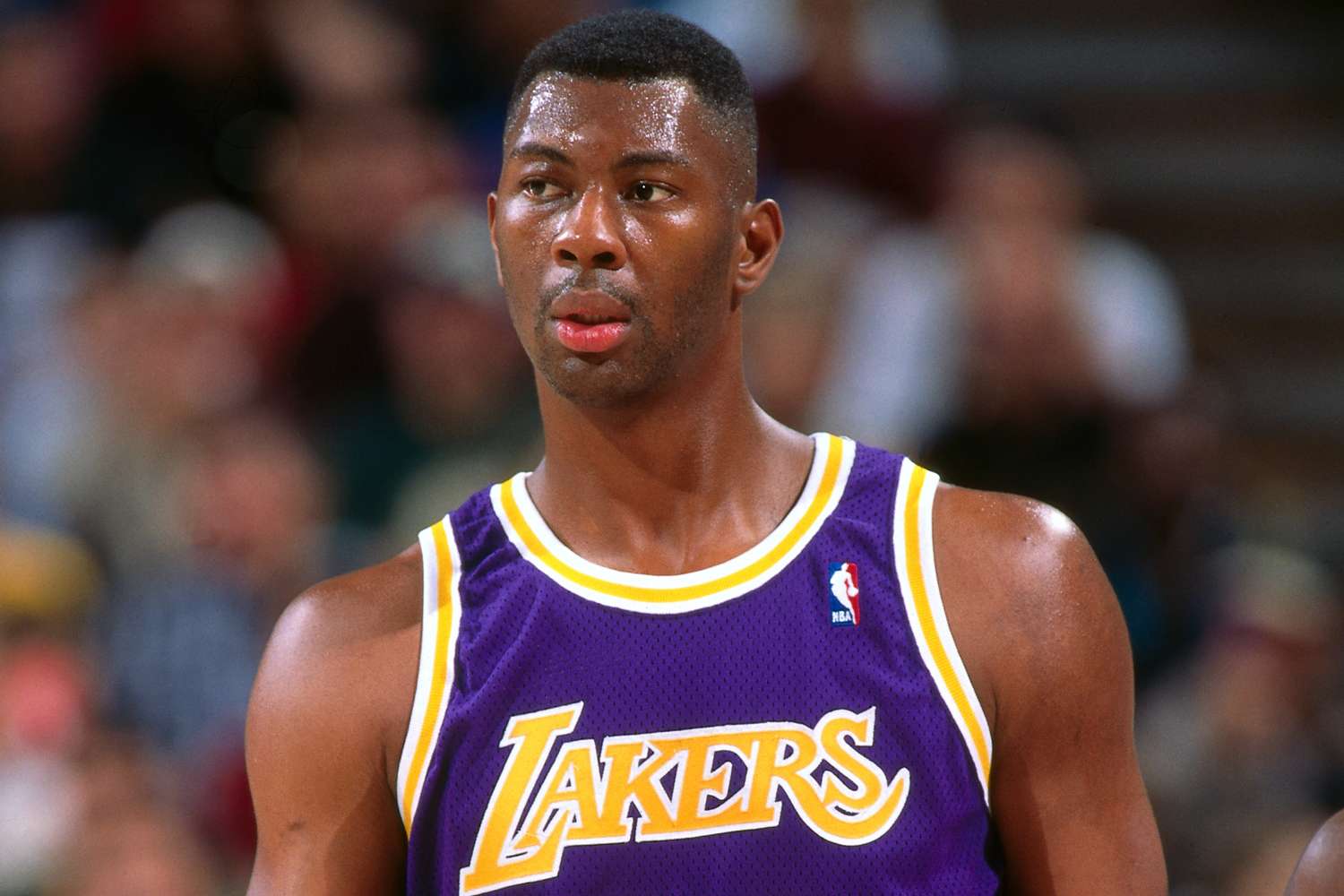
Campbell played 15 full seasons in the NBA, accumulating more than 10,000 career points and surpassing 1,600 blocks—numbers that reflect not only talent but remarkable longevity. Throughout his time in Los Angeles, he grew from a young player learning the system into a reliable interior force known for soft touch around the rim, a high-arching mid-range jumper, and the ability to alter shots with ease. Fans who watched him through the mid-1990s remember a center who rarely demanded the spotlight yet delivered some of the team’s most consistent efforts.
In the 1996–1997 season, playing alongside icons Shaquille O’Neal and Kobe Bryant, Campbell delivered one of his most productive years with the Lakers, averaging 14.9 points per game. His ability to contribute offensively while still anchoring the interior defense was vital during a period when the Lakers were retooling their roster toward a new dynasty.
Though championship glory eluded him during his Los Angeles tenure, his opportunity would come later—ironically at the expense of the very team he spent nearly a decade with.
Following his departure from the Lakers, Campbell joined other franchises including the Charlotte Hornets, where he produced the strongest statistical season of his career in 1999–2000, averaging 15.3 points and 9.4 rebounds. His performance that season reaffirmed what coaches had long insisted: when given responsibility, he delivered. His rebounding, scoring, and rim protection provided stability for a team building toward competitiveness.
His next major chapter came in Detroit, where his veteran expertise made him an ideal fit for a franchise built on grit, defense, and discipline. The 2003–2004 Detroit Pistons became one of the most iconic teams in modern NBA history—champions forged from toughness, teamwork, and relentless defensive intensity. Campbell contributed as a seasoned reserve center, offering size, experience, and calm during crucial stretches. When the Pistons defeated the Los Angeles Lakers in the 2004 NBA Finals, Campbell secured his lone championship ring, completing the full arc of his NBA journey.
Over the course of his career, he also spent time with the New Orleans Hornets, Seattle SuperSonics, and New Jersey Nets before retiring in 2005. During his final seasons, younger players often noted that he was more than just a veteran on the roster—he was a quiet mentor. His reputation around the league was one of professionalism: he showed up ready, stayed focused, avoided drama, and elevated his teammates through consistency rather than noise.
Beyond the statistics, the tributes emerging after his death emphasize just how much he was appreciated once he stepped away from the spotlight. Former teammates have described him as gentle, reserved, and respectable. Coaches say he was the type of player every franchise wants: someone who embraced his role, never caused conflict, and always remained prepared, regardless of how many minutes he was assigned on a given night.
His college program has also begun sharing reflections, recalling how his arrival marked one of the most successful periods in Clemson basketball history. Even decades later, his scoring record and presence remain part of the school’s proudest lineage. Alumni and longtime fans have expressed sadness at the news while also celebrating the mark he left on Clemson athletics.
Those who followed his career from high school to college to the pros are quick to point out that his legacy is defined by both numbers and character. His shot-blocking numbers remain impressive, and his career totals place him among the most durable big men of his era. But the enduring sentiment is tied to something quieter—his stability in a league defined by volatility, his competitiveness during a time when centers battled fiercely in the paint, and his admirable ability to transition across franchises while still maintaining performance.
In a league that celebrates flash and spectacle, Campbell’s contributions often went unheralded. Yet, for those who truly understood the game, his presence was invaluable. He offered a blend of size, experience, and steadiness that teams crave, and his career longevity is a testament to the trust coaches continually placed in him.
His passing at 57 is a profound loss for the basketball community. While details surrounding his death remain private, the response from former teams and fans is unified: gratitude for the years he gave to the sport and sorrow for a life cut far too short. Many are now revisiting old game footage, reliving moments when his defensive stops, mid-range jumpers, and quiet strength shaped the outcome.
The NBA is built on legends of every size—some loud, some understated. Campbell belonged to the latter category. And as news of his death spreads, so does the realization that the league has lost one of its most quietly influential figures, a player who carried himself with dignity on every court he stepped onto.
His journey—from Los Angeles roots to Clemson stardom, from a Laker mainstay to an NBA champion in Detroit—forms a story that will be remembered by those who watched him grow, compete, and ultimately triumph. And as fans reflect on his legacy, one sentiment resonates above all: the gentle giant of the paint will not be forgotten.

Emily Johnson is a critically acclaimed essayist and novelist known for her thought-provoking works centered on feminism, women’s rights, and modern relationships. Born and raised in Portland, Oregon, Emily grew up with a deep love of books, often spending her afternoons at her local library. She went on to study literature and gender studies at UCLA, where she became deeply involved in activism and began publishing essays in campus journals. Her debut essay collection, Voices Unbound, struck a chord with readers nationwide for its fearless exploration of gender dynamics, identity, and the challenges faced by women in contemporary society. Emily later transitioned into fiction, writing novels that balance compelling storytelling with social commentary. Her protagonists are often strong, multidimensional women navigating love, ambition, and the struggles of everyday life, making her a favorite among readers who crave authentic, relatable narratives. Critics praise her ability to merge personal intimacy with universal themes. Off the page, Emily is an advocate for women in publishing, leading workshops that encourage young female writers to embrace their voices. She lives in Seattle with her partner and two rescue cats, where she continues to write, teach, and inspire a new generation of storytellers.