For years, one of world’s most recognizable football voices has enjoyed an unusual second act. After a celebrated playing career, he reinvented himself as a broadcaster and media personality whose opinions often carried as much weight as his sporting achievements once did. That transformation brought global reach, lucrative partnerships, and a prominent role on one of the world’s most powerful streaming platforms. But it has also come with risks—risks that, according to industry insiders, are now being taken far more seriously on the other side of the Atlantic.
In recent weeks, concerns have intensified inside American media and entertainment circles about whether the outspoken football star has become a liability rather than an asset. Executives, advisers, and legal teams are reportedly weighing how his public behavior, political commentary, and high-profile feuds could affect future projects, particularly those tied to U.S. audiences and regulators. Some insiders have gone further, quietly warning that the situation could escalate into something far more consequential than a damaged reputation: the possibility that he could face serious barriers to working in the United States at all.
At the heart of the anxiety is a clash between cultures. In the United Kingdom, robust public debate—especially when tied to politics, immigration, or social issues—has long been part of the national conversation. In the U.S., however, media companies operate within a far more cautious corporate ecosystem, one shaped by advertisers, political pressure, and an intensely polarized public. For American partners, the fear is not simply controversy, but unpredictability.
Netflix, which has invested heavily in sports-adjacent storytelling and personality-driven documentaries, is said to be particularly uneasy. The platform’s executives have spent years cultivating relationships with U.S. regulators and international partners, and they are acutely aware of how a single high-profile figure can complicate that effort. According to people familiar with internal discussions, the concern is not about silencing opinion but about exposure—legal, political, and reputational.
The football star’s recent behavior has revived those worries. Public interventions on sensitive political topics, social media posts that spark backlash within hours, and pointed criticism of powerful institutions have combined to create what one insider described as a “risk profile that keeps expanding.” In an era when streaming services are under intense scrutiny from lawmakers and activist groups alike, that profile matters.
What makes the situation more complicated is the individual’s unique standing. He is not just another pundit or commentator. He is a cultural figure whose voice resonates well beyond sport. That reach is precisely what made him attractive to global platforms in the first place—and what now makes his actions harder to manage. When he speaks, the reaction is rarely confined to football fans.
There is also a growing sense of irony surrounding his position. Critics point to what they describe as a “hypocrisy gap” between his outspoken stances and his professional associations. In particular, comparisons have been drawn with other famous English football figures who have faced criticism for aligning with controversial regimes or commercial partners. Insiders say this perceived double standard has become a point of friction behind closed doors, especially as media companies attempt to enforce consistent values across their talent roster.
It is against this backdrop that the conversation about potential U.S. consequences has emerged. Immigration and visa rules in the United States are strict, and while celebrities often navigate them with relative ease, nothing is guaranteed. Public behavior, legal disputes, or associations deemed problematic can complicate applications or renewals. Industry lawyers note that while bans are rare, scrutiny is not—and increased scrutiny alone can derail projects.
A former England international and Golden Boot winner, Lineker has spent decades in the public eye, transitioning seamlessly from elite football to broadcasting. His articulate style and willingness to speak his mind turned him into one of the most recognizable faces of sports media.
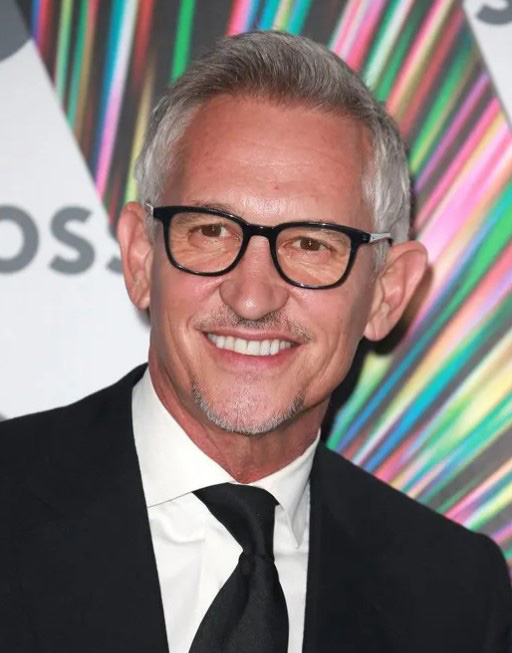
Yet it is precisely that willingness to speak out that has brought him to this crossroads. In recent years, Lineker has positioned himself as a vocal commentator on social and political issues, often using his substantial online following to amplify his views. Supporters praise him for moral clarity and courage; critics accuse him of recklessness and selective outrage.
Inside Netflix, those debates are no longer abstract. Executives are reportedly asking whether Lineker’s presence could jeopardize projects aimed at U.S. audiences, particularly at a time when the company is eager to expand its sports-related content. One senior source described the mood as “deeply concerned,” emphasizing that the platform has little appetite for distractions that could invite congressional attention or consumer boycotts.
The issue extends beyond Netflix. American broadcasters, sponsors, and event organizers are increasingly cautious about associating with figures who generate sustained controversy outside their core professional field. For a football star whose post-playing career depends heavily on international media work, that caution could translate into fewer opportunities and tighter conditions.
There is also the question of legacy. Lineker’s playing career is secure, his place in English football history unquestioned. But legacies are not static. They evolve with time, shaped by what comes after the final whistle. Some observers argue that his recent trajectory risks overshadowing decades of sporting achievement with a narrative of controversy and division.
Supporters counter that this is the inevitable price of authenticity. In their view, Lineker represents a generation of former athletes unwilling to retreat into bland neutrality once their playing days are over. They argue that expecting silence from influential figures is neither realistic nor desirable in a democratic society.
Still, even allies acknowledge the stakes are higher when global corporations and foreign governments are involved. The United States, in particular, is not just another market. It is a regulatory environment where political perception can matter as much as contractual compliance. For someone whose work increasingly intersects with American media, that reality cannot be ignored.
Whether the direst predictions come true remains uncertain. No formal action has been taken, and there is no indication of an imminent ban. But the fact that such scenarios are being discussed at all is telling. It suggests that Lineker’s behavior has crossed a threshold—from manageable controversy to strategic concern.
In the end, this is less about one football star and more about the changing relationship between celebrity, politics, and global media. The platforms that elevate voices to worldwide prominence also expect discipline, predictability, and alignment with corporate strategy. When those expectations clash with personal conviction, something has to give.
For Gary Lineker, the coming months may determine which path he chooses: continued outspokenness regardless of consequence, or a recalibration aimed at preserving his international standing. Either way, the outcome will serve as a case study in how fame, influence, and accountability intersect in a media landscape that grows less forgiving by the day.