A surprise moment at one of the nation’s most influential business and policy gatherings is now rippling across both political and entertainment circles. What began as a discussion about health, aging, and personal advocacy quickly transformed into a moment that drew audible reactions from a packed auditorium and ignited debate far beyond the walls of the venue.
The incident unfolded at The New York Times’ DealBook Summit, held at Lincoln Center in New York City. The event draws a powerful mix of political leaders, corporate executives, media elites, and cultural figures. It is known less for confrontation and more for carefully measured dialogue — which made the moment all the more jarring for those in attendance.
As one of the summit’s featured speakers took the stage, few in the room anticipated what was about to unfold.
A Rare Break from Industry Norms
For decades, Hollywood has largely maintained a unified political front, particularly in its support of Democratic leadership. While individual dissent is not unheard of, high-profile public criticism from major celebrities remains relatively rare, especially when delivered directly and without restraint.
That is why the exchange that unfolded sent an immediate wave of shock through the audience. Witnesses said the room fell quiet before reacting with a mixture of gasps, stunned silence, and uneasy murmurs.
Social media lit up within minutes as clips and quotes from the moment began circulating.
At first, the comments were framed around personal health, aging, and advocacy. But it soon became clear that the speaker was laying the groundwork for something far more politically charged.
A Personal Mission Years in the Making
For the past year, the actress has been publicly committed to advocating for expanded resources for women dealing with menopause and midlife health challenges. Through her company, she has pushed for greater visibility, funding, and institutional support for an issue she says has long been ignored or stigmatized.
She spoke at length about building solutions she wished had existed for her earlier in life. According to her, the lack of education, medical access, and public dialogue around menopause leaves countless women navigating one of the most difficult transitions of their lives without adequate support.
Her remarks resonated with many in the audience — particularly women who shared similar experiences. But what followed pushed the conversation beyond health policy and directly into the political arena.
That was when she named names.
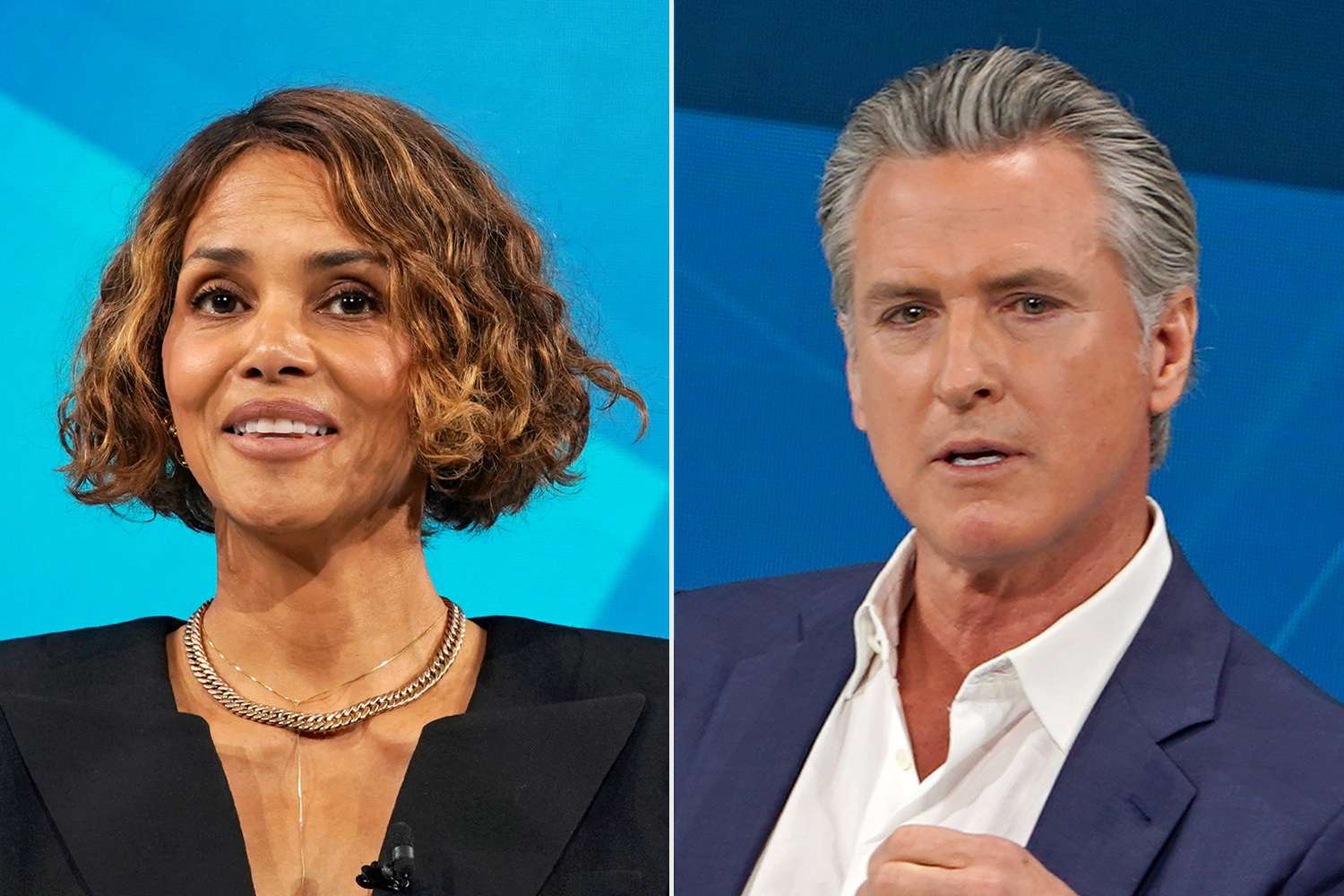
The Academy Award–winning actress directly criticized California Governor Gavin Newsom, accusing him of repeatedly blocking legislation aimed at supporting women experiencing menopause.
“At this stage in my life, I have zero f–ks left to give,” she told the audience, according to multiple reports, before turning her focus squarely on the governor.
She revealed that in California — the state she called home — a proposed menopause support bill had been vetoed not once, but two years in a row.
“But that’s okay,” she added pointedly, “because he’s not going to be governor forever.”
The room reacted instantly, with audible gasps cutting through the crowd as the political implications of her words became unmistakable.
She then went even further, questioning whether Newsom should seek higher office at all.
“With the way he’s overlooked women — half the population — by devaluing us in midlife,” she said, “he probably should not be our next president either.”
That single line triggered another wave of stunned reactions.
Why the Comments Hit So Hard
The criticism carried weight not only because of the speaker’s celebrity status, but because of where it was delivered. The DealBook Summit is typically a space for strategic messaging, controlled narratives, and cautious positioning.
To hear such an unfiltered political rebuke — delivered just hours before Governor Newsom was scheduled to speak at the same event — made the moment even more explosive.
Observers noted that the timing appeared anything but accidental.
Within minutes, video clips spread across social platforms, drawing both praise and backlash. Some hailed the actress for “speaking truth to power,” while others accused her of injecting unnecessary politics into a health-focused discussion.
https://twitter.com/Rightanglenews/status/1996645567938941129
Calling on the Audience to Take Sides
Rather than retreat after the reaction, the actress leaned in even harder.
She urged women across the country to join her fight for greater access to midlife healthcare, framing the issue as one of national urgency rather than personal grievance.
“I need every woman in this country to fight with me,” she said.
But she didn’t stop there.
“The truth is, the fight isn’t just for us women,” she continued. “We need men, too. We need all of the leaders — every single one of you in this room. This fight needs you.”
Her message shifted from criticism to mobilization, transforming the moment into a broader call for political and social engagement.
Building What She Says Didn’t Exist
During her appearance, the actress explained that her work is rooted in personal experience.
“As a founder, I’m building for myself what I wish I had ten years ago,” she said, referring to the early stages of her own midlife transition. “With the knowing that it’s going to help generations and generations to come.”
She described a healthcare system that often overlooks or minimizes symptoms related to menopause, leaving women to struggle in silence or navigate confusing medical advice alone.
The lack of institutional investment, she argued, reflects a deeper cultural bias that values women primarily for youth rather than longevity.
https://twitter.com/MAGAVoice/status/1996700361344909409
A Broader Cultural Critique
Her comments expanded beyond legislation and healthcare to address how aging affects women in public life — particularly in entertainment, media, and professional environments.
“In 2025, there is a lot still to be talked about and uncovered,” she said. “Especially if you are a woman navigating midlife and thoughtfully considering your longevity.”
She then made a stark declaration:
“In 2025, I, Halle Berry, and women of my age are simply devalued in this country.”
She described how women in their late 50s and beyond are often treated as invisible — in Hollywood, in the workplace, and on social media.
“Our culture thinks that at 59 years old, I am past my prime,” she said.
She pointed out the pressure women face to remain frozen at an unrealistic version of youth.
“Women are pressured to stay forever 35,” she said. “We’re complimented if we seem to be aging backwards or defying gravity — as if that’s even possible.”
She added that when women appear to look younger than their actual age, it becomes the unspoken standard by which their worth is measured.
https://twitter.com/mazemoore/status/1997138306497389005
Newsom Responds After the Fallout
After the summit, Governor Newsom was approached by reporters and asked about the remarks. His response was notably restrained.
According to TMZ, Newsom said he had already been in contact with the actress’s management team.
“We have the ability to reconcile that,” he said. “So we’re reconciling.”
He also claimed that the menopause-related issue would be included in California’s next budget cycle.
However, critics quickly expressed skepticism, noting that similar assurances had been made in the past without follow-through.
Why This Moment Matters Politically
Newsom is widely viewed as a potential national political figure, with speculation surrounding future presidential ambitions continuing to grow. Public criticism from a major Hollywood figure — especially one framed as a moral and social rebuke rather than a partisan attack — introduces an unusual challenge.
The fact that the remarks came from within traditionally supportive entertainment circles gives the moment added political weight.
While isolated celebrity critiques are common, sustained public pressure tied to legislative outcomes is far less typical.
The Reaction Across the Internet
The public response to the moment has been swift and polarized.
Supporters have praised the actress for using her platform to highlight a neglected health issue and for directly challenging political leadership.
Others have accused her of overstating the issue, politicizing personal health, or unfairly targeting Newsom without acknowledging the complexity of legislative negotiations.
What is indisputable, however, is that the moment struck a nerve — and forced menopause, aging, and midlife health directly into a mainstream political spotlight.
What Comes Next
It remains unclear whether California lawmakers will revive the stalled legislation in the next budget cycle or whether Newsom’s pledge will translate into concrete policy action.
For the actress, the moment appears to mark a turning point — transforming her advocacy from a business-driven mission into a national political confrontation.
Whether that shift will lead to lasting reform or become another fleeting headline remains to be seen.
But for those inside Lincoln Center that evening, one thing was certain: they had just witnessed a moment that no one in the room expected — and one that may continue to echo across politics and pop culture for months to come.

Emily Johnson is a critically acclaimed essayist and novelist known for her thought-provoking works centered on feminism, women’s rights, and modern relationships. Born and raised in Portland, Oregon, Emily grew up with a deep love of books, often spending her afternoons at her local library. She went on to study literature and gender studies at UCLA, where she became deeply involved in activism and began publishing essays in campus journals. Her debut essay collection, Voices Unbound, struck a chord with readers nationwide for its fearless exploration of gender dynamics, identity, and the challenges faced by women in contemporary society. Emily later transitioned into fiction, writing novels that balance compelling storytelling with social commentary. Her protagonists are often strong, multidimensional women navigating love, ambition, and the struggles of everyday life, making her a favorite among readers who crave authentic, relatable narratives. Critics praise her ability to merge personal intimacy with universal themes. Off the page, Emily is an advocate for women in publishing, leading workshops that encourage young female writers to embrace their voices. She lives in Seattle with her partner and two rescue cats, where she continues to write, teach, and inspire a new generation of storytellers.