A nationwide tuna recall quietly widened this week after a breakdown in distribution controls allowed products that were supposed to be isolated from sale to end up on store shelves across multiple states. Federal regulators say the expansion was triggered not by a new manufacturing issue, but by a logistics failure that undermined an earlier safety action.
According to the U.S. Food and Drug Administration (FDA), the recall affects canned tuna products that may pose a serious health risk to consumers, even if the food appears normal. Officials stressed that visual inspection, smell, or taste cannot reliably indicate whether the product is safe.
The agency’s updated warning, issued on January 19, urged consumers to avoid eating certain canned tuna products entirely and to dispose of them immediately. The concern centers on possible contamination with Clostridium botulinum, the bacterium responsible for botulism — a rare but potentially fatal form of food poisoning.
Botulism is particularly dangerous because it thrives in low-oxygen environments, such as sealed cans, and produces a toxin that can cause severe neurological symptoms. The FDA warns that exposure may result in general weakness, dizziness, double vision, slurred speech, difficulty swallowing, muscle paralysis, breathing problems, abdominal swelling, and constipation. In severe cases, botulism can be deadly without prompt medical treatment.
What makes this recall especially troubling to regulators is that the affected products were already identified and quarantined during an earlier recall. Despite that safeguard, some cases were mistakenly shipped to retail locations, creating a second wave of concern.
“This current recall was initiated after the company discovered that quarantined cases associated with the initial recall were inadvertently shipped by a third-party distributor,” FDA officials stated in their announcement.
The affected tuna products were distributed to major grocery chains in at least eight states. Retailers in Illinois, Indiana, Kentucky, Michigan, Ohio, and Wisconsin received shipments through Meijer stores. Giant Foods locations in Maryland and Virginia were also impacted. On the West Coast, California stores including Safeway, Albertsons, Vons, and Pavilions carried the recalled items.
At the center of the issue is a packaging defect involving easy-open pull-tab can lids. According to the FDA, the lids on certain cans may have been manufactured incorrectly, potentially compromising the seal that keeps bacteria out. Over time, such defects can allow leaks or create conditions where dangerous bacteria can grow unnoticed.
Food safety experts emphasize that botulism contamination cannot be detected by consumers at home.
“You can’t reliably sniff-test botulism risk,” said Ed McCormick, a food science consultant with Cape Crystal Brands. “This kind of recall doesn’t mean tuna is sketchy. It means packaging and handling controls failed somewhere in the chain.”
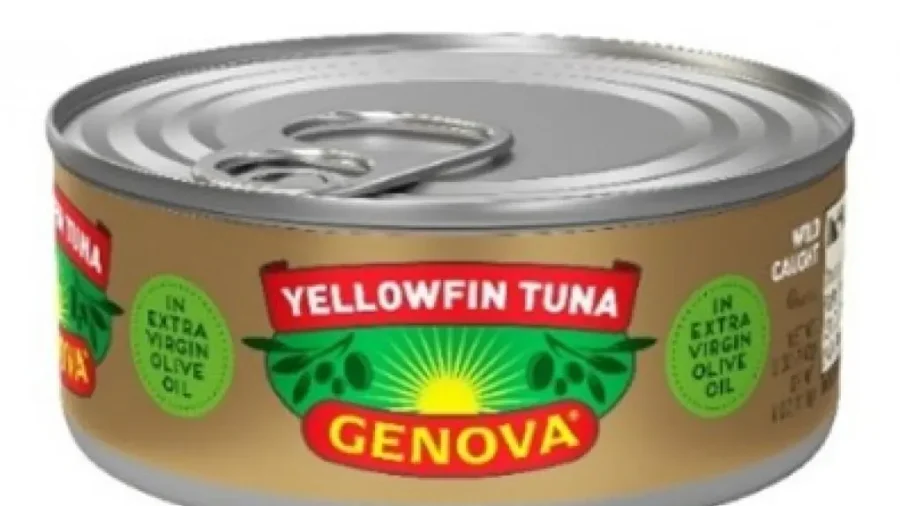
Midway through the FDA’s notice, the company responsible for the recalled products was publicly identified as Tri-Union Seafoods, a major seafood distributor in the United States. The recall specifically involves certain cans of Genova® yellowfin tuna, including 5-ounce cans sold individually and in multi-pack formats, packed in olive oil or extra virgin olive oil with sea salt.|
The January 19 expansion followed an earlier voluntary recall initiated after Tri-Union Seafoods was alerted by a supplier to the can-lid defect. At that time, the company attempted to remove affected products from circulation and isolate remaining inventory. The newly announced recall indicates that some of those measures failed during distribution.
Tri-Union Seafoods did not respond to media requests for comment following the FDA’s announcement.
This incident follows a broader tuna recall announced earlier by the FDA in February 2025, which involved multiple brands and retailers. Products included various sizes and styles of canned tuna sold under Genova, Van Camp’s, Trader Joe’s, and H-E-B labels. The scope of that recall highlighted how a single packaging issue can ripple across the food supply chain, affecting numerous brands that rely on shared suppliers or manufacturing processes.
Consumer advocates say the situation underscores the complexity — and vulnerability — of modern food distribution systems. Even when recalls are initiated quickly, the involvement of third-party logistics providers can introduce gaps in oversight.
“When quarantined food still makes it to shelves, it’s usually not malice — it’s miscommunication or procedural failure,” said one former FDA compliance officer, who was not authorized to speak publicly. “But from a public health standpoint, the outcome is the same.”
The FDA advises anyone who has purchased canned tuna recently to check official recall notices carefully and not to consume any product believed to be affected. Consumers are encouraged to return the items to the place of purchase or dispose of them safely, even if the cans appear undamaged.
Health officials also stress that anyone experiencing symptoms consistent with botulism should seek immediate medical attention. Early treatment can be lifesaving.
While tuna remains a staple protein for millions of households, experts caution that this recall is a reminder of how crucial packaging integrity is to food safety. Unlike spoilage caused by age or temperature, botulism contamination can occur silently — and with far more severe consequences.
“This isn’t about avoiding canned fish,” McCormick said. “It’s about ensuring systems work the way they’re supposed to, every step of the way.”
For now, federal regulators continue to monitor the situation as retailers remove affected products and distributors review their procedures. The FDA has indicated it will provide additional updates if further issues are discovered.

Emily Johnson is a critically acclaimed essayist and novelist known for her thought-provoking works centered on feminism, women’s rights, and modern relationships. Born and raised in Portland, Oregon, Emily grew up with a deep love of books, often spending her afternoons at her local library. She went on to study literature and gender studies at UCLA, where she became deeply involved in activism and began publishing essays in campus journals. Her debut essay collection, Voices Unbound, struck a chord with readers nationwide for its fearless exploration of gender dynamics, identity, and the challenges faced by women in contemporary society. Emily later transitioned into fiction, writing novels that balance compelling storytelling with social commentary. Her protagonists are often strong, multidimensional women navigating love, ambition, and the struggles of everyday life, making her a favorite among readers who crave authentic, relatable narratives. Critics praise her ability to merge personal intimacy with universal themes. Off the page, Emily is an advocate for women in publishing, leading workshops that encourage young female writers to embrace their voices. She lives in Seattle with her partner and two rescue cats, where she continues to write, teach, and inspire a new generation of storytellers.