


The U.S. health authorities have issued an urgent alert, warning consumers of a potential contamination in a common grocery staple — a situation serious enough that affected products are being recalled immediately. The risk is not your usual foodborne pathogen, but rather inadvertent exposure to cleaning chemicals, widely used in food-processing environments. Because of this, the public is urged to check their kitchen shelves carefully and avoid consuming certain dairy products until more is known.
Officials stress that the risk stems not from bacterial contamination or spoilage — but from a chemical error in the production process, which led to unintended inclusion of food-grade cleaning agents. Such agents, while legal and safe in their intended use for sanitizing equipment, can pose health hazards if ingested. Symptoms can range from mild digestive upset to more serious illness depending on the contaminant and the amount ingested. Because cleaning agents are not meant to enter the food supply, the recall has been classified as a safety issue that demands immediate consumer attention.
In an era where many Americans already express concern about food safety — from pathogens like salmonella or E. coli to mislabeling or allergen mistakes — this type of chemical-contamination recall sharpens the public spotlight on industrial hygiene standards, regulatory oversight, and the integrity of supply- chain safety. When seemingly innocuous items like milk may pose a risk, even temporarily, trust in food producers and oversight agencies is tested.
To help shoppers respond effectively, authorities recommend a quick but deliberate review of dairy purchases made in recent weeks — particularly any gallon-size containers. If in doubt, err on the side of caution: refrain from consuming the product, dispose of it securely, and follow recall instructions.
Multiple retailers nationwide have already begun pulling affected items from their shelves. Meanwhile, the company involved has committed to cooperating fully with regulatory authorities, launching an internal investigation, and auditing sanitation protocols. Public health agencies are also emphasizing transparency, promising to update consumers rapidly once the investigation concludes.
Why Chemical Contamination Matters — Not Just Bacteria
When people hear “food recall,” they usually think of bacterial outbreaks or spoiled food. But chemical contamination — whether from cleaning solutions, disinfectants, pesticides, or sanitizing agents — can be equally dangerous.
Food-grade cleaning agents are formulated to clean surfaces and equipment used in food processing: vats, pipes, packaging lines, storage tanks. They are designed for external use only — thoroughly rinsed away before production resumes. If rinsing or filtration fails, residual detergent or sanitizing solution can end up mixed with the final product.
Ingesting residues of cleaning agents can lead to direct irritation of the stomach and intestines. Depending on the chemical, a person may experience abdominal pain, nausea, vomiting, diarrhea, or mouth/throat irritation. For some sensitive individuals — children, the elderly, or those with compromised health — adverse reactions could be more serious.
Because cleaning agents are not food themselves, there is no acceptable “trace” level in consumables. Their presence typically indicates a serious breach in quality control or sanitation procedures — which is why regulators treat such contamination as a high-priority recall.
The fact that this incident involves a low-risk food like milk — often viewed as one of the more benign staples in grocery shopping — only amplifies concern. Dispensing with assumptions of safety, regulators are urging every potentially affected consumer to treat the recall with full seriousness.
What to Do Right Now — A Quick Consumer Checklist
If you’ve recently purchased gallon-size milk containers, especially from retail chains operating in certain states, take a moment now to:
-
Check your refrigerator and pantry for containers matching recall descriptions.
-
Examine the packaging carefully — look for UPC codes, stamped production dates, and any batch- or code-date markings.
-
If your container matches those from the affected production run, do not consume the milk.
-
Dispose of the product safely — ideally pouring out contents, sealing the empty container, and placing it where it cannot be accessed by children or pets.
-
If you’ve consumed the milk and begin feeling unwell — especially gastrointestinal discomfort, nausea, or vomiting — consider seeking medical attention and report the incident to your local health authority.
-
Monitor public-health or company announcements for updates on the scope of the recall, reimbursement or refund procedures, and any further instructions.
Even for households that regularly boil or heat milk (for coffee, cooking, or baking), authorities strongly discourage trying to “salvage” the product. Chemical contamination isn’t destroyed by boiling — and heating may actually exacerbate taste or odor issues, making ingestion unpleasant or dangerous.
What Happened — And Which Product Is Involved
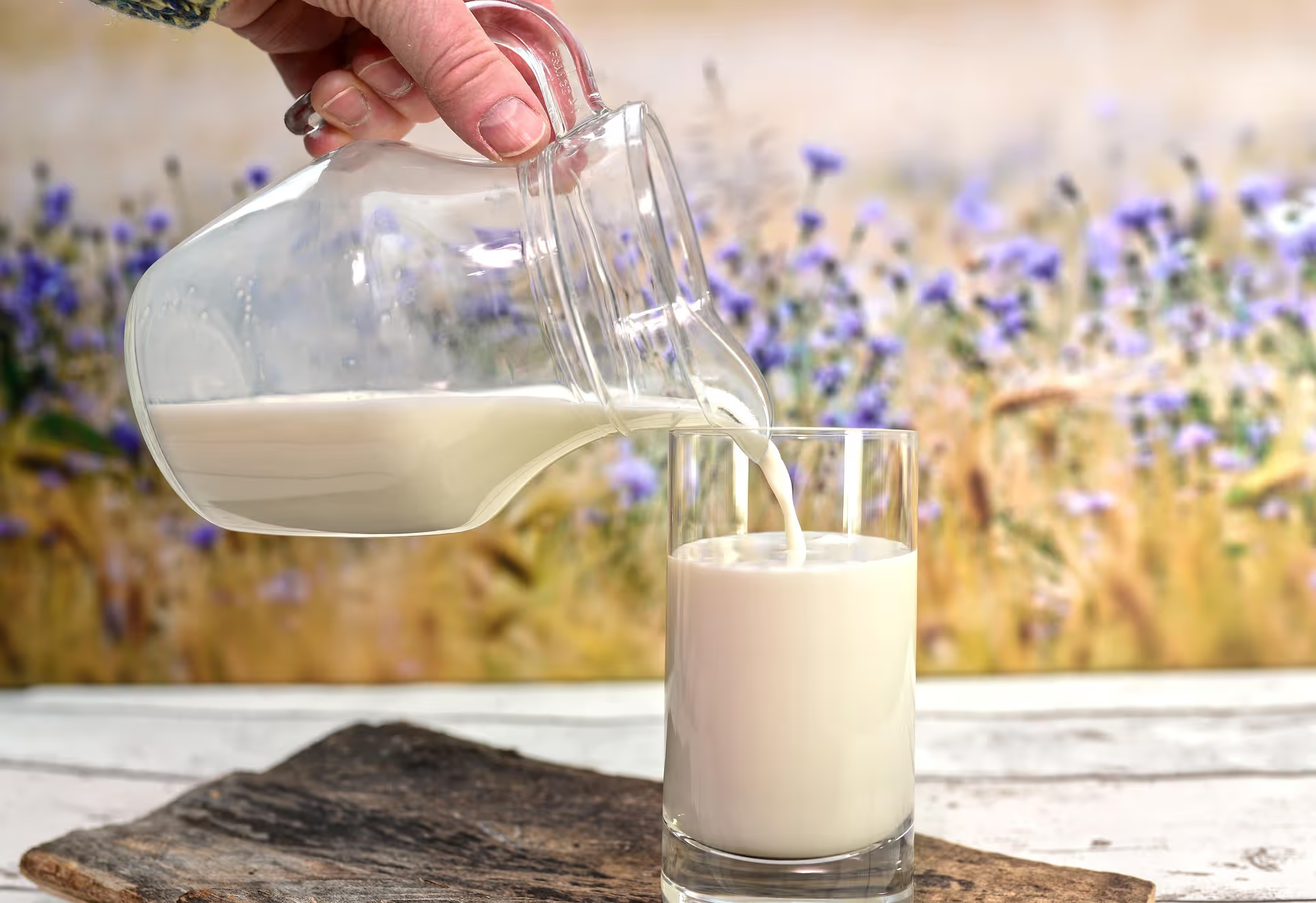
The recalled product is a gallon-type fat-free milk produced by a major dairy supplier and sold in a regional retail chain’s stores across two U.S. states. The contamination has been traced to a single production facility, with the affected volume limited to a specific segment of the production run on a particular day.
According to the supplier, about 320 gallons of the product were sold before the quality issue was detected. The affected units bear the UPC code 7273023117, and were processed between 17:51 and 21:23 on the production date. The company states that only a portion of that day’s production — not the full batch — was contaminated.
Once alerted to the potential problem on Nov. 24, the company launched an internal investigation in coordination with regulators. The recalled batches were removed from store shelves as soon as the contamination was confirmed, and a recall was initiated. Retail partners and public-health agencies have since worked together to notify customers and facilitate safe disposal.
The milk in question was sold at a chain of grocery stores operating in Illinois and Wisconsin. Customers who purchased gallon containers from those locations within the time frame indicated are urged to stop using them immediately, check their packaging, and discard any potentially affected containers.
Company officials, in public statements, have apologized for the incident and emphasized their commitment to full transparency. They are working with regulatory authorities to identify what went wrong in the sanitizing or rinsing process, to ensure it cannot recur.
A Broader Context: Previous Recall of Contaminated Eggs
This incident comes on the heels of a separate major recall — one involving eggs linked to a bacterial outbreak. Late last year, regulators upgraded a previous “salmonella-linked” egg recall to Class I — the most serious type, reserved for products that pose a high risk of “serious adverse health consequences or death.”
That recall involved eggs from a poultry farm based in Wisconsin. According to health-department data, the outbreak sickened dozens of people across multiple states: Wisconsin, Michigan, Illinois, Iowa, Minnesota, Colorado, Utah, California and Virginia. In total, 65 infections were recorded; among the 63 cases with available details, 24 individuals required hospitalization.
Although no deaths were reported, the severity of the illnesses — extended hospital stays, dehydration, risk of complications — spurred a massive recall of all egg types from the affected producer. That recall covered conventional, cage-free, organic, and non-GMO eggs, all sold under various labels and distributed widely across several states.
The egg recall underscored how even routine food supplies can harbor hidden danger, and how quickly a supply-chain problem can ripple across state lines. It also reminded consumers that seemingly safe items — eggs, milk, produce — require continuous vigilance.
By comparison, the current milk recall may seem modest in scope. But the fact that a chemical-sanitization failure — rather than a microbial outbreak — triggered the recall adds a troubling new dimension to food-safety concerns. It highlights how industrial-scale food production depends on precise hygiene and quality-control protocols, where even small mistakes can render products unsafe.
Why This Recall Matters — For Consumers, Producers, Regulators
1. Erodes consumer trust in everyday essentials
Milk is a staple in many households — for drinking, cooking, cereals, coffee, baking. It is often considered safe and benign. When milk is subject to chemical contamination and recall, it shakes consumer confidence not only in that brand, but potentially in the broader dairy supply chain.
2. Highlights the fragility of industrial food-processing protocols
Modern food production depends on complex systems: sanitation, sterilization, automated production lines, quality control sampling, traceability. A single breakdown — a missed rinse, a faulty sensor, a mis-labeled batch — can compromise large quantities of product. This recall shows that even routine cleaning agents, if mishandled, can turn a benign product into a health hazard.
3. Amplifies regulatory and compliance pressure on producers
Producers now face increased scrutiny from both public-health authorities and consumers. This recall may lead to more frequent inspections, stricter sanitation audits, and perhaps new regulations on cleaning-agent usage, handling, and verification in food production. For producers, it underscores the need for rigorous standard operating procedures and transparent record-keeping.
4. Serves as a warning for cautious consumer behavior
Consumers are reminded not to assume safety just because a product is widely available. Checking packaging carefully, understanding product codes, and staying alert to public-health notices can make the difference between safety and risk. The recall also demonstrates that even commonly consumed foods like milk — once considered low-risk — may carry unexpected hazards under certain circumstances.
5. A test case for how recalls of chemical contamination are handled
While microbial recalls (like salmonella or listeria) are common, chemical contamination recalls receive less public attention. This event may influence future recall policies, encourage better labeling practices, and lead to clearer guidelines on when and how to alert consumers — especially when cleaning agents, sanitizers, or other non-food chemicals are involved.
What Consumers Should Do — Best Practices for Safety
If you or someone in your household purchased milk recently, especially gallon-size containers, follow these steps:
-
Check packaging thoroughly — look for the UPC code 7273023117, and check production stamps or code dates.
-
If the code matches the recalled batch, do not drink, cook, or feed the milk to pets or children.
-
Safely dispose of the milk by emptying the contents into a safe drain (if allowed in your local waste-disposal regulations), sealing the empty container, and placing it in a secure trash bin.
-
If you experience any symptoms after consuming the product — particularly gastrointestinal or throat/mouth irritation — seek medical care and report the illness to your local health department.
-
Spread the word. If you know friends or family in regions affected by the recall, inform them so they can verify their own milk purchases.
-
Stay alert for updates. The company and regulatory agencies may expand the recall list, offer refunds or reimbursements, or issue further guidance.
Above all, treat the recall as serious — chemical contamination is not something that “goes away” with boiling or cooking, and it cannot be assumed to be harmless.
Looking Ahead — The Bigger Picture for Food-Safety
This recall may seem limited in scope today, but it arrives at a critical moment for consumer trust and regulatory scrutiny. With global supply chains, large-scale production, and automated food processing — the margin for error may be shrinking, but the consequences of mistakes remain significant.
If regulators and producers respond properly — with transparency, swift removal of contaminated products, clear communication, and robust sanitation procedures — such events can be contained and prevented from recurring. But if complacency sets in, or if oversight is weak, consumer confidence may suffer long-term damage.
For now, public health experts urge consumers not to panic — but to act responsibly: check your containers, follow recall instructions, and stay informed.
As one industry analyst noted, “Trust is built over years, but lost in an instant.” This recall is a reminder that maintaining that trust requires relentless attention to detail from producers — and vigilance from consumers.
Summary: What You Need to Know — In Short
-
An urgent recall was issued after certain milk containers were found possibly contaminated with food-grade cleaning agents.
-
Chemical contamination, not bacteria, triggered the recall — ingestion of cleaning agents can cause serious illness.
-
The recall involves a gallon-size fat-free milk with UPC code 7273023117, produced in a specific time window at one processing facility.
-
About 320 gallons were sold before the recall — customers in affected states are urged to check their purchases and discard any affected containers.
-
Consumers experiencing symptoms after ingestion should seek medical attention and report the incident.
-
This recall follows a recent high-profile egg recall involving salmonella, highlighting increasing concerns over food safety — both chemical and microbial.
-
The incident underscores the critical importance of strict sanitation procedures, regulatory oversight, and consumer vigilance.
In short: this is a serious, but contained — for now — safety alert. If you’ve purchased gallon-size milk in the relevant region recently, take a moment now to check your fridge. It could mean the difference between safety and illness.

Emily Johnson is a critically acclaimed essayist and novelist known for her thought-provoking works centered on feminism, women’s rights, and modern relationships. Born and raised in Portland, Oregon, Emily grew up with a deep love of books, often spending her afternoons at her local library. She went on to study literature and gender studies at UCLA, where she became deeply involved in activism and began publishing essays in campus journals. Her debut essay collection, Voices Unbound, struck a chord with readers nationwide for its fearless exploration of gender dynamics, identity, and the challenges faced by women in contemporary society. Emily later transitioned into fiction, writing novels that balance compelling storytelling with social commentary. Her protagonists are often strong, multidimensional women navigating love, ambition, and the struggles of everyday life, making her a favorite among readers who crave authentic, relatable narratives. Critics praise her ability to merge personal intimacy with universal themes. Off the page, Emily is an advocate for women in publishing, leading workshops that encourage young female writers to embrace their voices. She lives in Seattle with her partner and two rescue cats, where she continues to write, teach, and inspire a new generation of storytellers.