FBI: Suspect in Charlie Kirk Case Allegedly Left Note Explaining Motive
Federal investigators say the suspect accused of killing conservative activist Charlie Kirk may have left behind a chilling message before the deadly attack.
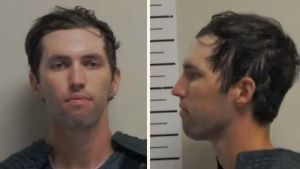
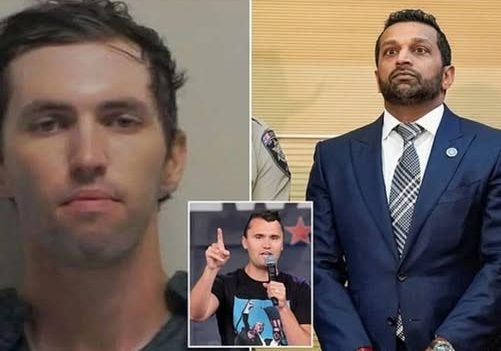
FBI Director Kash Patel told Fox News on Monday that forensic evidence has confirmed the existence of a note written by 22-year-old Tyler Robinson before he allegedly shot Kirk at Utah Valley University last week. According to Patel, the note has since been destroyed, but investigators were able to determine its contents.
The Alleged Note
Patel said the note revealed Robinson’s mindset before the shooting.
“‘I have the opportunity to take out Charlie Kirk and I’m going to take it,’” Patel claimed the note read. “That note was written before the shooting.”
The FBI director added that agents used forensic methods to verify what was in the message, though he did not specify whether the note was handwritten, digital, or recovered through electronic forensics.
“It did exist, and we have evidence to show what was in that note,” Patel emphasized.
Partner Turned Over Evidence
Robinson reportedly told his live-in partner about the note before fleeing his apartment. Relatives of the partner, who is in the process of transitioning, told Fox that the individual had grown increasingly hostile toward conservatives and Christians over the past few years.
“He hates conservatives and Christians,” one female relative said. “He hated us. He was not raised that way, but he has become really detached and radicalized.”
Despite that history, the roommate has been cooperating with investigators and provided messages and other evidence linking Robinson to the attack.
Robinson in Custody
Robinson remains in the custody of the Utah County Sheriff’s Department. Officials confirmed he is being held in a special housing unit under “special watch” while undergoing mental health evaluations.
Gov. Spencer Cox said on Sunday that Robinson has refused to cooperate with investigators but that family members and his partner have been helpful. The governor added that those close to Robinson described him as “deeply indoctrinated with leftist ideology.”
Forensic Evidence Mounts
In addition to the note, Patel said DNA samples collected from a towel wrapped around the rifle and a screwdriver found on the roof of Utah Valley University matched Robinson. The Bureau of Alcohol, Tobacco, Firearms, and Explosives is still processing the rifle itself.
“The evidence shows conclusively that Robinson was at the scene and carried out the attack,” Patel said.
Another Arrest Adds Chaos
The Kirk case has taken additional twists. Over the weekend, police arrested 71-year-old political activist George Zinn after he falsely confessed to being the shooter.
According to Fox 13 Utah, Zinn approached officers immediately after the attack and shouted, “I shot him, now shoot me!” Officers quickly determined he was unarmed but arrested him at the chaotic scene.
Court documents reveal Zinn later admitted he had not shot Kirk. Instead, he claimed he wanted to distract officers “to draw attention from the real shooter” and even suggested he hoped to be a “martyr” for the victim.
Authorities charged Zinn with obstruction of justice, a second-degree felony, saying his actions wasted valuable time in the early stages of the investigation. Video from the scene shows him being dragged away by police as bystanders shouted angrily, believing he was the killer.
The Bigger Picture
The developments highlight the growing complexity of the investigation. Officials are now balancing Robinson’s prosecution, evaluating the cooperation of his partner, and dealing with distractions caused by false confessions.
Despite Robinson’s lack of cooperation, federal and state officials insist the case against him is strong. Between DNA evidence, electronic communications, and forensic findings, investigators say they have built a comprehensive picture of what happened before and during the attack on Kirk.
James Jenkins is a celebrated Pulitzer Prize-winning author whose work has reshaped the way readers think about social justice and human rights in America. Raised in Atlanta, Georgia, James grew up in a community that instilled in him both resilience and a strong sense of responsibility toward others. After studying political science and creative writing at Howard University, he worked as a journalist covering civil rights issues before dedicating himself fully to fiction. His novels are known for their sharp, empathetic portraits of marginalized communities and for weaving personal stories with broader political realities. Jenkins’s breakout novel, Shadows of Freedom, won national acclaim for its unflinching look at systemic inequality, while his more recent works explore themes of identity, resilience, and the fight for dignity in the face of oppression. Beyond his novels, James is an active public speaker, lecturing at universities and participating in nonprofit initiatives that support literacy and community empowerment. He believes that storytelling is a way to preserve history and inspire change. When not writing, James enjoys jazz music, mentoring young writers, and traveling with his family to explore cultures and stories around the world.