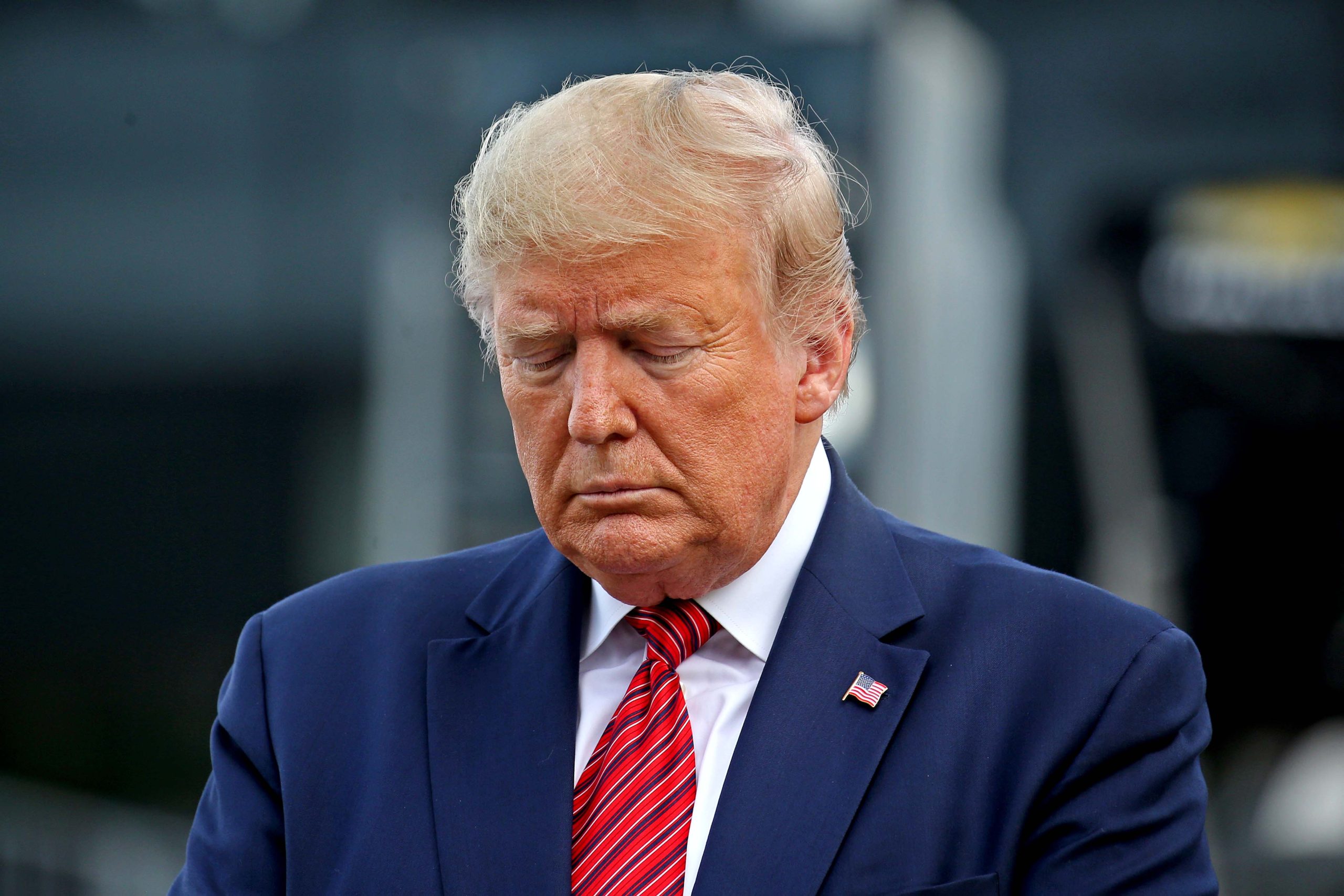
President Donald Trump recently posted a 62-second video on Truth Social that quickly drew national attention, primarily for its focus on claims of fraud in the 2020 presidential election. While the majority of the video was devoted to asserting that the 2020 race was “rigged,” critics and commentators seized on a fleeting animation that appeared for just a couple of seconds at the very end of the clip.
In the closing moments of the video, a brief animated frame shows former President Barack Obama and former First Lady Michelle Obama with their faces superimposed on cartoon primate bodies. The image, which flashes for only an instant, resembles a meme format common on social media platforms like Instagram Reels or TikTok, where clips transition rapidly from one to the next. Observers noted that the sudden appearance of the animation seemed incidental, part of a recycled meme sequence rather than a central message of the post.
The video itself primarily revisits long-running claims by Trump and his allies that the 2020 election was marred by widespread fraud. The former president has repeatedly sought to portray the election as illegitimate, with legal challenges and public statements aimed at questioning the integrity of the vote in key battleground states. In this post, Trump condensed much of that argument into a short-form video designed for rapid consumption on social media, in keeping with trends in political meme culture.
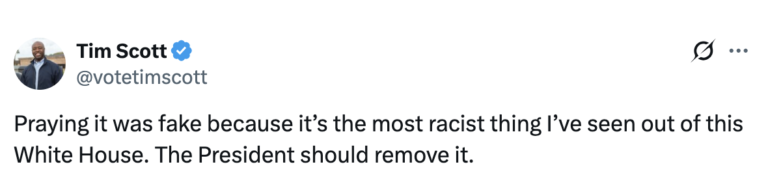
Despite the brief nature of the animation, Republican Sen. Tim Scott of South Carolina publicly criticized the post, labeling the image as racist. Scott, who has recently faced scrutiny and waning support from the GOP base, took to X (formerly Twitter) to express his disapproval. “Praying it was fake because it’s the most racist thing I’ve seen out of this White House. The President should remove it,” Scott wrote, framing the post as an example of unacceptable imagery coming from the former president.
The White House responded quickly to the backlash, asserting that the criticism had misread the context of the video. White House Press Secretary Karoline Leavitt explained that the animation was part of a broader internet meme depicting Trump as the “King of the Jungle” and Democrats as characters from The Lion King. “Please stop the fake outrage and report on something today that actually matters to the American public,” Leavitt said in a statement to NewsNation, emphasizing that the focus of the video remained on Trump’s allegations of electoral irregularities.
Supporters of the former president also pointed out that the animation appeared for only a fraction of a second and did not constitute the primary message of the post. Short-form video content, especially memes and social media reels, often relies on rapid transitions between visuals, with each frame appearing only briefly. From this perspective, many viewed the criticism as an overreaction to a moment that was incidental and not the focus of the message.
The timing of the post further fueled discussion, as it coincided with renewed scrutiny of the 2020 election by federal authorities. The Department of Justice recently seized voting rolls from a Fulton County, Georgia, election office, part of an ongoing investigation into the handling of ballots and voter data. Meanwhile, the office of the Director of National Intelligence, including reports from former presidential candidate Tulsi Gabbard, reportedly examined voting machines used in Puerto Rico. These developments have kept debates over the 2020 election in the headlines, providing a backdrop for Trump’s video and his continued claims regarding election integrity.
Observers note that the controversy surrounding the brief animation highlights how modern political communication, especially via social media, can generate rapid and polarized reactions. A video designed to emphasize one message—in this case, claims about election fraud—can be reframed in the court of public opinion by a single frame or image, even if that frame constitutes only a fraction of the content. The incident also illustrates how political figures are scrutinized not only for what they say but for every visual element they publish online.
Political analysts have commented on the broader implications of the episode for the Republican Party. While Trump maintains a devoted base of supporters who continue to rally behind his claims of a “stolen” election, the post also risks alienating figures like Scott who seek to distance themselves from imagery or rhetoric perceived as offensive. Balancing the demands of a base that embraces Trump’s messaging with the concerns of mainstream party members has become a recurring challenge for GOP leadership.
In addition to the political ramifications, the episode underscores the power of social media in shaping public discourse. Platforms like Truth Social, X, TikTok, and Instagram Reels enable rapid dissemination of content, but they also magnify scrutiny. Content can go viral almost instantly, and the speed at which viewers consume short-form media often leads to heightened reactions to fleeting moments that might otherwise be overlooked in traditional reporting formats.
Critics argue that the brief animation, regardless of intent, reflects a pattern in which political messaging relies heavily on memes, symbolism, and humor that can be interpreted in multiple ways. Supporters, conversely, stress the importance of focusing on the broader message—Trump’s ongoing assertions about election irregularities—rather than a split-second visual. This divergence in interpretation has fueled a broader debate about accountability, intent, and context in online political communication.
The former president’s use of memes and short-form video is consistent with his long-standing social media strategy, which prioritizes rapid, visually impactful content designed to reinforce key narratives. Over the past decade, Trump has leveraged these formats to mobilize supporters, shape public perception, and dominate news cycles. The Truth Social post continues this pattern, combining political messaging with elements of internet culture to engage viewers in a format they are accustomed to consuming quickly.
While the animation’s appearance was brief, its impact on political discourse was amplified by national media coverage and commentary from prominent politicians. The incident demonstrates the heightened sensitivity surrounding depictions of public figures, particularly former presidents and other high-profile officials, in any visual form. It also highlights how digital content can be interpreted in ways that diverge from the creator’s original intent, particularly in a politically polarized environment.
As debates continue over the legitimacy of the 2020 election, posts like this one remain a flashpoint for discussions about race, media literacy, and the boundaries of political satire. Observers suggest that the episode will likely be cited in ongoing conversations about social media regulation, responsible messaging, and the ways in which rapid, short-form content can shape perceptions of political figures and historical events.
Ultimately, the Truth Social video serves as a case study in how digital media, political messaging, and cultural memes intersect. While Donald Trump intended the post to reinforce his long-standing narrative about alleged election fraud, the fleeting animation of the Obamas in the final moments generated intense scrutiny and debate. Whether interpreted as a meme or offensive imagery, the incident underscores the ways in which modern political communication can spark immediate and widespread reactions, particularly when content is consumed in the fast-paced, fragmented environment of social media platforms.
As national attention remains focused on election investigations and political messaging, this episode is likely to continue generating discussion among media outlets, political analysts, and social media users, reflecting both the influence and challenges of communicating political ideas in the digital age.

Emily Johnson is a critically acclaimed essayist and novelist known for her thought-provoking works centered on feminism, women’s rights, and modern relationships. Born and raised in Portland, Oregon, Emily grew up with a deep love of books, often spending her afternoons at her local library. She went on to study literature and gender studies at UCLA, where she became deeply involved in activism and began publishing essays in campus journals. Her debut essay collection, Voices Unbound, struck a chord with readers nationwide for its fearless exploration of gender dynamics, identity, and the challenges faced by women in contemporary society. Emily later transitioned into fiction, writing novels that balance compelling storytelling with social commentary. Her protagonists are often strong, multidimensional women navigating love, ambition, and the struggles of everyday life, making her a favorite among readers who crave authentic, relatable narratives. Critics praise her ability to merge personal intimacy with universal themes. Off the page, Emily is an advocate for women in publishing, leading workshops that encourage young female writers to embrace their voices. She lives in Seattle with her partner and two rescue cats, where she continues to write, teach, and inspire a new generation of storytellers.