A rising voice in Southern hip-hop has died at just 25, sending shockwaves through fans, collaborators, and the broader music community. Authorities in Georgia confirmed Thursday that the artist died from a self-inflicted gunshot wound to the head, with the death ruled a suicide by the Fulton County Medical Examiner’s Office. The news emerged only a day after the performer’s passing, leaving supporters grappling with a sudden and devastating loss.
In the hours following confirmation of the cause of death, tributes and messages of disbelief flooded social media platforms. Fans posted messages expressing grief and confusion, many noting that the young musician appeared to be on the brink of a major career breakthrough. “No way, this guy had it all,” one user wrote, echoing a common sentiment among listeners who had followed his ascent in recent years. Others reflected more quietly on the private struggles artists may endure away from public view, writing that he “must have been in pain.”
The artist, based in Jacksonville, Florida, had just released new music days before his death, including the single “Out Of Town Bae” along with its accompanying video. The release had been viewed by fans as a sign of momentum, with a new performance scheduled for March in New Orleans and continued buzz around his evolving sound. His most recent album, Almost Normal Again, arrived in August 2025 and further solidified his reputation for introspective storytelling layered over melodic Southern production.
It was only in the middle of the unfolding coverage that many readers encountered the name that had become synonymous with that distinct style: Lil Poppa. Born Janarious Mykel Wheeler, he had emerged from Jacksonville’s rap scene with a voice that balanced vulnerability and grit, building a loyal audience drawn to his emotionally direct lyrics and narrative depth.
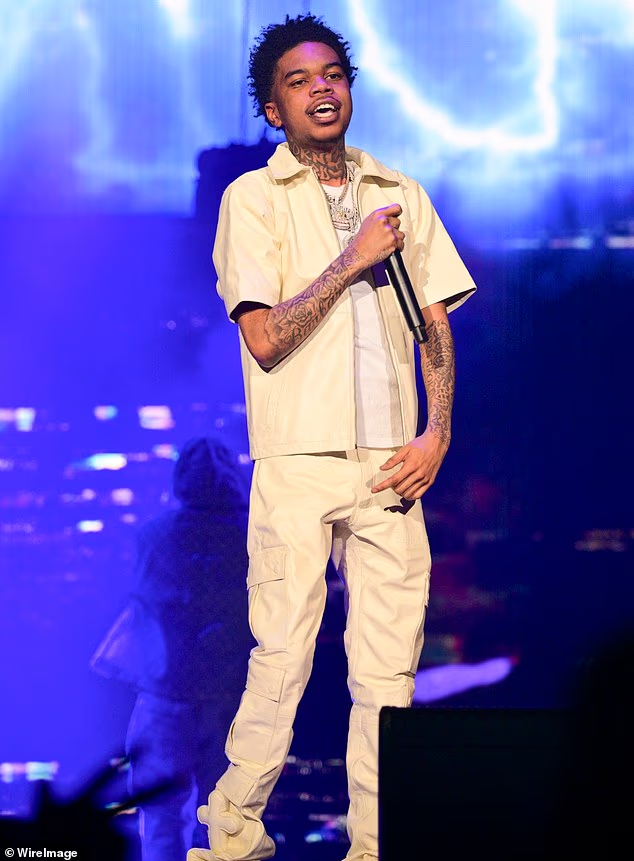
His rise began with breakout tracks such as Love & War, which resonated widely for its candid depiction of hardship, relationships, and personal growth. Over time, additional releases including Mind Over Matter and Happy Tears expanded his reach, positioning him as one of the most promising artists to emerge from the region in recent years. Signed to Collective Music Group, the label founded by Memphis rapper Yo Gotti, he represented a new generation of Southern artists bridging street narratives with reflective songwriting.
Industry figures and fellow artists were among the first to publicly mourn the loss. Comedian and rapper Lil Duval shared a deeply personal tribute, describing a long-standing connection to the Jacksonville music scene and recalling a recent conversation in which the two had discussed meeting up in the near future. His message expressed regret that the meeting never happened, a sentiment that resonated across many posts from friends and collaborators who wished they had more time.
YouTube personality Davo Migo also posted a brief but emotional message online, writing that the news “hurt” and expressing disbelief at the sudden loss. Executives who had worked closely with the artist during his development echoed those sentiments. Caroline “Baroline” Diaz, CEO of Great Day Records and an early supporter of his work, described him as “my little brother” and said she was “broken” by the news, highlighting the personal bonds often formed behind the scenes in the music industry.
For many in Jacksonville, his passing has been felt as a loss not only of a performer but of a hometown figure whose success story reflected broader aspirations within the community. Local supporters frequently cited his authenticity and determination, noting that his music carried the experiences of his upbringing while striving toward something more hopeful. His trajectory—from local talent to nationally recognized artist—had become a point of pride for fans who saw in him a reflection of their own ambitions.
The timing of his death, just one month before his 26th birthday, adds to the sense of tragedy surrounding the event. Plans for upcoming performances and new projects now stand as reminders of a career that was still unfolding. Industry observers note that he had begun to carve out a unique lane within contemporary hip-hop, one that blended the emotional candor of melodic rap with the storytelling traditions of Southern street music.
While tributes continue to circulate, conversations have also turned toward the broader issue of mental health in the entertainment industry. The pressures of public life, touring schedules, creative expectations, and personal challenges can converge in ways that are not always visible to fans. Advocates and fellow musicians have used the moment to encourage open dialogue, urging those struggling to seek help and emphasizing that support systems are essential even for those who appear outwardly successful.
The Fulton County Medical Examiner’s ruling brings a measure of clarity to the circumstances of the death, but it does little to ease the grief felt by those who knew the artist personally or through his music. As messages continue to pour in from across the country, many focus on celebrating the legacy he leaves behind—songs that connected deeply with listeners and a voice that captured a particular emotional honesty rarely expressed so directly.
In the days ahead, fans are expected to revisit his catalog, sharing lyrics and performances that defined his short but impactful career. The sense of loss remains profound, but so too does recognition of the artistic imprint he created in just a few years. For many, his music will continue to speak long after his passing, offering both comfort and reflection in the wake of an absence that feels sudden and immense.
If you or someone you know is struggling, confidential help is available through the Suicide and Crisis Lifeline by dialing 988 in the United States or by contacting local support services in your country.