




A revered figure in American folk music, admired by some of the most influential artists of the past half-century, has died alongside his wife following a devastating house fire in rural Belgium. The couple were found at their longtime home in eastern Wallonia over the weekend, bringing a quiet and tragic end to a life defined by art, devotion, and uncompromising creativity.
Local authorities confirmed that the fire broke out late on Saturday at the couple’s residence near the Meuse River. Emergency services responded swiftly, but both occupants were pronounced dead at the scene. Officials later said the cause of death was asphyxiation. No foul play is suspected.
News of the deaths sent ripples through the international music community, particularly among folk musicians and songwriters who regarded the American expatriate as a cult figure whose influence far outweighed his commercial profile. For decades, his work circulated among artists rather than charts, passed hand-to-hand like a secret text — revered, studied, and cherished.
Though he never became a household name, his songwriting earned him a fiercely loyal following. His songs were known for their emotional severity, intellectual depth, and refusal to conform to commercial expectations. Fellow musicians often described his work as demanding but deeply rewarding, marked by unusual chord structures, literary lyrics, and a spiritual intensity that set him apart from his peers.
Born in California during the post-war years, the singer emerged in the late 1960s amid a crowded folk revival scene. While many of his contemporaries chased topical anthems or radio success, he followed a different path, drawing on formal musical training and classical composition techniques. His work stood at an unusual crossroads of folk, poetry, and modern composition — too complex for pop radio, yet too emotionally raw to be academic.
That tension became the defining feature of his career.
Despite limited mainstream success, his debut album — released at the height of the folk boom — quietly earned the admiration of other musicians. Over time, it became one of those records whispered about in studios and tour buses, passed between artists as an example of fearless songwriting. One of its most devoted listeners would later become one of the most famous musicians in the world.
By the time the full scope of his influence was understood, the singer had already retreated from the American music industry. He relocated to Europe in the 1970s, settling eventually in Belgium, where he built a life centered on composing, teaching, and writing — far from the commercial pressures of the industry he had never quite embraced.
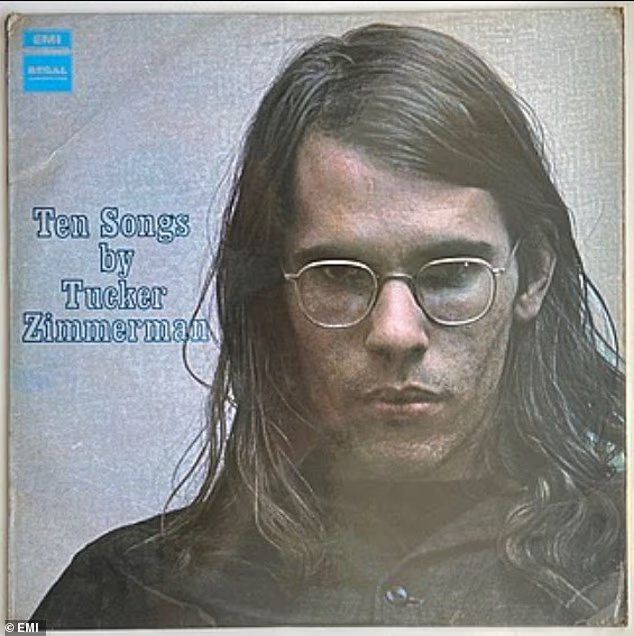
The artist was Tucker Zimmerman, an American folk singer-songwriter whose career spanned more than six decades. He was 84 years old.
Zimmerman died alongside his wife of more than fifty years, Marie-Claire Lambert, who was 81. The two met in Rome in the mid-1970s, married soon after, and remained inseparable partners in both life and art. Friends often described Lambert as Zimmerman’s anchor — the steady presence that allowed him to continue creating with single-minded devotion.
In a statement released following the news, Zimmerman’s longtime record label paid tribute to his vast body of work, calling it “an extraordinary collection of records, compositions, poetry, and short stories created over a 60-year career.” The statement described him as an artist who “never compromised his vision,” even when that choice came at a personal or financial cost.
Zimmerman’s debut album, released in 1969 and produced by Tony Visconti, marked the beginning of his enduring reputation among musicians. Visconti would later become one of the most important producers of the 20th century, working extensively with David Bowie — another early admirer of Zimmerman’s work.
Bowie spoke openly about his respect for the singer, once naming Zimmerman’s first album among his favorite records of all time. In interviews, Bowie praised the emotional ferocity and compositional rigor of the songs, describing them as “stern, angry, and enthralling.” He frequently expressed disbelief that such a formidable talent had remained on the margins of popular recognition.
Over the years, Zimmerman wrote more than 800 songs, alongside orchestral works, film compositions, and experimental pieces. His output was prolific, though much of it circulated quietly, released on small labels or performed live for devoted audiences rather than mass markets.
In recent years, a new generation of musicians helped reintroduce his work to contemporary listeners. In 2024, the indie band Big Thief collaborated with Zimmerman as producers and backing musicians on the album Dance of Love, a project that brought renewed attention to his songwriting and affirmed his relevance well into his eighties.
His final album, Music by River Words by Ear, was released just months before his death. Listeners described it as reflective and spare, infused with themes of time, memory, and enduring love — qualities that now resonate with added poignancy.
Zimmerman often spoke publicly about the central role his wife played in his life. In a passage published on his website, he credited her with sustaining him through decades of artistic uncertainty, writing that without her, he “would be nowhere in the world except six feet under.” He described Lambert as his guide, his muse, and his driver — emotionally and practically.
The couple are survived by their son, Quanah, now 49.
As tributes continue to pour in from musicians, writers, and listeners around the world, many have emphasized that Zimmerman’s legacy cannot be measured by fame or sales. Instead, it lives on in the work of those he inspired — artists who heard in his songs permission to take risks, to ignore trends, and to pursue truth at all costs.
In the end, Tucker Zimmerman remained exactly what he had always been: a songwriter’s songwriter, a musician’s musician, and a quiet force whose influence will continue long after the fire that claimed his life has faded from memory.

Emily Johnson is a critically acclaimed essayist and novelist known for her thought-provoking works centered on feminism, women’s rights, and modern relationships. Born and raised in Portland, Oregon, Emily grew up with a deep love of books, often spending her afternoons at her local library. She went on to study literature and gender studies at UCLA, where she became deeply involved in activism and began publishing essays in campus journals. Her debut essay collection, Voices Unbound, struck a chord with readers nationwide for its fearless exploration of gender dynamics, identity, and the challenges faced by women in contemporary society. Emily later transitioned into fiction, writing novels that balance compelling storytelling with social commentary. Her protagonists are often strong, multidimensional women navigating love, ambition, and the struggles of everyday life, making her a favorite among readers who crave authentic, relatable narratives. Critics praise her ability to merge personal intimacy with universal themes. Off the page, Emily is an advocate for women in publishing, leading workshops that encourage young female writers to embrace their voices. She lives in Seattle with her partner and two rescue cats, where she continues to write, teach, and inspire a new generation of storytellers.