A newly released tranche of documents related to convicted sex offender Jeffrey Epstein has brought renewed public attention to a number of high-profile political, entertainment, and cultural figures, after photographs featuring well-known names were made public by the U.S. Department of Justice.
The release, which took place Friday afternoon, included roughly 300,000 pages of records connected to Epstein, following a federal transparency law requiring the disclosure of all unclassified materials in the government’s possession. The documents were made public at approximately 4 p.m. Eastern Time, though officials acknowledged that the release remains incomplete and that additional material will follow in subsequent batches.
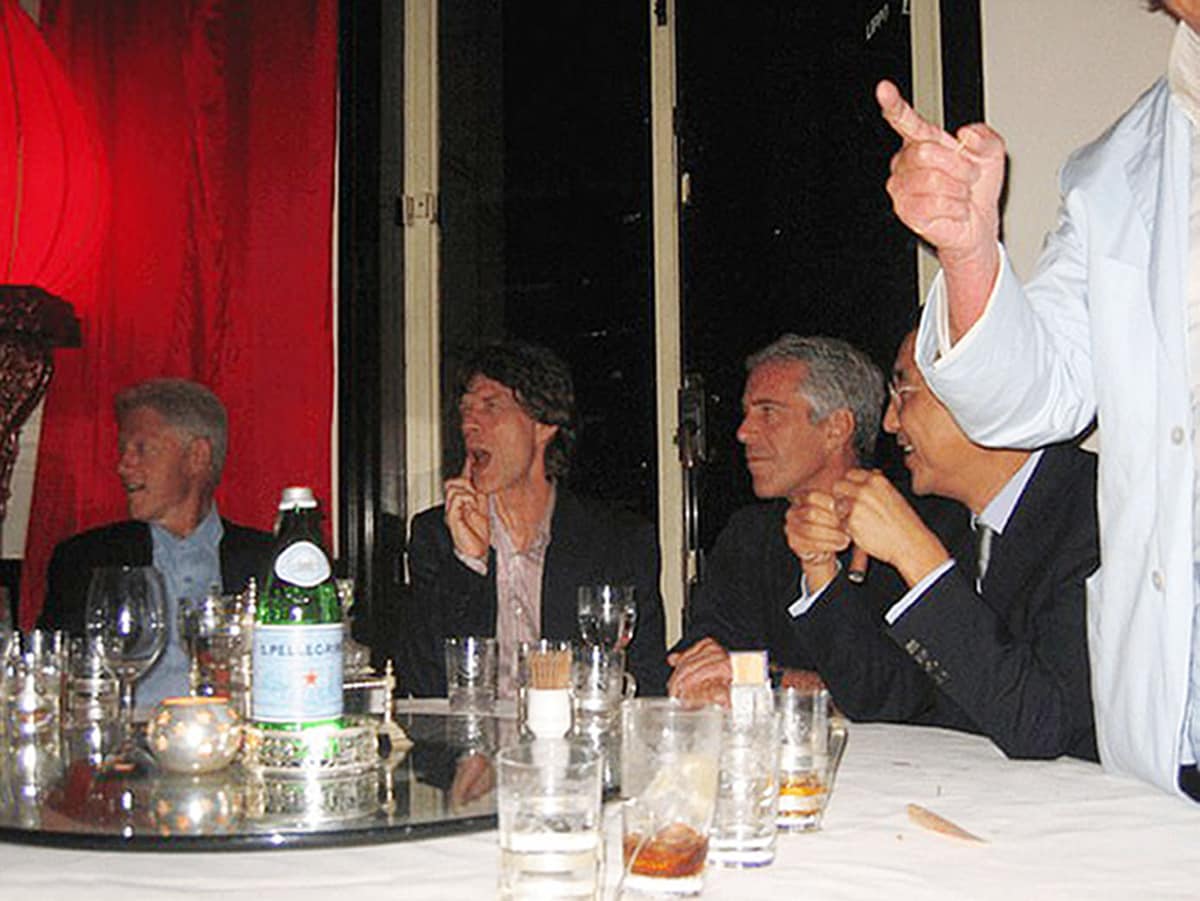
Among the files are photographs depicting Epstein and his longtime associate Ghislaine Maxwell socializing with prominent figures, including former U.S. President Bill Clinton, pop icon Michael Jackson, Rolling Stones frontman Mick Jagger, actor Chris Tucker, and Britain’s disgraced former royal Andrew Mountbatten-Windsor, formerly known as Prince Andrew. Sarah Ferguson, Andrew’s former wife, also appears in the images.
The appearance of these individuals in the files has sparked widespread interest both in the United States and internationally. However, the Department of Justice emphasized that inclusion in the documents or photographs does not imply criminal wrongdoing, and no new allegations have been made against those pictured.
Several of the images featuring Clinton have drawn particular attention. One photograph shows the former president swimming in a pool alongside Maxwell. Another depicts a provocative painting of Clinton wearing a dress and heels—an artwork that has circulated publicly in previous years but now appears as part of the official DOJ release.
Additional photographs show Epstein and Maxwell attending social events with celebrities and political figures, though the precise dates, locations, and circumstances of many of the images remain unclear. In one image, Maxwell is seen posing outside 10 Downing Street, the official residence of the British prime minister. Others depict Epstein smiling alongside Michael Jackson, or seated at dinner tables with high-profile guests.
According to reporting by the BBC, some of the photographs recovered from Epstein’s properties were not taken by Epstein himself and may depict events he did not attend. The DOJ has not provided contextual explanations for most of the images, nor has it clarified the nature of Epstein’s relationships with everyone pictured.
Clinton has previously addressed his past association with Epstein. In his 2024 memoir, Citizen: My Life After the White House, the former president acknowledged traveling aboard Epstein’s private aircraft in connection with work related to the Clinton Foundation. He wrote that, in hindsight, the association was a mistake.
“The bottom line is, even though it allowed me to visit the work of my foundation, traveling on Epstein’s plane was not worth the years of questioning afterward,” Clinton wrote. “I wish I had never met him.”
Following Friday’s document release, a spokesperson for Clinton issued a statement pushing back against renewed scrutiny. The statement characterized the images as decades old and dismissed suggestions that Clinton was being protected by the delayed disclosure.
“They can release as many grainy 20-plus-year-old photos as they want, but this isn’t about Bill Clinton,” the spokesperson said. “Never has, never will be. There are two types of people here: those who cut off contact with Epstein before his crimes came to light, and those who continued relationships afterward. We’re in the first group.”
The spokesperson added that public focus should remain on accountability rather than deflection, saying that “everyone expects answers, not scapegoats.”
Beyond the photographs, the newly released files include extensive redactions, underscoring the sensitive nature of the material. A so-called “masseuse list,” containing 254 entries, has been entirely blacked out. A 119-page grand jury document was also released in fully redacted form, with no explanation provided for the scope of the omissions.
Other materials include handwritten notes, contact books, flight logs, and a scrapbook featuring images of Epstein alongside photographs of women whose identities have been obscured. One caption in the scrapbook reads, “Is my cover blown?”—a phrase that has further fueled speculation, though no additional context was provided.
Deputy Attorney General Todd Blanche said on Friday that a review of the files identified more than 1,200 victims and their families. All identifying information related to victims has been redacted to protect privacy, consistent with federal law.
Blanche also confirmed that the DOJ was unable to meet the statutory deadline for releasing the entirety of the Epstein materials in a single disclosure. Instead, officials plan to continue releasing documents in phases over the coming weeks.
The staggered release has drawn criticism from some lawmakers and advocacy groups, who argue that delays undermine transparency and public trust. Others have cautioned against drawing conclusions from partial disclosures, especially when context is missing and significant portions of the records remain sealed.
Epstein, a financier with deep ties to powerful individuals across politics, business, and entertainment, died in federal custody in 2019 while awaiting trial on sex trafficking charges. His death was ruled a suicide, though it has continued to fuel public skepticism and conspiracy theories.
Maxwell, Epstein’s longtime associate, was convicted in 2021 of federal sex trafficking-related offenses and is currently serving a lengthy prison sentence.
As more documents are expected to be released before the end of the year, officials say the public should expect further scrutiny of Epstein’s social network, though they continue to stress that appearances in the files alone do not constitute evidence of criminal behavior.
The Department of Justice has not indicated when the next batch of documents will be made public.

Emily Johnson is a critically acclaimed essayist and novelist known for her thought-provoking works centered on feminism, women’s rights, and modern relationships. Born and raised in Portland, Oregon, Emily grew up with a deep love of books, often spending her afternoons at her local library. She went on to study literature and gender studies at UCLA, where she became deeply involved in activism and began publishing essays in campus journals. Her debut essay collection, Voices Unbound, struck a chord with readers nationwide for its fearless exploration of gender dynamics, identity, and the challenges faced by women in contemporary society. Emily later transitioned into fiction, writing novels that balance compelling storytelling with social commentary. Her protagonists are often strong, multidimensional women navigating love, ambition, and the struggles of everyday life, making her a favorite among readers who crave authentic, relatable narratives. Critics praise her ability to merge personal intimacy with universal themes. Off the page, Emily is an advocate for women in publishing, leading workshops that encourage young female writers to embrace their voices. She lives in Seattle with her partner and two rescue cats, where she continues to write, teach, and inspire a new generation of storytellers.