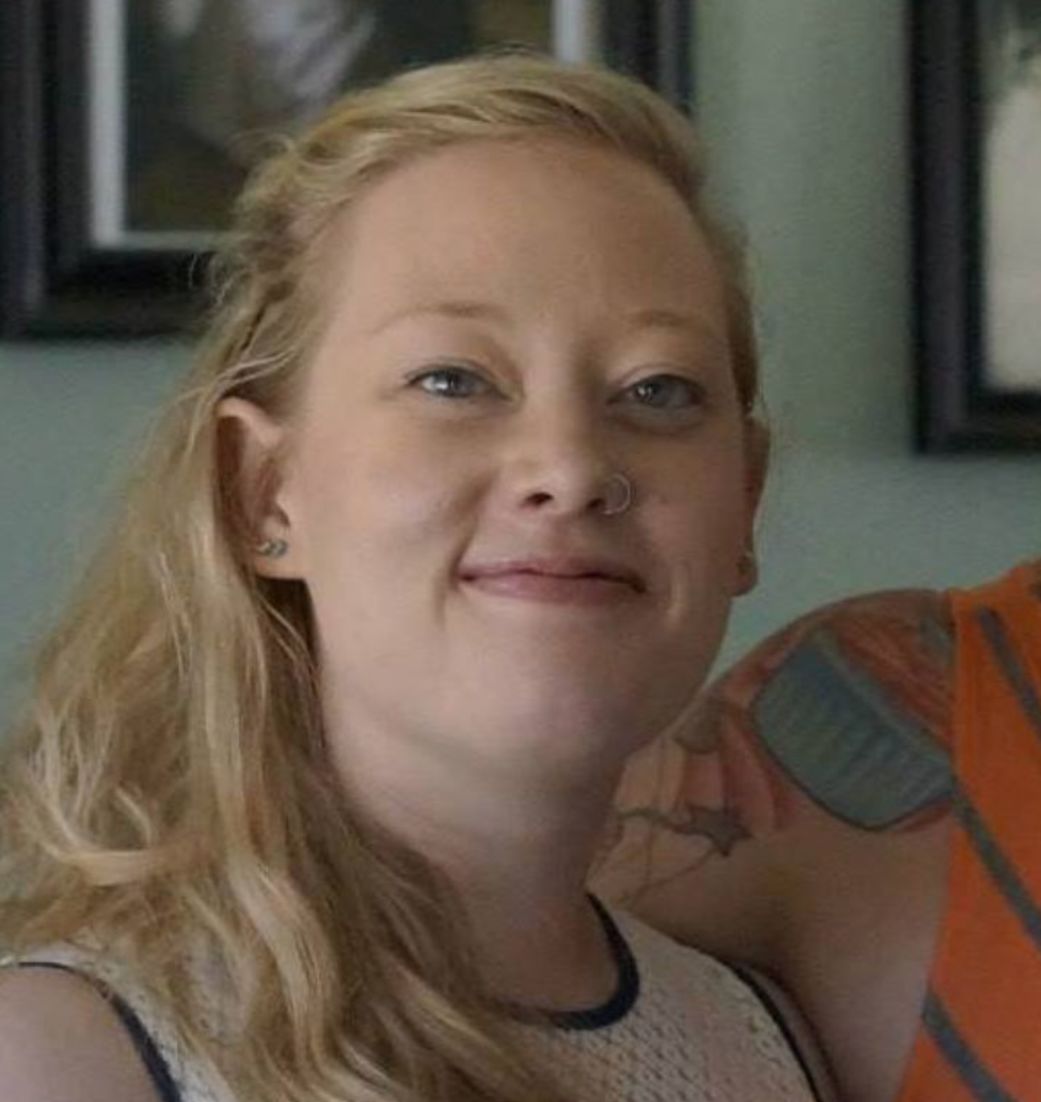
The aftermath of a fatal federal enforcement operation in Minneapolis continues to ripple across the country, as new voices emerge from within the victim’s own family. Amid protests, political clashes, and mounting questions about federal authority, a man once considered family to the woman at the center of the storm has spoken publicly, offering a message that blends grief, faith, and uneasy justification.
The man is William Morgan, the father of the late husband of the woman killed by an Immigration and Customs Enforcement agent during a crackdown in the Twin Cities. His remarks, delivered during a television interview, have drawn attention not only for their emotional weight but for the way they mirror the national divide over what happened and what it represents.
Morgan, a preacher and self-described supporter of President Donald Trump, quoted Scripture and spoke in measured tones. He did not directly condemn the agent who fired the shots. Instead, he framed the incident as “hard for everybody involved,” suggesting that the moment unfolded in chaos and fear.
“I’m not blaming anybody,” he said, echoing the position taken by federal officials who argue the agent acted under threat.
The shooting occurred during a series of immigration enforcement operations that had already drawn crowds of demonstrators into the streets. Protesters had gathered to confront federal officers, accusing them of terrorizing neighborhoods and targeting families. In the middle of that standoff, a vehicle attempted to leave the scene.
Within seconds, gunfire erupted.
The woman behind the wheel was 37 years old. She had dropped her six-year-old son off at school just hours earlier. Her wife was among the protesters outside. An ICE agent, later identified as Jonathan Ross, fired multiple rounds into her car.
Federal authorities initially described her as a threat, claiming she had attempted to use her vehicle as a weapon against officers. President Trump and Homeland Security Secretary Kristi Noem publicly referred to her as a “domestic terrorist.”
Video footage later released complicated that narrative. While the scene was chaotic, the available angles did not clearly support claims that the woman was trying to ram officers. Instead, they showed a car inching forward in a dense, confused crowd.
That gap between official statements and visual evidence ignited public anger.
Protests erupted in Minneapolis and quickly spread to other cities. Demonstrators demanded accountability, chanting against ICE and calling for federal leaders to be investigated. City officials accused Washington of inflaming tensions. Lawmakers introduced measures aimed at restricting federal operations.
It was in this climate that Morgan spoke.
He described watching the footage and trying to imagine the split-second decision facing the agent.
“In a flash like that, it’s hard to say how you would react,” he said, pointing to what he believed was the car’s bumper making contact with the agent’s legs. “I’ve seen the bumper of the car hitting his legs.”
Yet he also acknowledged that the evidence remains contested.
What made his appearance striking was not only his attempt to empathize with the shooter, but his conflicted portrayal of the woman herself.
Midway through the interview, her name entered the conversation in full, and it carried the weight of a life that now defines a national controversy: Renee Nicole Good.
Morgan spoke of her as a “great person,” “full of life,” and “a real gentle, good mother.” He remembered her as someone who brought warmth into a room. But he also questioned her choices, particularly her presence at a protest confronting armed federal officers.
“I think there’s some bad choices,” he said. “If we’re walking in the spirit of God, I don’t think she would have been there. That’s the way I look at it.”
His words reflected a tension that now echoes throughout the country: sympathy for a woman whose life ended violently, paired with an acceptance of the system that killed her.
Good had been married to Morgan’s son, Timmy Macklin, for five years before Macklin’s death in 2023. Together they had a child, Emerson. After her husband’s passing, Good later married her wife, Rebecca. Morgan remains connected through Emerson, the six-year-old boy who lost his mother in a burst of gunfire on a city street.
Morgan emphasized that he did not agree with everything Good did.
“Do I agree with everything that she did? Absolutely not,” he said.
At one point in the interview, he reacted to footage in which a voice is heard using a vulgar slur just moments after shots were fired. The speaker is not clearly identified, but Morgan assumed it was the agent.
“He don’t know the Lord like he should,” Morgan said. “That’s definitely showing evidence that he don’t know the Lord like he should.”
Later, the host showed him a clip of President Trump offering a softer assessment than his earlier rhetoric.
“I would bet you that she, under normal circumstances, was a very solid, wonderful person,” Trump said. “But her actions were pretty tough.”
Hearing this, Morgan nodded in agreement.
“Renee was an amazing person,” he replied. “She was full of life, full of joy, a real gentle, good mother. I just think we make bad choices and that’s the problem.”
For many observers, the interview crystallized the emotional and moral fracture running through the country. Even within a grieving family, there is no unified narrative. Compassion exists alongside justification. Love coexists with blame.
Outside the studio, Minneapolis remains a city on edge.
Thousands have marched through downtown streets. Murals and makeshift memorials line sidewalks near the site of the shooting. Candles burn beneath handwritten signs reading “Justice” and “Say Her Name.” Speakers at rallies describe Good not as a threat, but as a mother, a poet, and a neighbor.
Local leaders have accused federal authorities of sowing fear. The mayor has labeled official claims “garbage” and warned that aggressive operations are destabilizing communities. Civil rights groups have begun assembling legal challenges, arguing that the use of lethal force violated constitutional protections.
At the federal level, the response has hardened. Republican lawmakers have backed the Department of Homeland Security, voting against efforts to compel the release of internal records and additional footage. Officials continue to maintain that the agent perceived an imminent threat.
In Washington, the case has become a symbol in a broader struggle over immigration enforcement, federal power, and protest rights. Supporters of the administration argue that officers must be protected while doing dangerous work. Critics counter that labeling civilians as terrorists lowers the threshold for violence.
The human cost, however, is not abstract.
A six-year-old boy has lost his mother.
A community is reliving its history of tense relationships with law enforcement.
A nation is arguing over whether a woman in a car deserved to die.
Morgan’s words sit uneasily in that debate. They offer no clean resolution. Instead, they reveal how deeply politics, faith, and personal loss are now intertwined.
He does not deny that Good mattered. He does not celebrate her death. But he also does not challenge the system that killed her.
For some, that stance feels like betrayal. For others, it is a painful attempt to make sense of an unbearable reality.
In the end, his interview underscores what the protests and headlines already suggest: this is not just a legal case or a policy dispute. It is a story about how Americans see one another in moments of fear.
Is a woman in a car a threat, or a mother trying to escape chaos?
Is an agent a protector, or an instrument of an unforgiving system?
Can grief coexist with accountability?
As Minneapolis continues to grapple with those questions, the voice of a grieving father-in-law lingers, caught between love and loyalty, faith and fury, memory and ideology.
The nation, like him, remains divided over what happened—and what it means.

Emily Johnson is a critically acclaimed essayist and novelist known for her thought-provoking works centered on feminism, women’s rights, and modern relationships. Born and raised in Portland, Oregon, Emily grew up with a deep love of books, often spending her afternoons at her local library. She went on to study literature and gender studies at UCLA, where she became deeply involved in activism and began publishing essays in campus journals. Her debut essay collection, Voices Unbound, struck a chord with readers nationwide for its fearless exploration of gender dynamics, identity, and the challenges faced by women in contemporary society. Emily later transitioned into fiction, writing novels that balance compelling storytelling with social commentary. Her protagonists are often strong, multidimensional women navigating love, ambition, and the struggles of everyday life, making her a favorite among readers who crave authentic, relatable narratives. Critics praise her ability to merge personal intimacy with universal themes. Off the page, Emily is an advocate for women in publishing, leading workshops that encourage young female writers to embrace their voices. She lives in Seattle with her partner and two rescue cats, where she continues to write, teach, and inspire a new generation of storytellers.