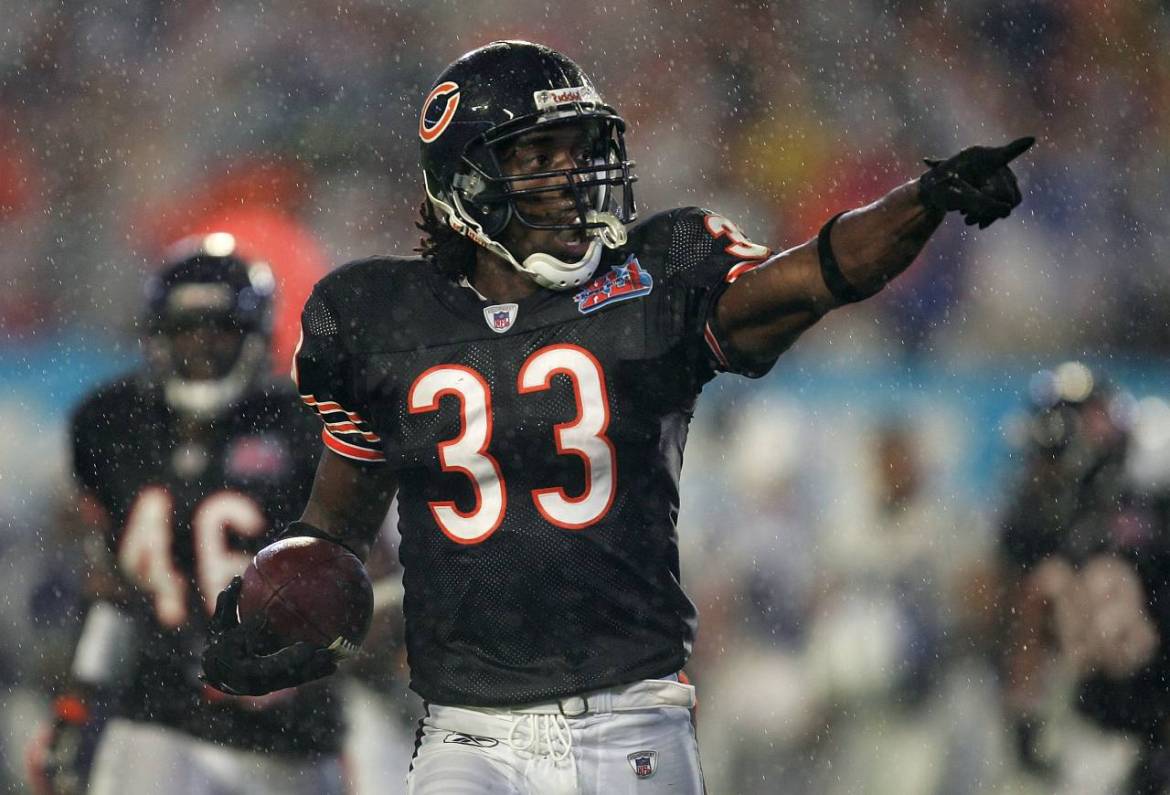
Former NFL star Charles Tillman spent more than a decade patrolling football fields, shutting down opposing receivers and earning a reputation as one of the most respected defensive backs of his era. After retiring from the game, he traded shoulder pads for body armor, embarking on a second career in federal law enforcement that reflected a lifelong commitment to public service. But that career came to an abrupt end in early 2025, when Tillman says he could no longer reconcile his duties with the direction of the Trump administration’s immigration policies.
Tillman, now 44, has revealed that his decision to resign from the FBI was driven by discomfort with immigration crackdowns led by Immigration and Customs Enforcement. In a recent interview, he described a pivotal moment in January 2025, when federal agencies were mobilized to assist ICE during enforcement operations in Chicago. That day, he said, marked a breaking point.
After a distinguished 13-season NFL career, Tillman joined the FBI in 2018, two years after hanging up his cleats. He enrolled in the bureau’s intensive 20-week training program in Quantico, Virginia, embracing a role far removed from the stadiums and spotlight he had known as a professional athlete. At the time, he described the decision as an opportunity to “do my part and give back,” a sentiment that aligned closely with his upbringing and values.
Tillman had earned more than $50 million during his football career and briefly explored life as a broadcaster, spending a year as an NFL analyst with Fox Sports following his retirement in 2016. Yet he found the work unfulfilling. The desire to serve, he said, ultimately outweighed the appeal of media work, prompting him to pursue a career in law enforcement. His former teammates, he recalled, were supportive of the move.
In January 2025, however, that sense of purpose began to erode. Tillman recounted the moment he and fellow FBI agents in Chicago were informed that Trump administration border czar Tom Homan was arriving in the city, accompanied by television personality Dr. Phil McGraw. ICE agents were coming with them, and multiple federal agencies—including the FBI, the Drug Enforcement Administration, the Bureau of Alcohol, Tobacco, Firearms and Explosives, Border Patrol, and the U.S. Marshals Service—were expected to assist in an immigration enforcement operation.
According to Tillman, the directive was clear and troubling. Agents were instructed to stand guard and participate in arrests tied to illegal immigration. He said the operation was not limited to pursuing individuals with violent criminal records but appeared to involve broader sweeps aimed at meeting enforcement targets.
“It was, ‘We need everybody outside, and we want everyone standing guard,’” Tillman said. “And they wanted us to make arrests. It wasn’t just about going after violent individuals.” He described scenarios where workers outside homes were targeted simply to meet what he perceived as a quota system. To him, the effort felt political rather than rooted in public safety.
Tillman said he could not bring himself to participate. Instead of joining the operation that day, he attended his daughter’s basketball game. Shortly afterward, he made the decision to resign from the FBI, bringing an abrupt end to a career he once viewed as deeply meaningful.
The decision was not an easy one. Tillman has spoken openly in the past about his pride in the work he did as an FBI agent. In a previous interview, he described federal law enforcement as a thankless profession, one where success is measured by what does not happen and where recognition is rare by design.
“You do your job because you’re protecting people,” he said at the time. “You don’t want to be in the paper. You do it because it’s the right thing to do.” He added that while moments of success were often unseen, the fulfillment came from knowing that someone had been helped.
Tillman’s commitment to service is deeply rooted in his personal history. His father, Donald Tillman, served as a sergeant in the United States Army for 20 years. As a military family, the Tillmans moved frequently, and Charles attended 11 different schools between kindergarten and high school. That upbringing instilled discipline and a strong sense of civic duty.
He initially appeared destined for a career in criminal justice, earning a degree in the field from the University of Louisiana at Lafayette. It was there that his signature football move, the “Peanut Punch,” was born—a technique that would later become synonymous with his name. Nicknamed “Peanut” by his Aunt Renee because of his appearance as a baby, Tillman carried that moniker throughout his career.
Football ultimately delayed his entry into law enforcement. Drafted by the Chicago Bears in the second round of the 2003 NFL Draft, Tillman went on to become one of the greatest defensive backs in franchise history. He holds Bears records for interceptions by a cornerback, interception return touchdowns, and total defensive touchdowns. His impact on the field made him a Chicago sports icon.
Tillman’s revelation about his resignation comes at a moment of heightened national tension surrounding federal law enforcement and immigration policy. In recent weeks, unrest has grown following federal operations in Minnesota that resulted in the deaths of two American citizens.
Alex Jeffrey Pretti, a 37-year-old intensive care nurse, was shot and killed during a struggle with federal agents in Minneapolis during a Department of Homeland Security operation. His death came just two weeks after another fatal incident, in which 37-year-old Renee Good, a mother of three, was shot while sitting in her car by an ICE officer. The back-to-back deaths have sparked protests, political outrage, and calls for accountability across the country.
The controversy has intensified as the nation approaches major events, including the Super Bowl. Federal officials have confirmed that ICE agents will be deployed to the Bay Area ahead of the game, scheduled for February 8. Administration officials have insisted that individuals who are in the country legally and not committing other crimes have nothing to fear.
Still, statements from senior allies of President Donald Trump have fueled anxiety. Homeland Security Secretary Kristi Noem has vowed aggressive enforcement, declaring that agents would be “all over” areas surrounding major events. While reports indicate there are no plans for ICE operations at Levi’s Stadium or official NFL events, the warnings have heightened public concern.
For Tillman, the climate surrounding these enforcement actions underscored his decision to step away. His account adds a rare perspective from inside federal law enforcement, particularly from someone whose credibility spans both professional sports and public service. While many agents continue to carry out their duties under difficult circumstances, Tillman’s choice highlights the moral and ethical dilemmas faced by individuals asked to enforce policies they do not fully support.
As the national debate over immigration enforcement, federal authority, and civil liberties continues, Tillman’s story stands as a reminder that even those sworn to uphold the law may reach a point where conscience outweighs duty. His resignation reflects not only a personal reckoning but also the broader tensions shaping law enforcement in the United States today.

Emily Johnson is a critically acclaimed essayist and novelist known for her thought-provoking works centered on feminism, women’s rights, and modern relationships. Born and raised in Portland, Oregon, Emily grew up with a deep love of books, often spending her afternoons at her local library. She went on to study literature and gender studies at UCLA, where she became deeply involved in activism and began publishing essays in campus journals. Her debut essay collection, Voices Unbound, struck a chord with readers nationwide for its fearless exploration of gender dynamics, identity, and the challenges faced by women in contemporary society. Emily later transitioned into fiction, writing novels that balance compelling storytelling with social commentary. Her protagonists are often strong, multidimensional women navigating love, ambition, and the struggles of everyday life, making her a favorite among readers who crave authentic, relatable narratives. Critics praise her ability to merge personal intimacy with universal themes. Off the page, Emily is an advocate for women in publishing, leading workshops that encourage young female writers to embrace their voices. She lives in Seattle with her partner and two rescue cats, where she continues to write, teach, and inspire a new generation of storytellers.