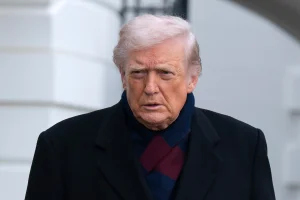
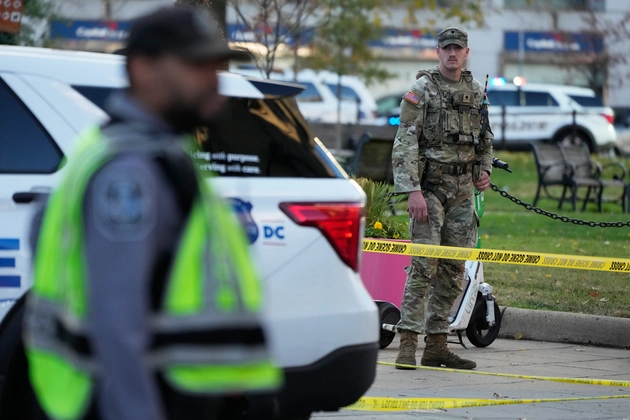
President Donald Trump issued a sharp and emotional response after a deadly shooting in downtown Washington, D.C., left two National Guard members dead and briefly forced the White House into lockdown on Wednesday afternoon. The attack, carried out just blocks from the executive mansion and near one of the busiest Metro stations in the city, immediately triggered a sweeping security response, raised concerns about public safety in the capital, and reignited political debate over Trump’s controversial deployment of National Guard troops earlier this year.
Authorities say a suspect is in custody, though his identity and motive have not been released. The shooting unfolded shortly before 3 p.m., according to officials, in an area typically filled with commuters, federal workers, and tourists.
The two Guardsmen—both members of the West Virginia National Guard deployed to Washington as part of the federal crime-reduction operation Trump ordered in August—were pronounced dead after being rushed to separate hospitals. Their deaths were confirmed Wednesday evening by West Virginia Governor Patrick Morrisey, who said the state was “devastated” and pledged full cooperation with the ongoing federal investigation.
A deadly attack near the heart of American government
The incident took place just north of the White House, near the Farragut West Metro station, an area that sits only a few minutes’ walk from the executive complex. Witnesses described chaos as gunfire erupted near the station entrance, sending people running in multiple directions. Within minutes, a massive emergency response descended on the area, and the White House was placed on lockdown as a precaution.
Law enforcement officials confirmed that one suspect was apprehended shortly after the shooting. The suspect was reportedly injured during the confrontation with authorities and transported to a nearby hospital. His condition has not been disclosed.
Metro police, federal investigators, and National Guard leadership say the investigation is active and ongoing. As of Wednesday night, no details about what may have led to the attack have been released, and officials have emphasized that the priority is securing the scene and gathering accurate information before releasing further details to the public.
Trump reacts sharply: “Will pay a very steep price”
President Trump reacted quickly and forcefully. On Truth Social, he condemned the attacker in harsh terms, referring to the suspect as an “animal” and vowing severe consequences.
He wrote: “The animal that shot the two National Guardsmen, with both being critically wounded, and now in two separate hospitals, is also severely wounded, but regardless, will pay a very steep price. God bless our Great National Guard, and all of our Military and Law Enforcement. These are truly Great People. I, as President of the United States, and everyone associated with the Office of the Presidency, am with you!”
Shortly after Trump’s post, West Virginia officials confirmed that both Guardsmen had succumbed to their injuries.
As news of the deaths spread, reactions poured in from federal and state officials. The White House press office confirmed that Trump had been briefed and that senior security officials were closely monitoring the situation.
Karoline Leavitt, the White House Press Secretary, issued a statement acknowledging the tragedy and emphasizing that the administration was receiving ongoing updates from law enforcement.
Homeland Security Secretary Kristi Noem also weighed in, urging the public to pray for the Guardsmen and their families. She reaffirmed that her agency is working closely with local law enforcement to gather more information.
West Virginia mourns its fallen Guardsmen
Governor Patrick Morrisey expressed deep sorrow as he confirmed the deaths of the two service members. He called the shooting a “horrific act” and pledged that the state would push for full accountability.
“It is with great sorrow that we can confirm both members of the West Virginia National Guard who were shot earlier today in Washington, DC have passed away from their injuries,” Morrisey wrote. “These brave West Virginians lost their lives in the service of their country. Our entire state grieves with their families, their loved ones, and the Guard community.”
The governor said the state government is in ongoing contact with federal officials and will remain involved as the investigation continues.
Why the National Guard is patrolling Washington, D.C.
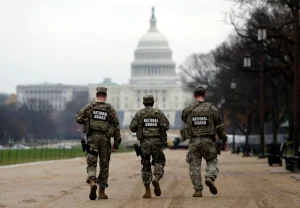
The shooting occurred against the backdrop of a broader debate over Trump’s decision to deploy the National Guard to address what he described as a crime emergency in the nation’s capital. In August, Trump federalized portions of the city’s police operations and ordered Guard units from eight states to patrol high-traffic areas, assist local law enforcement, support community safety operations, and deter violent crime.
The deployment has been highly divisive. Supporters argue that the presence of troops has stabilized areas historically affected by criminal activity. Critics—including some D.C. residents, legal advocates, and members of local government—have accused the administration of overreach, pointing to the city’s declining crime rates and arguing that the president lacked legal authority for such an extensive military presence.
Just last week, a federal judge ruled that Trump’s deployment exceeded his legal authority. However, the ruling will not take effect for 21 days, giving the Trump administration time to pursue an appeal. In the meantime, National Guard patrols have continued throughout downtown Washington, including near major Metro stations like Farragut West, where Wednesday’s shooting occurred.
The presence of troops has been highly visible. Guard members have been stationed at transit hubs, government facilities, and major intersections, and have participated in both law-enforcement support and community-assistance tasks, including trash collection and transit monitoring.
In a statement shared by CBS News, White House spokeswoman Abigail Jackson defended the deployment, arguing that legal challenges were politically motivated.
She said D.C. Attorney General Brian Schwalb’s lawsuit against the administration was “nothing more than another attempt — at the detriment of DC residents — to undermine the President’s highly successful operations to stop violent crime in DC.”
FAA briefly halts flights, security fears spike
Shortly after the shooting, the Federal Aviation Administration temporarily halted flights bound for Ronald Reagan Washington National Airport. Officials cited the proximity of the shooting scene to flight paths and said the delay was enacted out of an abundance of caution.
Air travel resumed later in the afternoon, but the brief suspension signaled the seriousness with which federal authorities responded to what they described as a potential threat in a high-security zone.
Investigation continues as questions mount
By Wednesday evening, investigators were still working to piece together the sequence of events. No motive has been released, and police have not said whether the suspect had any prior interactions with law enforcement or whether the Guardsmen were specifically targeted.
The Washington Metropolitan Police Department, the FBI, the Secret Service, and the National Guard are all participating in the investigation. Officials have not announced a timeline for releasing additional details, but they have confirmed that updates will be made public once verified.
Residents and commuters in the area reported heightened police presence and extended perimeter closures. Multiple streets around the White House and Farragut Square remained blocked for several hours as investigators processed the scene.
A city on edge, a nation watching
The shooting has intensified national debate about safety in Washington, D.C., federal authority, and the president’s ongoing crime policies. While full details have yet to emerge, the deaths of two National Guard members in the line of duty—just steps from the presidency—have shaken law-enforcement communities across the country.
The White House remains on high alert, though lockdown procedures were lifted once authorities declared the immediate area secure. For now, many questions remain unanswered, including the identity of the attacker, the motive behind the shooting, and the broader security implications for the capital.

Emily Johnson is a critically acclaimed essayist and novelist known for her thought-provoking works centered on feminism, women’s rights, and modern relationships. Born and raised in Portland, Oregon, Emily grew up with a deep love of books, often spending her afternoons at her local library. She went on to study literature and gender studies at UCLA, where she became deeply involved in activism and began publishing essays in campus journals. Her debut essay collection, Voices Unbound, struck a chord with readers nationwide for its fearless exploration of gender dynamics, identity, and the challenges faced by women in contemporary society. Emily later transitioned into fiction, writing novels that balance compelling storytelling with social commentary. Her protagonists are often strong, multidimensional women navigating love, ambition, and the struggles of everyday life, making her a favorite among readers who crave authentic, relatable narratives. Critics praise her ability to merge personal intimacy with universal themes. Off the page, Emily is an advocate for women in publishing, leading workshops that encourage young female writers to embrace their voices. She lives in Seattle with her partner and two rescue cats, where she continues to write, teach, and inspire a new generation of storytellers.