In the months following a shocking act of political violence that stunned the nation, unanswered questions, grief, and rumor have circulated widely across social media and online commentary spaces. As investigations continued and legal proceedings moved forward, speculation about what truly happened—and who was responsible—began to take on a life of its own.
That climate of uncertainty came sharply into focus during a nationally televised town hall this week, where a grieving widow addressed some of the most persistent and troubling claims circulating about the death of her husband. Speaking publicly in depth for the first time since the tragedy, she confronted allegations that range from implausible to deeply personal, urging the public to distinguish fact from fiction.
The event, moderated by CBS editor-in-chief Bari Weiss, aired on December 13 and brought together questions that many viewers have quietly wrestled with as conspiracy theories gained traction online. Throughout the discussion, the widow remained composed but visibly resolute, describing the emotional toll of seeing her husband’s death turned into a digital battleground.
A Tragedy Followed by an Information Vacuum
In the immediate aftermath of the killing, authorities released only limited details, citing the integrity of the investigation and the need to preserve a fair judicial process. While law enforcement proceeded methodically, the absence of constant updates created a vacuum—one that was quickly filled by speculation.
Online commentators, independent podcasters, and anonymous social media users began offering their own explanations. Some questioned whether the crime was politically motivated beyond what investigators had acknowledged. Others went much further, suggesting secret networks, foreign intelligence involvement, or elaborate staging.
During the town hall, the widow acknowledged why such theories gain momentum after traumatic events.
“This is the first time that we have seen evil on display where we have social media at our fingertips,” she said. “Something so evil that happened—people want answers immediately. They want to understand it. They want to wrap their minds around it.”
She explained that the desire for meaning can sometimes lead people to reject straightforward explanations in favor of more complex, sensational narratives.
Confronting the Central Question
As the discussion progressed, Weiss posed the most direct and emotionally charged question of the evening—one that sits at the heart of the case.
“Do you believe the man charged with this crime murdered your husband?” Weiss asked, referring to the suspect currently facing prosecution.
Without hesitation, the widow answered plainly.
“Yes,” she said.
Weiss followed up, pressing on why so many people online appear unwilling to accept that conclusion.
“Because it’s too simple,” the widow replied. “Everyone always wants there to be more to the story. Sometimes there isn’t.”
She emphasized that her confidence is not rooted in blind faith or public messaging, but in firsthand access to evidence that has not been released to the public.
“I’ve seen the autopsy report. I’ve seen the case file. I’ve been in constant contact with our attorneys and the prosecution team. I’ve seen it all,” she said.
Why the Evidence Has Not Been Publicized
Despite her certainty, she said she has deliberately chosen not to disclose details of the evidence publicly—both to protect the integrity of the trial and to prevent potential jurors from being influenced.
“If we put everything out there now, the defense could poke holes in it,” she explained. “And more importantly, it risks tainting the jury pool.”
Legal experts have echoed that concern, noting that excessive public disclosure in high-profile cases can complicate prosecutions and lead to appeals or mistrials.
The widow stressed that restraint should not be mistaken for secrecy or deception.
“This is about justice,” she said. “Not about feeding speculation.”
Addressing the Conspiracy Theories Head-On
As the conversation turned to specific allegations circulating online, Weiss listed several of the more extreme claims that have gained attention in recent weeks. Among them were assertions that the widow herself was connected to foreign intelligence agencies, that her clothing or jewelry symbolized secret allegiances, and that groups within the crowd on the day of the killing were part of a coordinated covert operation.
The widow categorically rejected each claim.
One particularly viral theory alleged that individuals wearing maroon shirts in the crowd were part of an “elite airborne unit,” a claim amplified by political commentator Candace Owens.
Another suggested that foreign aircraft—specifically Egyptian planes—had been tracking the widow’s movements for years prior to the attack.
Her response was a mix of disbelief and frustration.
“I was pregnant for 90 percent of those trips,” she said. “The places they claim I traveled to—I’ve never been there. Or I wasn’t even in those states.”
She added that she possesses photographic evidence disproving at least one of the dates cited in the allegations.
Why She Felt Compelled to Respond
At one point, Weiss asked whether addressing such claims only served to legitimize them.
“I do feel like I have to,” the widow replied. “At least on some of them.”
She explained that while many of the theories are absurd, allowing them to spread unchecked has real consequences—not just for her reputation, but for her family and her unborn child at the time.
Speaking candidly, she described how pregnancy shaped her public visibility during that period.
“I intentionally hid—not because I was embarrassed, not because I didn’t want people to know,” she said. “It was because that moment was sacred. I was growing a human inside of me.”
The implication, she noted, was painfully ironic: what some online personalities framed as secretive behavior was, in reality, deeply personal and human.
Drawing a Firm Line
As the town hall neared its conclusion, Weiss asked what message the widow wanted to send to those continuing to promote what she described as falsehoods.
Her answer was brief and unequivocal.
“Stop,” she said. “That’s it. That’s all I have to say. Stop.”
It was a moment that underscored both exhaustion and resolve—an attempt to reclaim some measure of dignity in the face of relentless scrutiny.
https://www.youtube.com/watch?v=tzoZ28s8X78
The Broader Context
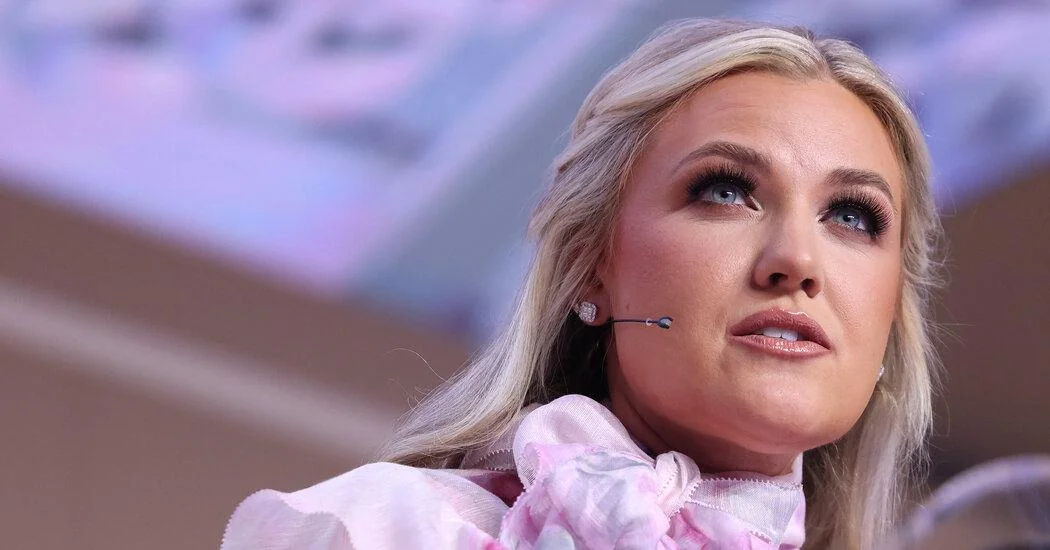
Only later in the discussion was the full context of her role made explicit. The woman speaking was Erika Kirk, now chairwoman and CEO of Turning Point USA, who assumed leadership after the organization’s founder—her husband—was killed at age 31 while speaking to students at Utah Valley University on September 10.
The suspect in the case, Tyler Robinson, has been charged with the murder and remains at the center of ongoing legal proceedings.
Since the assassination, Erika Kirk has largely avoided public commentary, focusing instead on legal matters and personal healing. Her appearance at the CBS town hall marked a significant departure from that silence.
Grief, Public Life, and the Digital Age
The discussion highlighted a broader challenge facing families of victims in the internet era: grief no longer unfolds privately. Instead, it is dissected, debated, and often distorted in real time.
Experts say high-profile tragedies increasingly generate parallel “information wars,” where speculation competes with verified facts—and where emotional pain can be compounded by online harassment.
Erika Kirk’s appearance served as a rare moment of direct engagement, not to litigate the case publicly, but to draw boundaries.
As investigations continue and the justice system moves forward, she made clear that her focus remains on truth, accountability, and protecting the integrity of the process—not on chasing rumors across the internet.
For viewers, the town hall offered a sobering reminder of how quickly tragedy can be reframed through misinformation—and of the human cost when speculation overshadows reality.