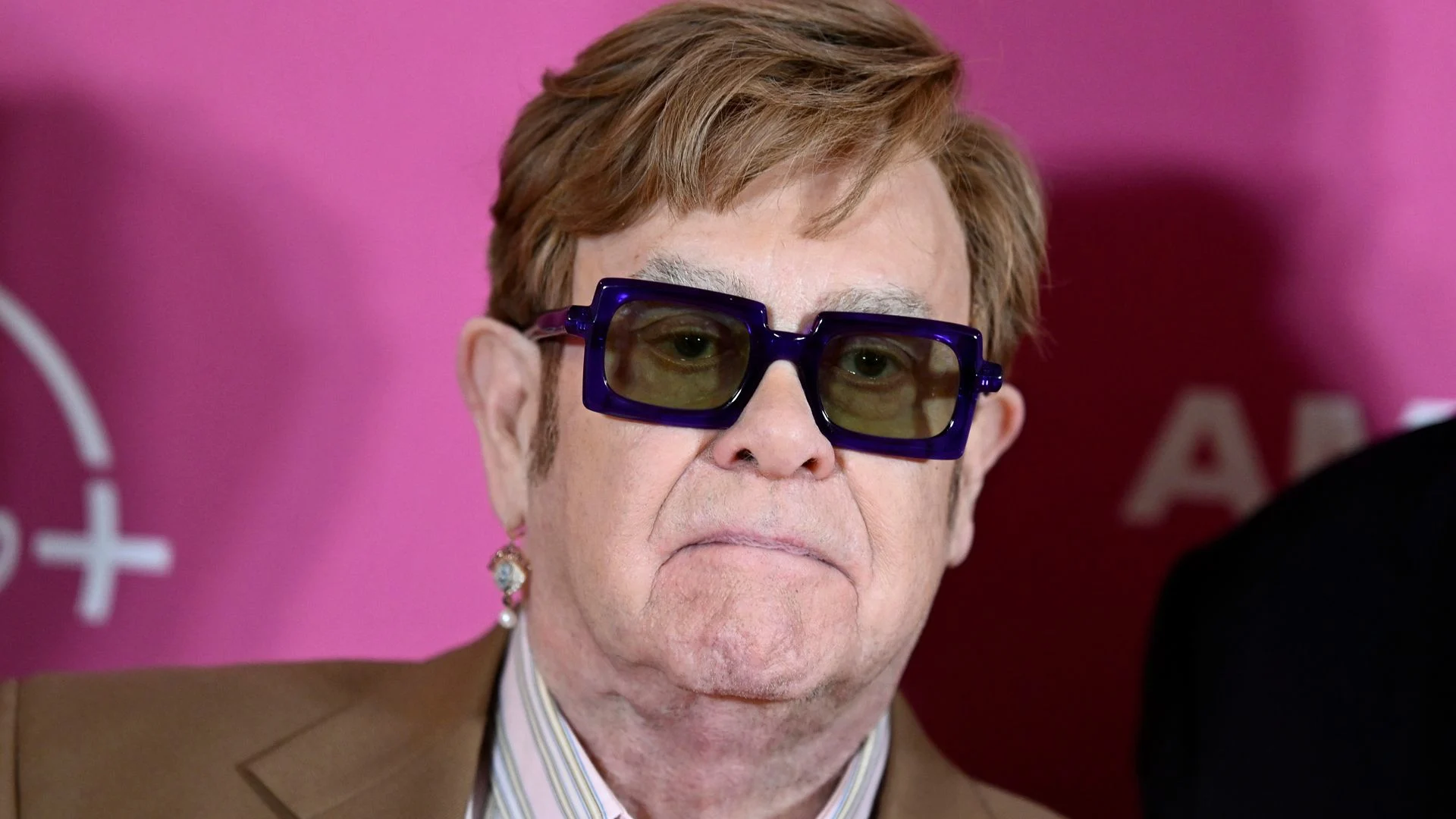
For more than fifty years, Sir Elton John has been one of the most influential voices in global pop culture—a musician, activist, philanthropist, and outspoken figure never afraid to challenge expectations. But his latest comments during a wide-ranging conversation with Variety have created one of the biggest stirrings of his career, and it has nothing to do with music.
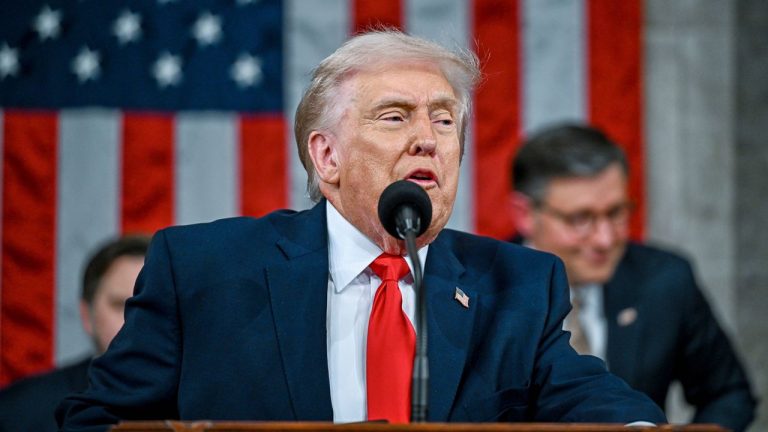
While speaking primarily about the global fight against HIV and AIDS—a cause to which he has devoted decades of his life—Elton unexpectedly invoked President Donald Trump. And not as a punchline, not as a critic… but as someone who could, in Elton’s words, “go down as one of the greatest presidents in history.”
Even by Elton John standards, that is a statement bound to turn heads.
A Conversation About HIV Turns Into Something Much Bigger
The interview began with Elton discussing the work of the Elton John AIDS Foundation, an organisation that has raised hundreds of millions of dollars since its founding in the early 1990s. His tone was emotional, even angry, as he spoke about ongoing barriers to life-saving medication.
“You know, there’s a big war that’s being settled, hopefully,” he said, referencing global conflicts. “But there’s another war—with people who are suffering from HIV and AIDS that should be able to get their medicine but can’t, because governments won’t let them. It’s inhumane.”
Elton continued passionately:
“It’s so frustrating when you have the medicine, you have prep, you have the antiretrovirals. We can stop the spread of AIDS if people just got off their backsides and treated human beings in a Christian kind of way.”
It was the kind of moral clarity Elton has often offered throughout his career—urgent, forceful, righteous. But then, the tone shifted.
Then Elton John Dropped the Line Heard Around the World
During the conversation, Elton brought up something completely unexpected: Donald Trump.
Not only did he bring him up—he credited him.
“President Trump has maybe solved the peace problem,” Elton said, apparently referencing recent diplomatic victories and geopolitical negotiations.
But it was the next line that truly stunned readers:
“If he wants to go down as one of the greatest presidents in history… if he ended AIDS, that would really be a feather in his cap.”
With that single statement, Elton crossed a line few major entertainers are willing to step over. He acknowledged—without irony—the idea that Trump could become one of history’s most impactful presidents if he were to prioritize eliminating HIV/AIDS globally.
Suddenly, the interview wasn’t just about medical access or activism.
It became a political earthquake.
Why Elton’s Statement Landed With Such Force
The entertainment industry has spent years painting Trump as an enemy of progressive causes. Every celebrity award show, every red-carpet interview, every activist forum has operated under an unwritten rule: Trump is to be mocked, dismissed, or condemned.
Elton John, however, has always been something of an outlier.
He has performed at Trump’s special events in the past. Trump has publicly praised Elton’s talent. And while Elton did not align himself with Trump politically, there has never been visible hostility between them.
Still—even with that history—no one expected Elton John to be the one suggesting Trump could become one of America’s “greatest presidents” under the right circumstances.
In Hollywood terms, it was a cultural rupture.
Reaction From the Left: Outrage, Confusion, and Meltdowns
Predictably, social media exploded.
Within minutes, left-leaning activists, commentators, and media personalities were attacking Elton’s remarks.
Some accused him of “platforming a tyrant.”
Others said he was “normalizing Trump.”
Many simply couldn’t believe the quote was real.
Progressive critics pointed out that the Trump administration had previously reduced certain HIV research budgets. Others argued that mentioning Trump in a positive context—even hypothetically—was unacceptable for someone with Elton’s influence.
But the criticism only underscored one thing: Elton had touched a nerve.
Reaction From Conservatives: Respect, Optimism, and Surprise
On the other side of the aisle, conservatives responded with admiration—some of it astonished.
Elton John is one of the most iconic figures in modern culture. His endorsement or praise, on any level, carries international weight. The idea that someone of his stature would talk about Trump in terms usually reserved for historians or political theorists was seen by many right-leaning observers as validation that even ideological opponents can acknowledge Trump’s impact on global affairs.
Several conservative commentators noted that Elton’s remarks cut through the noise in a way that few political statements can.
Here was a man revered by the left acknowledging something they continually refuse to discuss: that many of Trump’s policies—particularly in global diplomacy—have had significant, measurable results.
Why Elton’s AIDS Comment Matters Politically
When Elton said Trump could “end AIDS,” he wasn’t speaking metaphorically. He was referencing something very real:
The medical tools to eliminate HIV transmission already exist.
Pre-exposure prophylactics (PrEP)
Antiretroviral therapies
Long-acting injectables
Global distribution programs
The scientific community broadly agrees: the barrier to ending AIDS is political will.
By invoking Trump, Elton was saying something few public figures dare to acknowledge—Trump has the ability, and possibly the motivation, to take on a world-changing challenge.
And if he succeeded, it would overshadow nearly every other accomplishment of his presidency.
Trump’s Peace Negotiations and Elton’s Praise
Elton’s remark that Trump “maybe solved the peace problem” wasn’t a throwaway line.
It was a reference to:
• Middle East normalization agreements
• Historic border treaties
• De-escalation efforts
• New diplomatic frameworks
Trump has long argued that his style—unpredictable, aggressive, transactional—is precisely what has made hostile nations take the U.S. seriously. Elton, surprisingly, seemed to give credence to that view.
The question now is: Was Elton just speaking casually, or was he intentionally sending a message?
Hollywood’s Problem With Independent Thinkers
Elton John is not a Republican.
He is not a conservative.
He is not MAGA.
He is, however, independent-minded.
And in modern Hollywood, that may be the greatest sin of all.
The backlash against him shows how rigid and fragile the entertainment world has become. For many celebrities, even acknowledging that Trump could do something good is treated as treason.
But Elton has never lived his life seeking approval.
And that may be exactly why his comment landed the way it did.
Will Trump Respond?
Trump has not yet publicly reacted to the interview, but those close to him suggest he would likely appreciate the praise—especially coming from someone as respected as Elton John.
Throughout his presidency, Trump often said he wanted “big victories”—transformational wins that would define his legacy. Ending the AIDS epidemic, particularly globally, would be the kind of historic achievement that would fundamentally alter how future generations view his presidency.
Elton’s comment may have put that idea directly on Trump’s radar again.
The Larger Meaning Behind the Conversation
Ultimately, Elton John’s interview was about compassion. His frustration wasn’t directed at Trump but at governments around the world—left, right, and everything in between—that have failed to deliver lifesaving treatments to the people who need them most.
His message was simple:
We have the tools.
We have the science.
We have the knowledge.
What we don’t have is action.
And in that context, his comment about Trump becomes clearer. Elton wasn’t endorsing the president. He was challenging him—and perhaps the entire political class—to seize the moment and finish what medicine has already made possible.
A Remark That Will Be Remembered
In a political climate where celebrity comments are predictable, repetitive, and often performative, Elton John did something rare:
He told the truth as he sees it.
He spoke without fear.
He acknowledged possibility instead of ideology.
And in doing so, he made one of the most surprising political statements of 2025.
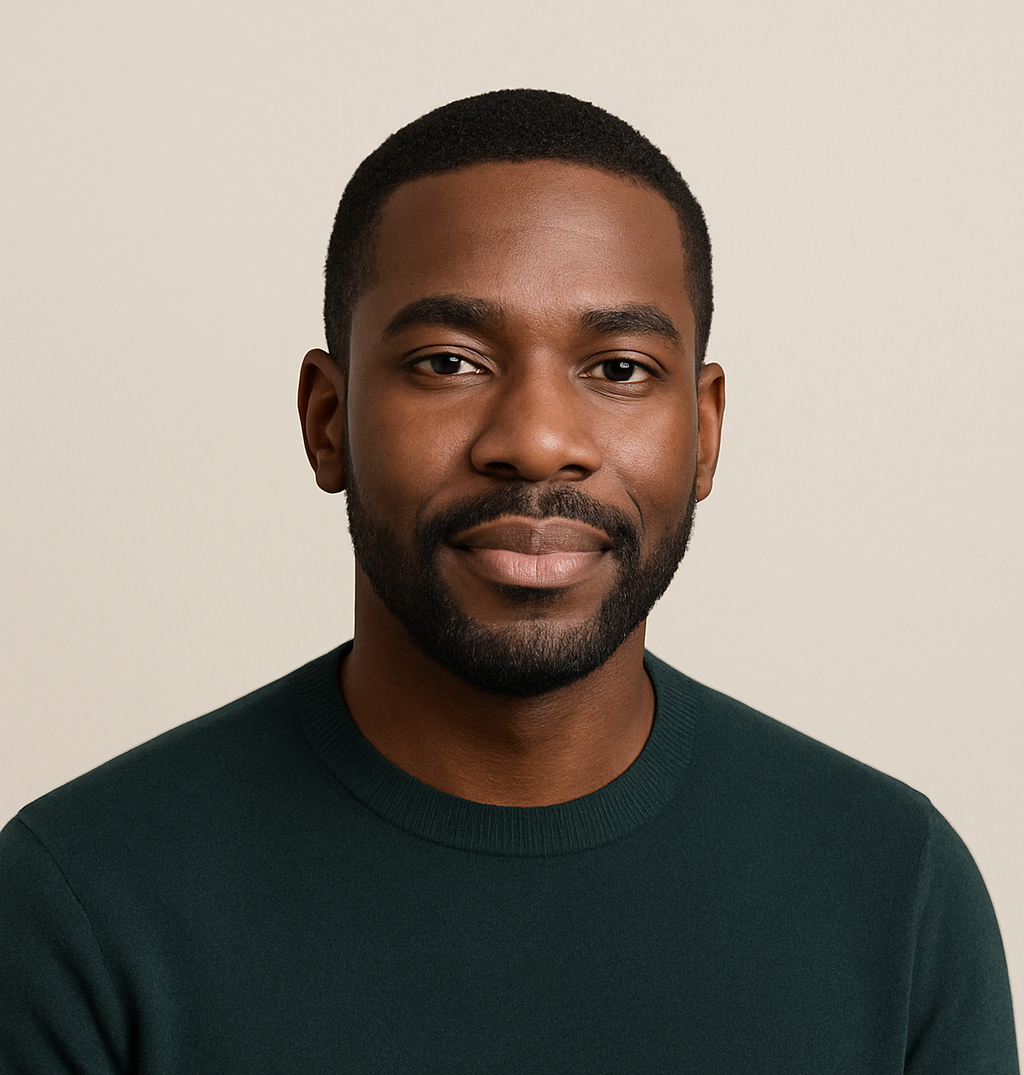
James Jenkins is a celebrated Pulitzer Prize-winning author whose work has reshaped the way readers think about social justice and human rights in America. Raised in Atlanta, Georgia, James grew up in a community that instilled in him both resilience and a strong sense of responsibility toward others. After studying political science and creative writing at Howard University, he worked as a journalist covering civil rights issues before dedicating himself fully to fiction. His novels are known for their sharp, empathetic portraits of marginalized communities and for weaving personal stories with broader political realities. Jenkins’s breakout novel, Shadows of Freedom, won national acclaim for its unflinching look at systemic inequality, while his more recent works explore themes of identity, resilience, and the fight for dignity in the face of oppression. Beyond his novels, James is an active public speaker, lecturing at universities and participating in nonprofit initiatives that support literacy and community empowerment. He believes that storytelling is a way to preserve history and inspire change. When not writing, James enjoys jazz music, mentoring young writers, and traveling with his family to explore cultures and stories around the world.