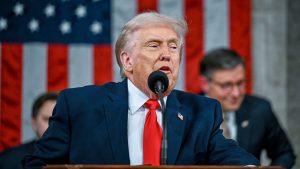

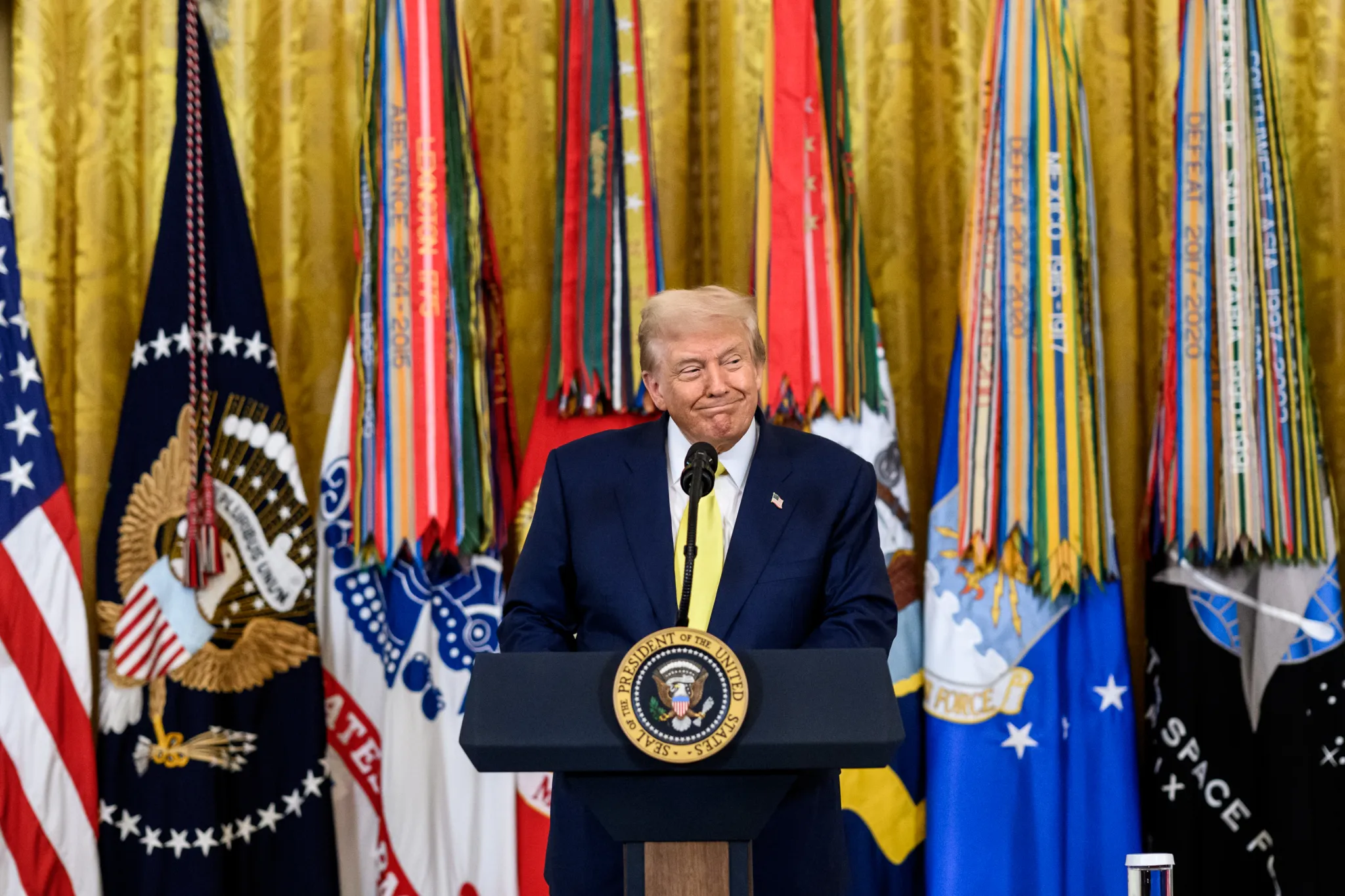
In recent weeks, former President Donald Trump has repeatedly addressed questions about whether he believes he will enter heaven — remarks that have drawn attention as much for their spiritual tone as for their political timing. Below is a look at what Trump has publicly stated, how those remarks have evolved, and how observers have responded.
Public Statements Over Time
August Remarks: War, Salvation, and Heaven
In August 2025, Trump made headlines when he drew a connection between ending the Russia-Ukraine war and his spiritual standing. During a public appearance, he said, in effect, that if he could save lives in the conflict, that might help his case for heaven. He referred to an estimate of “7,000 people a week” and framed it in moral and spiritual terms, saying he wanted “to try to get to heaven.” He also admitted uncertainty, saying he was “hearing that I’m not doing well” in that regard.
He additionally called himself “at the bottom of the totem pole” spiritually, saying that if he were able to accomplish acts of peace, they might serve as justification or redemption. These comments were widely reported in mainstream media and became a topic of discussion among religious commentators and his political supporters alike.
September Fundraising Email Reference
In September, reports surfaced that an email to Trump supporters had linked his request for donations — specifically $15 contributions — to his spiritual aspiration to “get to heaven.” The email reportedly referenced his survival of an assassination attempt, suggesting “God saved him” and implying that his return to politics was part of a divine mission.
While I have not found any definitive primary source confirming the full text of the email (i.e., a copy directly from Trump’s campaign archive or official account), multiple media outlets reported on the email’s content, indicating that the link between his spiritual messaging and fundraising appeals was publicly circulated.
October Conversation on Air Force One: “I Don’t Think There’s Anything Going to Get Me in Heaven”
On October 12, 2025, during a press exchange aboard Air Force One, Trump revisited the question of heaven in a more skeptical tone. He told reporters:
“I’m being a little cute. I don’t think there’s anything going to get me in heaven.”
He added later:
“I really don’t. I think I’m not maybe heaven-bound. I may be in heaven right now as we fly on Air Force One. I’m not sure I’m going to be able to make heaven, but I’ve made life a lot better for a lot of people.”
Those statements, as reported by People Magazine and covered by several news outlets, mark a somewhat sharper admission that spiritual reward may not rest strictly on one’s public deeds, at least in his view. Trump also claimed that if the 2020 election had not been stolen (a claim he continues to assert), he might have intervened earlier in foreign conflicts such as Russia’s invasion of Ukraine.
What Is Verifiable vs. What Is Interpretation
To understand these remarks fully, it helps to separate what is directly documented from what is implied or inferred.
What is established:
-
Trump has made multiple statements about heaven, salvation, and his prospects for entering an afterlife in public forums.
-
He has linked those statements to major political and global issues—especially his claims about ending wars or preventing deaths.
-
In his October remarks, he explicitly said he doubts there is “anything going to get me in heaven.”
-
He also made references to his political agenda—particularly the 2020 election and foreign policy—in the same context.
What is less certain or inferred:
-
The full authenticity and contents of the fundraising email linking donations to spiritual destiny are not positively confirmed in public archival sources.
-
The notion that Trump views his deeds as a guaranteed entry ticket to heaven is part of media interpretation, although the original remarks do suggest a connection is in his mind.
-
The emphasis by some outlets on “bizarre,” “strange,” or “delusional” framing of his statements is interpretive rather than factual.
When retelling or analyzing these remarks, focusing on the literal statements allows for a clearer understanding without injecting editorial assumptions.
Context and Reactions
Political and Media Reaction
Trump’s spiritual reflections have drawn varied commentary. Some conservative commentators praised the remarks as evidence of humility or depth, while others viewed them as part of a campaign strategy to appeal to religious voters. On the left, critics often framed the statements as inconsistent or opportunistic, pointing out that public figures mixing spiritual rhetoric and political ambition can provoke skepticism.
Because Trump continues to maintain a strong connection with a portion of the evangelical base, his referencing of heaven and morality receives particular attention in religious media. Some faith leaders have responded by emphasizing theological perspectives—that entry to heaven is a matter of faith rather than political accomplishment—while others have engaged with his comments directly.
Religious Interpretations
Among theologians and religious scholars, there’s consensus that most Christian traditions do not teach a transactional model in which public deeds alone guarantee access to heaven. Comments by Trump like “I don’t think there’s anything going to get me in heaven” are more aligned with views that stress grace, repentance, or divine judgment beyond human works.
Observers within religious circles note that political figures often invoke faith language in times of uncertainty or transition, and Trump’s remarks fit into a long pattern of U.S. leaders weaving personal belief with public performance. Whether a given faith community takes his words seriously or as political theater depends heavily on that community’s theology and internal dynamics.
Analysis of the Shift in Tone
One notable feature in Trump’s trajectory of remarks is a subtle shift in tone:
-
Earlier remarks leaned into the possibility that his political or global interventions (e.g., ending wars, saving lives) could bolster his spiritual standing.
-
Later remarks, especially the October 12 comments, express more doubt—“I’m not sure I’m going to be able to make heaven”—which contrasts with the more hopeful framing earlier.
This shift might reflect one or more of the following:
-
A rhetorical strategy to appear more humble or introspective.
-
A reaction to criticism or mockery of earlier statements.
-
A recalibration of messaging tied to his political positioning or audience response.
-
Genuine reflection on the complexities of faith, morality, and political legacy.
It is difficult to know with certainty which combination of factors is in play, but the tone change is clear.
What This Reveals About Trump’s Public Persona
Through these remarks, several elements of Trump’s public persona are reinforced:
-
Ambition mixed with spiritual language: Even when admitting uncertainty, Trump frames his political actions within a moral or spiritual narrative—saving lives, ending wars, seeking redemption.
-
Blurring of personal and public: He does not separate his political mission from his spiritual aspirations; they are interconnected in his rhetoric.
-
Use of doubt and humility as strategy: By acknowledging his uncertainty, he may position himself as more relatable or human to some audiences, contrasting with an image of overconfidence.
-
Continuity with past behavior: Trump has, over his career, used religious rhetoric occasionally—invoking God, faith, and spiritual dimensions in speeches. These recent comments are an intensification, not a radical departure.
Conclusion
Donald Trump’s public reflections on heaven—especially these latest remarks conceding there may be “nothing going to get me in heaven”—offer a window into how he perceives the moral weight of his actions, political legacy, and spiritual standing. Across multiple statements, he has alternated between hope, aspiration, and doubt, weaving together faith language and political ambition.
What is clear is that Trump sees his deeds—notably in foreign policy and life-saving claims—as part of a moral ledger. Yet in his more recent comments, he suggests that the calculus is not so simple, expressing skepticism about whether any act or combination of acts can alone guarantee divine favor.
These remarks may resonate differently among various audiences: to supporters, they might reflect transparency or authenticity; to critics, they may deepen concerns about consistency or motive. In any case, Trump’s engagement with the question of heaven underscores how, for many political figures, spiritual identity and public messaging remain intertwined.

Emily Johnson is a critically acclaimed essayist and novelist known for her thought-provoking works centered on feminism, women’s rights, and modern relationships. Born and raised in Portland, Oregon, Emily grew up with a deep love of books, often spending her afternoons at her local library. She went on to study literature and gender studies at UCLA, where she became deeply involved in activism and began publishing essays in campus journals. Her debut essay collection, Voices Unbound, struck a chord with readers nationwide for its fearless exploration of gender dynamics, identity, and the challenges faced by women in contemporary society. Emily later transitioned into fiction, writing novels that balance compelling storytelling with social commentary. Her protagonists are often strong, multidimensional women navigating love, ambition, and the struggles of everyday life, making her a favorite among readers who crave authentic, relatable narratives. Critics praise her ability to merge personal intimacy with universal themes. Off the page, Emily is an advocate for women in publishing, leading workshops that encourage young female writers to embrace their voices. She lives in Seattle with her partner and two rescue cats, where she continues to write, teach, and inspire a new generation of storytellers.