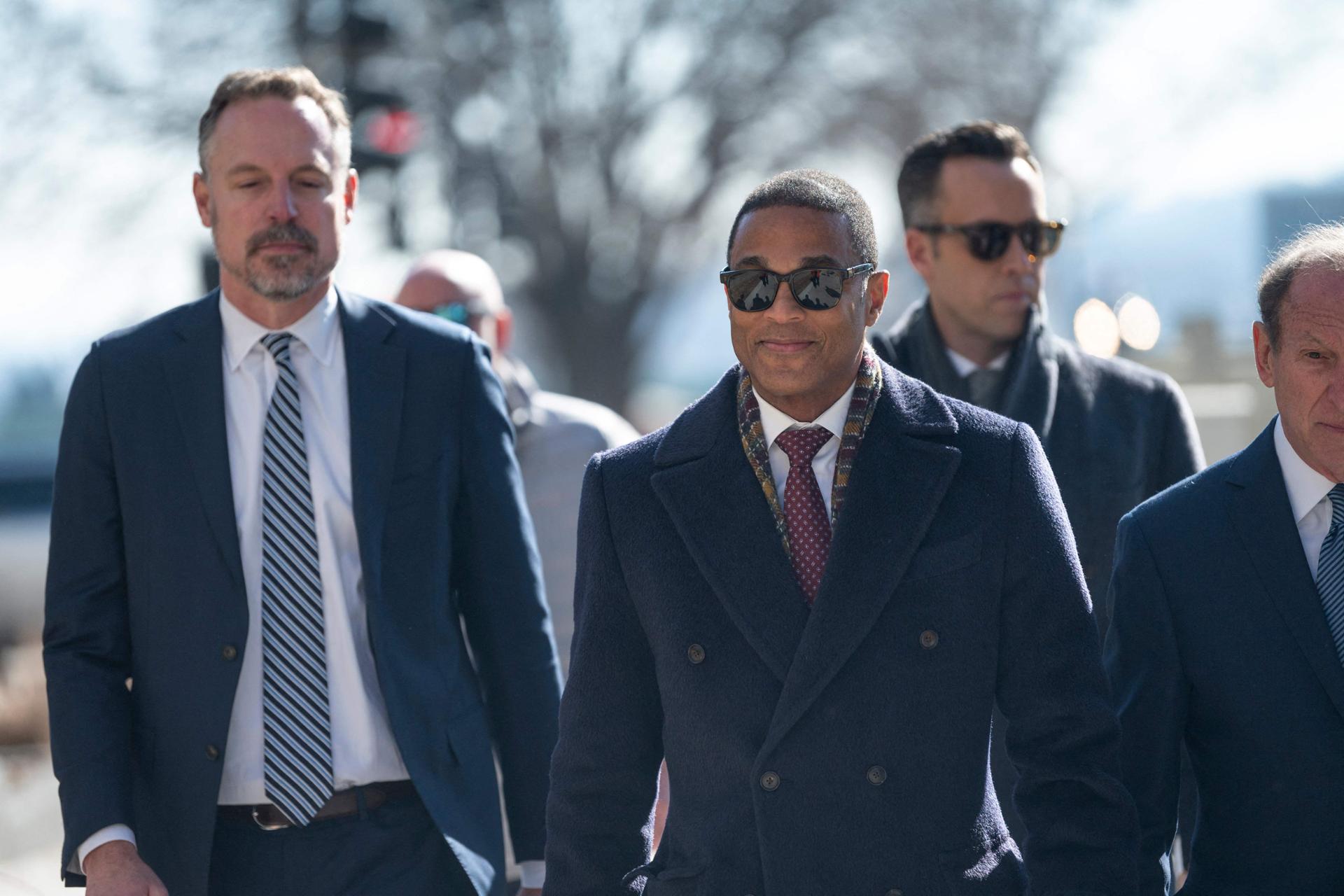
Former CNN anchor Don Lemon has pleaded not guilty to federal charges tied to his alleged involvement in a protest at a Minnesota church, a case that is now raising broader questions about the line between journalism, protest activity, and religious freedom protections under U.S. law.
The plea was entered on February 12 during a federal court appearance, where Lemon faced two serious counts related to alleged interference with religious worship. Prosecutors say Lemon and eight co-defendants conspired to disrupt a church service as part of a coordinated protest, while the defense argues he was acting in a journalistic capacity.
Charges and potential penalties
According to the indictment, Lemon and the other defendants are charged with:
-
Conspiracy against the right of religious freedom at a place of worship under 18 U.S.C. § 241
-
Injuring, intimidating, or interfering with the right of religious freedom at a place of worship under 18 U.S.C. § 248
If convicted, Lemon could face up to $20,000 in fines and a maximum of 10½ years in prison, reflecting the seriousness of federal civil rights violations involving places of worship.
Federal prosecutors allege that the group’s actions were not merely expressive protest but rose to the level of intimidation and obstruction. The indictment claims demonstrators entered the church, filled the aisles, and chanted slogans targeting U.S. immigration enforcement policies, specifically criticizing ICE.
Authorities also allege that some churchgoers were blocked from exiting the building and that children present were harassed — claims that form a central part of the government’s case.
The protest and “Operation Pullup”
The demonstration at the center of the case has been described by investigators as a coordinated action referred to as “Operation Pullup.” Prosecutors say it was promoted on social media prior to the event and that Lemon attended a pre-protest planning meeting.
Video footage cited in court filings allegedly shows protesters confronting the church’s pastor and questioning him in a way prosecutors say was intended to advance the protest’s political message. The government argues that this conduct crossed from protected speech into unlawful interference with religious practice.
Lemon’s defense: journalism and the First Amendment
Lemon has maintained that he was present in a professional capacity as a journalist documenting the protest and its surrounding issues. After his arrest in late January, he publicly defended his actions as protected under the First Amendment.
“There is no more important time than right now… for a free and independent media that shines a light on the truth and holds those in power accountable,” Lemon said at the time. “The First Amendment protects that work.”
His legal team is expected to argue that his presence at the event was consistent with newsgathering and reporting, not participation in criminal conduct.
High-profile legal team
Lemon is represented by a prominent legal defense team led by Abbe Lowell, known for representing high-profile political and public figures. His attorneys are expected to challenge both the factual allegations and the legal framework applied by prosecutors.
In addition to Lowell, Lemon’s defense includes a former acting U.S. attorney, indicating that the case is likely to be contested aggressively on constitutional grounds.
Evidence and investigation
During the arraignment, prosecutors revealed that federal authorities seized Lemon’s phone at the time of his arrest. The Department of Homeland Security currently retains the device under a sealed warrant, and it will not be returned until the search process is complete.
Investigators have not publicly detailed what evidence they expect to recover from the device, but such digital data could be used to establish communication between participants, planning activity, or intent.
Political and public reaction
Outside the courthouse, supporters of Lemon gathered, chanting slogans including “protect the press” and criticizing Attorney General Pam Bondi, reflecting how the case has already taken on political overtones.
Some civil liberties advocates argue the prosecution risks chilling press freedom, especially if journalists covering protests could face criminal liability. Others, however, say the case is about protecting religious liberty and ensuring that worship services are not disrupted by political activism.
Assistant Attorney General Harmeet Dhillon, speaking for the Justice Department’s Civil Rights Division, emphasized that constitutional protections for speech and press do not extend to conduct that disrupts religious worship.
“The First Amendment does not protect pseudo-journalism of disrupting a prayer service,” Dhillon said in a statement following the protest.
Broader legal implications
The case sits at the intersection of several constitutional protections: freedom of the press, freedom of speech, and freedom of religion. Courts will likely need to determine whether Lemon’s actions constituted legitimate journalism or active participation in conduct that interfered with religious practice.
Legal analysts note that prosecutions under 18 U.S.C. § 248 — commonly known as the Freedom of Access to Clinic Entrances (FACE) Act, but also applied to places of worship — have historically been used in cases involving physical obstruction or threats. Applying it to a protest involving a journalist adds a new dimension that could set precedent.
What comes next
Lemon’s case will now proceed through the federal court system, with pretrial motions likely to focus on constitutional arguments and evidentiary disputes. A trial date has not yet been publicly announced.
If the case goes to trial, it could become a landmark test of how far First Amendment protections extend for journalists embedded within protests that later become the subject of criminal charges.
For now, Lemon remains free pending trial after being released without bond following his January arrest. The outcome of the case could have lasting implications not only for him personally, but for how journalists, activists, and religious institutions interact in politically charged environments across the United States.