
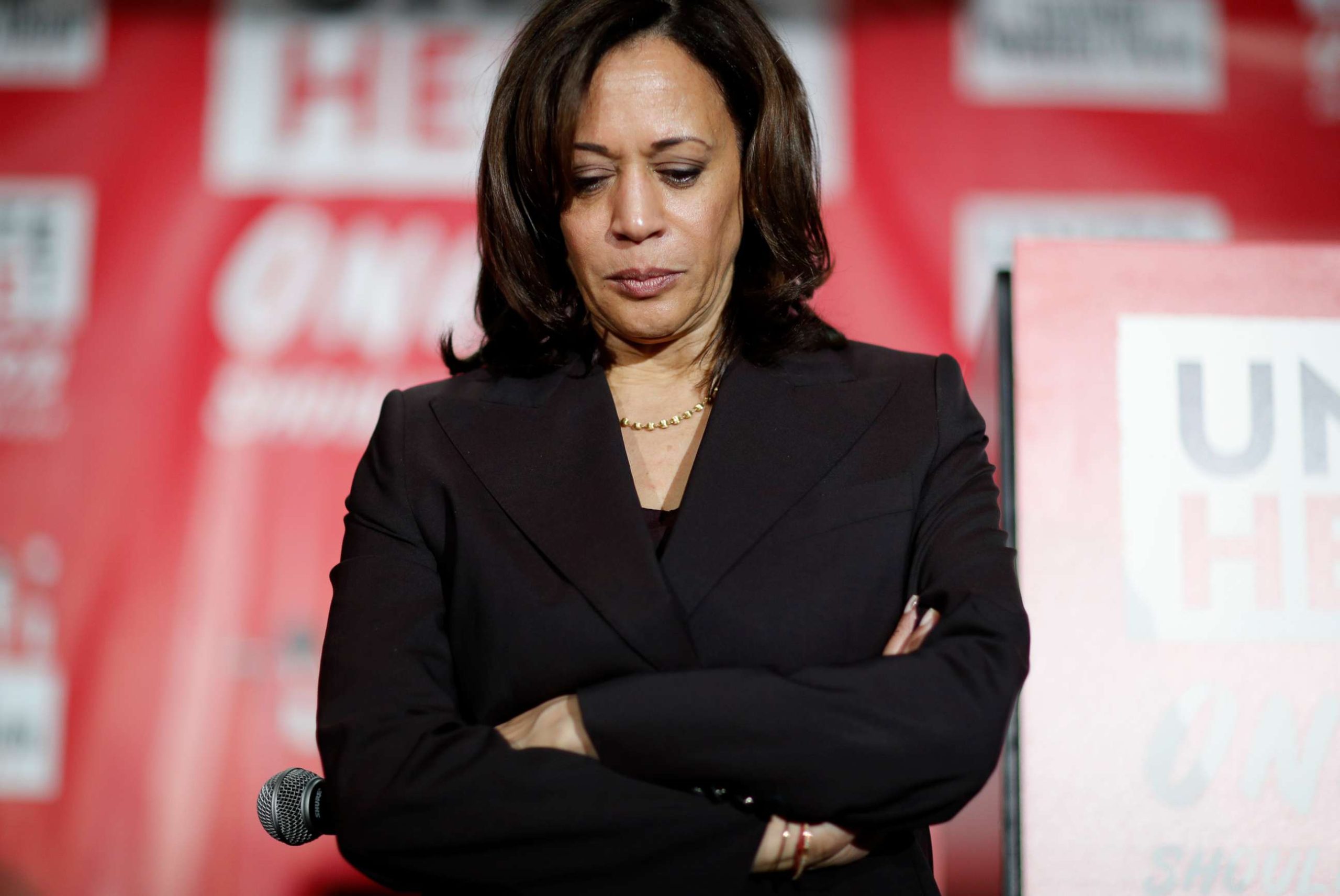
As the Democratic Party looks toward 2028, an uncomfortable reality is surfacing: there is no consensus on who should lead the next generation of the party. Into that vacuum steps Kamala Harris, the former vice president and 2024 nominee, whose reemergence on the national stage has reignited a quiet but deep divide among Democrats. To some, Harris represents continuity, resilience, and historic progress. To others, she embodies the burdens of a turbulent era and an electoral defeat they fear repeating.
Harris has not formally announced another presidential bid. Yet her recent movements suggest anything but retreat. She has resumed public appearances, extended her national book tour, and made high-profile stops in politically significant regions. She has also declined to pursue lower-profile options, such as a run for California governor, a decision widely interpreted as strategic. By keeping herself above state-level politics, Harris preserves the stature of a national figure—one whose ambitions remain unmistakably presidential.
This posture has unsettled Democrats who hoped the party would quickly turn the page after 2024. Privately, many strategists and donors question whether Harris can overcome the baggage of a polarizing administration and a high-profile loss. They argue that voters may associate her too closely with unpopular policies, inflation anxieties, and the perception of drift that plagued the party in recent years. For these skeptics, 2028 should be a clean break: a generational reset with a fresh face unburdened by the controversies of the past decade.
Others in the party see things very differently. They argue that Harris remains one of the most recognizable Democrats in the country, with a built-in national infrastructure and a loyal base. In a fractured media landscape, name recognition is power. Harris does not need to introduce herself to voters in Iowa, Georgia, or Nevada. She already commands attention, fundraising capacity, and global stature. To her supporters, writing her off would be an act of political malpractice.
At the heart of the divide is a fundamental question about what Democrats believe went wrong—and what they believe is needed to win again. One faction insists that the party must recalibrate ideologically and stylistically. They want a candidate who can project economic pragmatism, cultural moderation, and distance from Washington’s entrenched class. They fear Harris, fairly or not, is seen as a symbol of elite politics and institutional inertia.
Another faction rejects the premise that the party lost because it leaned too far into its values. They argue that the problem was not Harris herself, but a hostile media environment, voter cynicism, and structural disadvantages. From this perspective, abandoning Harris would signal weakness and reinforce the narrative that Democratic leaders crumble under pressure. For these Democrats, doubling down on a proven national figure is not reckless—it is disciplined.
Harris’s own rhetoric has been carefully calibrated. She has avoided overt campaign language while making it clear that she is “not done” with public service. This ambiguity serves a purpose. It allows her to test the waters without forcing a premature showdown inside the party. Every appearance becomes a soft focus group. Every speech offers feedback. Applause lines are noted. Silences are measured.
What makes this moment particularly tense is the absence of an obvious alternative. Several governors and senators are quietly positioning themselves, but none has yet consolidated a coalition broad enough to freeze Harris out. The Democratic bench is deep, but fragmented. Regional leaders appeal to regional voters. Policy-focused figures inspire activists but struggle with mass appeal. In that environment, Harris’s national profile looms large, even over those who would prefer a different standard-bearer.
The divide is not merely personal; it is philosophical. Harris represents continuity with the party’s recent past—a past that includes both legislative achievements and electoral disappointment. Her critics want rupture. Her allies want refinement. This debate mirrors earlier crossroads in Democratic history, when the party had to choose between reinvention and recommitment. In those moments, unity often came late and under pressure.
For now, the party’s tension remains largely behind closed doors. Publicly, Democrats speak in respectful generalities. Privately, operatives trade warnings. Some worry that a prolonged Harris shadow will deter new candidates from entering the race early. Others believe her presence will force would-be challengers to sharpen their arguments and prove their viability. Either way, her mere possibility is already shaping the field.
Harris herself appears acutely aware of this dynamic. She is not rushing. She is not vanishing. She is occupying space—deliberately, visibly, and on her own terms. By doing so, she compels the party to confront its unresolved questions sooner than it might prefer.
The road to 2028 is long, and political landscapes can shift dramatically. Economic cycles turn. International crises emerge. Public sentiment evolves. Harris may yet decide that another run is not in her interest. But the conversation she has sparked will not disappear. The Democratic Party must decide whether it believes in restoration or reinvention, in continuity or departure.
In that sense, Kamala Harris is more than a potential candidate. She is a mirror. Through her, Democrats are forced to look at what they have been, what they are, and what they want to become. The divide over her future is, ultimately, a divide over the party’s own identity.

Emily Johnson is a critically acclaimed essayist and novelist known for her thought-provoking works centered on feminism, women’s rights, and modern relationships. Born and raised in Portland, Oregon, Emily grew up with a deep love of books, often spending her afternoons at her local library. She went on to study literature and gender studies at UCLA, where she became deeply involved in activism and began publishing essays in campus journals. Her debut essay collection, Voices Unbound, struck a chord with readers nationwide for its fearless exploration of gender dynamics, identity, and the challenges faced by women in contemporary society. Emily later transitioned into fiction, writing novels that balance compelling storytelling with social commentary. Her protagonists are often strong, multidimensional women navigating love, ambition, and the struggles of everyday life, making her a favorite among readers who crave authentic, relatable narratives. Critics praise her ability to merge personal intimacy with universal themes. Off the page, Emily is an advocate for women in publishing, leading workshops that encourage young female writers to embrace their voices. She lives in Seattle with her partner and two rescue cats, where she continues to write, teach, and inspire a new generation of storytellers.