For years, she was regarded as a model of academic success and civic leadership—an immigrant who rose through higher education, nonprofit work, and public service with a reputation for dedication to children and families most in need. Her career was built on advocacy for early learning, equity, and opportunity, particularly for low-income communities. To colleagues and policymakers alike, she appeared to embody the very mission she promoted.
That image has now collapsed.
Federal prosecutors say a long-running fraud scheme siphoned millions of dollars away from programs designed to serve disadvantaged preschoolers across Michigan. The money, they argue, was never meant for luxury travel, personal enrichment, or shell businesses. It was intended to fund meals, transportation, and early education for children living below the poverty line.
Instead, investigators allege, it was systematically diverted over the course of several years—hidden behind fake invoices, fictitious childcare centers, and manipulated financial records.
At the center of the case is a once-celebrated nonprofit organization that operated in cities such as Grand Rapids, Kalamazoo, and Battle Creek. The organization partnered with local agencies to strengthen early learning infrastructure in underserved neighborhoods. At its peak, it supported programs that reached thousands of children and families, many of whom depended on these services for basic stability.
Roughly 72 percent of the children served lived below the federal poverty level. For their families, the organization’s work meant access to preschool classrooms, reliable transportation, and daily meals—resources that can shape a child’s future long before kindergarten.
Behind the scenes, however, federal investigators say the nonprofit’s leadership was abusing the trust placed in it by state and federal agencies.
According to court filings, the scheme began years before it came to light. Funds from taxpayer-supported grants—including those tied to federal early childhood initiatives and Michigan’s flagship preschool readiness programs—were allegedly redirected for personal use. The fraud continued even as the organization expanded its reach and its founder’s public stature grew.
The nonprofit’s leader was not only a respected academic but also a trusted voice in state policy circles. Her expertise in early childhood development earned her a seat on a powerful state committee responsible for shaping how Michigan invests in young children. From that position, she helped guide decisions on funding and strategy, while prosecutors say she was simultaneously misusing the very resources she was charged with protecting.
The unraveling began quietly, through financial discrepancies that raised red flags. What followed was a multi-year investigation that exposed an intricate web of falsified documents and financial misconduct. Prosecutors say the nonprofit’s CEO worked closely with the organization’s bookkeeper to generate fraudulent invoices totaling nearly half a million dollars. Those invoices, investigators allege, were used to justify payments that ultimately benefited the executives themselves.
The scheme went further. Authorities say two fictitious daycare businesses were created on paper—entities that appeared legitimate but existed only to funnel money to the CEO, her relatives, and associates. By routing funds through these fake operations, prosecutors allege, the fraud was concealed from oversight bodies for years.
By the time the misconduct was uncovered, more than $1 million had been embezzled.
Some of that money, according to court records, paid for personal travel, including trips to Hawaii and overseas destinations in Africa. None of it, prosecutors emphasize, was authorized for such use. Every dollar was intended to support early learning services for children whose families were already struggling to make ends meet.
The fallout was swift and devastating. In 2023, the nonprofit shut its doors permanently. Thirty-five employees lost their jobs. Families who relied on its programs were left scrambling to find alternatives, and partner organizations were forced to absorb the impact with limited resources of their own.
Later that year, the nonprofit filed a civil lawsuit seeking to recover losses from its former leadership. By then, the criminal investigation was well underway.
The bookkeeper involved in the scheme was prosecuted separately. She admitted to paying herself nearly $1 million during the same period and was sentenced to 54 months in federal prison—a signal from the court that the misconduct would be met with serious consequences.
Only midway through the legal proceedings did the public learn the full extent of the betrayal—and the identity of the woman at its center.
That woman is Nkechy Ezeh, a former professor, nonprofit executive, and state appointee who was born in Nigeria and built her career in the United States.
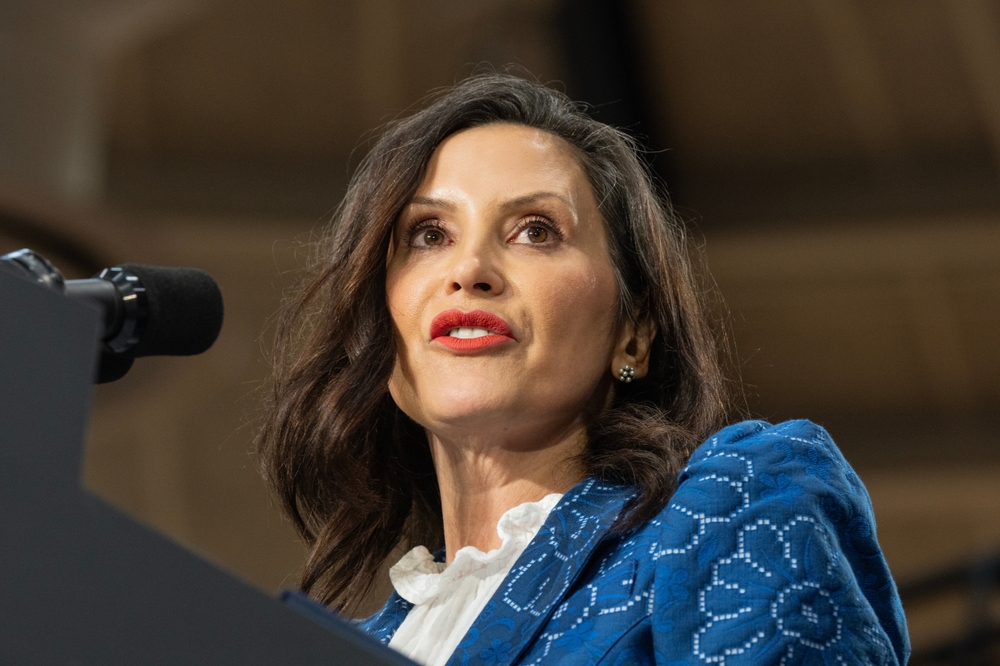
Ezeh earned a doctorate and spent years teaching at Aquinas College in Grand Rapids, where she was known for her scholarship and community involvement. In 2010, she founded the nonprofit that would later become the focus of the federal investigation. The organization’s mission aligned closely with her academic work: strengthening early childhood education systems and advocating for children in underserved communities.
Her success brought recognition. Before the fraud probe, Ezeh received numerous accolades and, in 2020, was appointed by Michigan Governor Gretchen Whitmer to the executive committee of the Michigan Early Childhood Investment Corporation. The role carried significant influence, involving oversight and strategic planning for statewide early childhood initiatives.
Prosecutors say the fraud occurred between 2017 and 2023—overlapping with her tenure in both nonprofit leadership and state service.
On December 29, 2025, Ezeh agreed to a plea deal with federal prosecutors. Two weeks later, on January 14, 2026, she stood before U.S. District Judge Hala Jarbou in the Western District of Michigan and entered a guilty plea to one count of wire fraud and one count of tax evasion.
The wire fraud charge stems from the electronic transmission of falsified financial documents used to carry out the scheme. The tax evasion charge relates to income from the fraud that was never reported to the Internal Revenue Service.
As part of the plea agreement, Ezeh agreed to pay $1.4 million in restitution to government agencies whose funds were misused. She also agreed to pay nearly $400,000 in back taxes and penalties to the IRS.
Sentencing is scheduled for May 13, 2026. Under federal law, Ezeh faces a maximum of 20 years in prison for wire fraud and up to five additional years for tax evasion. The actual sentence will be determined by the court, taking into account federal sentencing guidelines and the details of the plea agreement.
The case has sent shockwaves through Michigan’s early childhood education community. Advocates say it has undermined trust at a time when public confidence is essential to securing funding and political support for programs serving vulnerable children.
“It’s not just a financial crime,” one former partner said privately. “It’s a betrayal of families who depended on those services and believed in the mission.”
For many, the most painful aspect of the case is the contrast between Ezeh’s public image and her admitted conduct. She built a career on the language of equity and opportunity, while prosecutors say her actions deprived thousands of children of resources meant to support their earliest years.
As the case moves toward sentencing, it stands as a stark reminder of how power and trust—when abused—can inflict harm far beyond balance sheets. The children and families affected by the nonprofit’s collapse will not easily recover what was lost. And for Michigan’s early learning community, rebuilding trust may take far longer than rebuilding programs.