The Washington, D.C., shooting that left two young National Guard soldiers gravely wounded has taken an even more tragic turn, as the heartbroken father of one of the victims revealed on Thursday that his 20-year-old daughter is not expected to survive her injuries. The grim update came as federal investigators continued probing the attack as a possible act of terrorism, and as the political fallout surrounding the suspect’s background intensified nationwide.
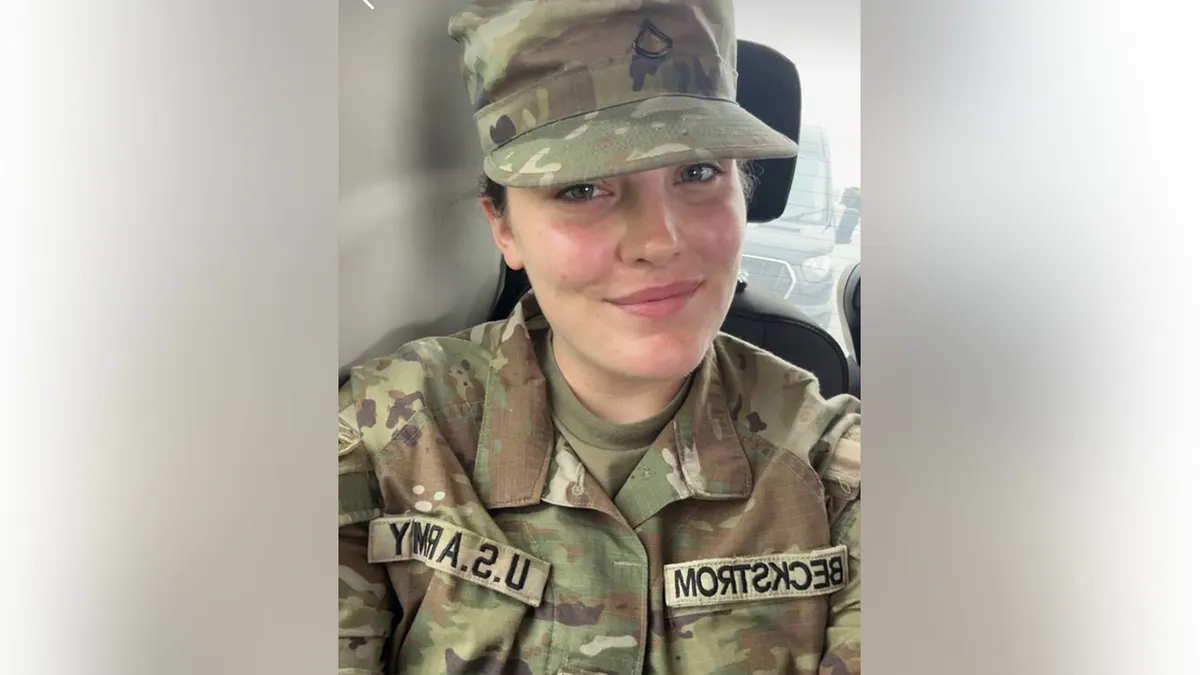
Sarah Beckstrom, a member of the West Virginia National Guard, was shot on Wednesday near the White House in what authorities have called an “ambush-style” attack. Her father, Gary Beckstrom, spoke from her hospital bedside, where he has remained since the moment she was rushed into emergency care. Fighting tears, he confirmed publicly that doctors do not believe his daughter will live.
“She has a mortal wound. It’s not going to be a recovery,” he said, holding her hand as he spoke. “I’m here with her, and I’m not letting go.”
Sarah, a dedicated young service member who had been deployed to D.C. as part of a federal security operation, was shot alongside fellow Guardsman Andrew Wolfe, 24. Wolfe remains in critical condition, though doctors have not released additional updates on whether his status has improved. The two soldiers were stationed only a few hundred yards from the White House when the shooting occurred, part of a large deployment assigned to assist federal authorities amid heightened security concerns in the capital.
The suspected gunman, 29-year-old Rahmanullah Lakanwal, was taken into custody after being wounded during the exchange. Authorities say his injuries are not life-threatening, and he remains hospitalized under guard. Investigators have confirmed that he drove across the country from Bellingham, Washington, where he lived with his wife and five children not far from the Canadian border. According to initial reports, the weapon used in the attack was a .357 Smith & Wesson revolver.
Officials state that the ambush was sudden and violent, with the suspect allegedly approaching the two Guardsmen before opening fire at close range. Witnesses nearby described the scene as chaotic, with police flooding the streets within moments and crowds fleeing the busy area near the Farragut West Metro station.
From the moment Lakanwal’s identity was released, his background became the center of national debate. Fingerprints confirmed that he was an Afghan national who entered the United States following the Taliban takeover of Afghanistan in 2021. His arrival had been part of the massive evacuation effort that brought tens of thousands of Afghan allies, refugees, and their families into the country in the months after Kabul fell.
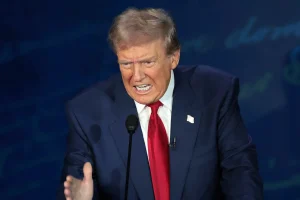
President Donald Trump, addressing the nation Wednesday night, placed sharp blame on the administration of Joe Biden for allowing Lakanwal to enter and remain in the country. In a somber, forceful message, Trump said: “The suspect in custody is a foreigner who entered our country from Afghanistan, a hellhole on earth. He was flown in by the Biden administration on those infamous flights everybody talked about, where nobody knew who was coming in.”
Trump went on to say that the suspect’s status in the United States was extended during Biden’s term, calling the former president “the worst in our history.” He demanded a full review of “every single alien from Afghanistan who has entered our country,” making clear that his administration would leave no case unexamined.
Yet in a surprising twist, intelligence officials later confirmed that Lakanwal had once worked alongside U.S. forces during the Afghanistan war. CIA Director John Ratcliffe stated that Lakanwal served as an elite commander within Unit 01, an arm of the former Afghan government’s National Directorate of Security that had cooperated extensively with American Special Forces. His record, Ratcliffe said, was well-known to U.S. intelligence.
Lakanwal also applied for asylum in 2024 — and, according to federal records, that application was approved earlier this year by the Trump administration’s own Department of Homeland Security. His Afghan identification card, which surfaced during the investigation, confirmed his ranking role in the country’s former intelligence apparatus.
Officials caution that these details do not diminish the gravity of Wednesday’s attack nor explain why the shooting occurred. U.S. Attorney Jeanine Pirro, who is overseeing the federal charges, said during a Thursday briefing that the suspect faces counts of assault with intent to kill while armed, as well as possession of a firearm during a crime of violence. She emphasized that the investigation is ongoing and that prosecutors are not ruling out additional charges, including murder, should either of the victims succumb to their wounds.
Pirro also noted that some witnesses reported the suspect shouted “allahu akbar” during the attack, though investigators are still determining the accuracy of those accounts and caution against drawing premature conclusions. “It’s too soon to say what the motive is,” she told reporters. “We are praying that they survive and that the highest charge does not have to be murder in the first degree. But if they do not survive, that charge will absolutely be considered.”
The FBI, under the leadership of Director Kash Patel, is examining whether Lakanwal may have had any communication with extremist groups or whether he acted completely alone. Authorities have not disclosed any confirmed motive but have labeled the attack a suspected act of terror due to the nature of the assault, the target, the location, and the suspect’s background.
The attack has placed renewed attention on the significant National Guard presence in Washington, where nearly 2,200 troops had already been deployed under the president’s directive to support local law enforcement. This mission began earlier in the year when Trump federalized the D.C. police force and ordered specialized Guardsmen from several states into the capital as part of a sweeping anti-crime and security initiative.
Following the shooting, the administration ordered an additional 500 soldiers into the city — a rapid reinforcement designed to strengthen the security grid around federal buildings, transit hubs, and public gathering areas. Tensions in Washington remain high as the holiday weekend approaches, with authorities increasing patrols, street closures, and surveillance in response to the incident.
As the political firestorm grows, the human side of the tragedy continues to shake the nation. Photos shared by the Beckstrom family show Sarah smiling beside her father, proud in her uniform. She enlisted in the National Guard at a young age, hoping to build a career in public service. Friends describe her as dedicated, hardworking, and determined to protect her country.
Her father’s grief has resonated deeply across the nation. “She just wanted to serve,” he said softly from the hospital. “That’s all she ever wanted to do.”
Investigators, meanwhile, continue piecing together the cross-country journey the suspect took before arriving in the District. Authorities believe Lakanwal planned his trip for several days before the shooting, though they have not yet determined whether he intended to target the National Guard specifically or encountered the two soldiers by chance.
For Andrew Wolfe’s family, the wait for updates grows more agonizing by the hour. The young Guardsman, like Sarah, had been deployed as part of heightened security operations. He was shot multiple times but survived long enough to receive emergency transport. His condition remains critical, and his family has asked for privacy.
Federal officials stress that every aspect of the suspect’s background — from his asylum application to his service with Afghan intelligence to his life in Washington state — is under review. The Department of Homeland Security has so far declined public comment on the case while investigators continue their work.
What began as an ordinary shift for two young service members has now become a national tragedy, one that raises difficult questions about security, immigration vetting, and intelligence coordination. As the investigation unfolds, the country waits for clarity while families cling to hope — and brace for heartbreak.
For the Beckstroms, the heartbreak has already arrived.
“She’s my little girl,” her father said. “And I’m just trying to be here while I still can.”

Emily Johnson is a critically acclaimed essayist and novelist known for her thought-provoking works centered on feminism, women’s rights, and modern relationships. Born and raised in Portland, Oregon, Emily grew up with a deep love of books, often spending her afternoons at her local library. She went on to study literature and gender studies at UCLA, where she became deeply involved in activism and began publishing essays in campus journals. Her debut essay collection, Voices Unbound, struck a chord with readers nationwide for its fearless exploration of gender dynamics, identity, and the challenges faced by women in contemporary society. Emily later transitioned into fiction, writing novels that balance compelling storytelling with social commentary. Her protagonists are often strong, multidimensional women navigating love, ambition, and the struggles of everyday life, making her a favorite among readers who crave authentic, relatable narratives. Critics praise her ability to merge personal intimacy with universal themes. Off the page, Emily is an advocate for women in publishing, leading workshops that encourage young female writers to embrace their voices. She lives in Seattle with her partner and two rescue cats, where she continues to write, teach, and inspire a new generation of storytellers.