
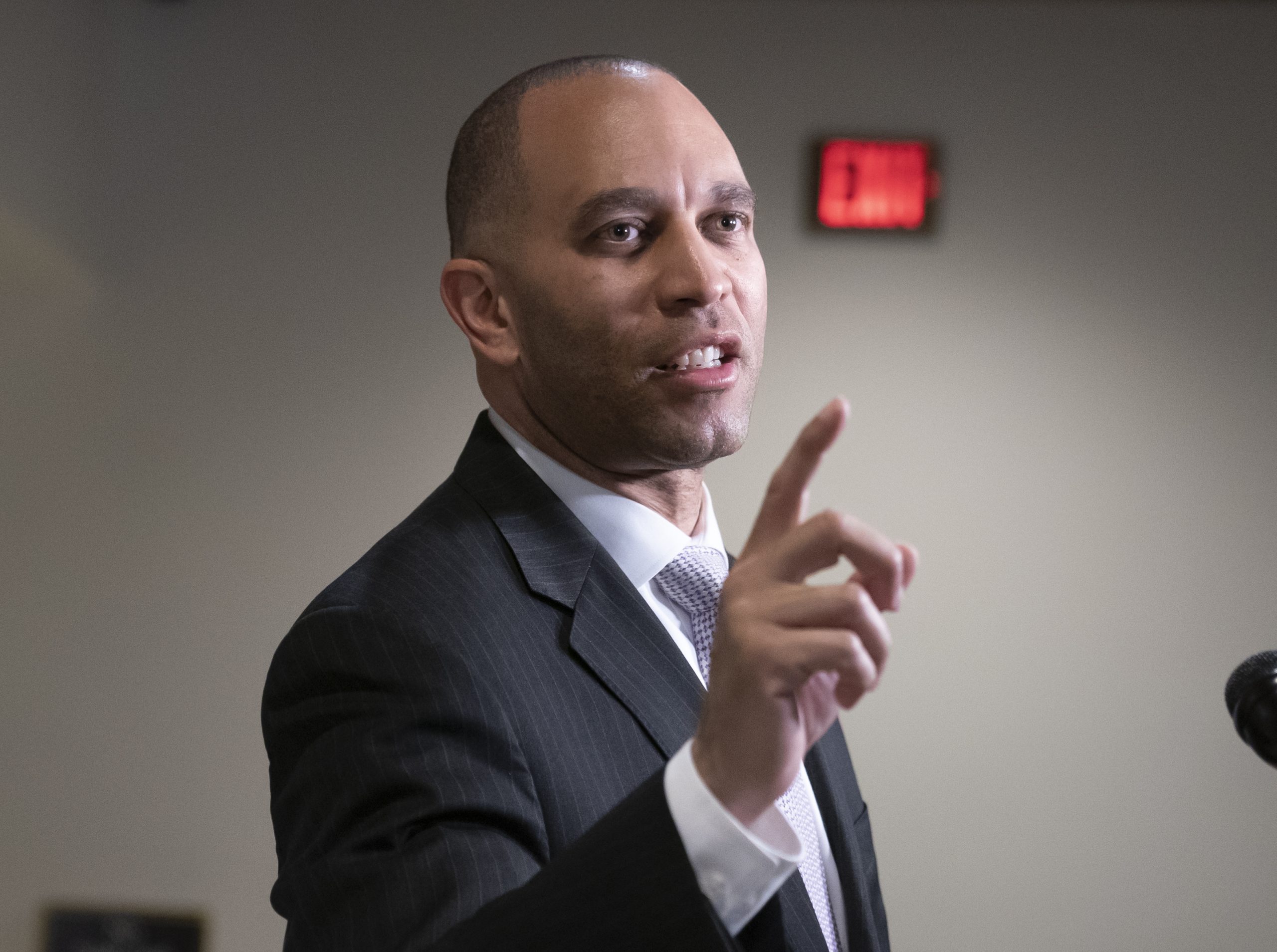
Rep. Henry Cuellar’s political future became the center of national attention on Wednesday, after the longtime Democratic lawmaker from Texas made two major moves within hours of each other: filing for re-election and publicly responding to President Donald Trump’s surprise pardon.
Cuellar, long known as one of the most conservative Democrats in Congress, delivered a message that immediately shut down speculation swirling through Washington: he is not retiring, and he is not switching parties.
The announcement came after Trump unexpectedly pardoned both Cuellar and his wife, Imelda, wiping away a federal corruption case that has hovered over the congressman for more than a year. The rare cross-party intervention ignited talk that Cuellar might defect to the GOP or step aside to avoid a bruising 2026 contest.
But Cuellar made it clear — he isn’t going anywhere.
Cuellar Says Trump’s Move “Clears the Air”
Speaking to a small group of reporters, Cuellar said the pardon caught him off guard.
“It came as a surprise,” he told Politico. “I want to thank President Trump for this. Now we clear the air. Nothing has changed, and we’re going to be ready to win re-election again.”
The message was straightforward: he appreciated the pardon, but it didn’t alter his political identity.
“Nothing has changed — I’m a good old conservative Democrat,” Cuellar said.
The remark doubled as a reminder of why Cuellar has always been one of the most unusual Democrats on Capitol Hill. He represents a border district deeply shaped by Hispanic culture, Catholic values, and a long tradition of conservative Democrats. His voting record often reflects that reality, and it frequently puts him at odds with the progressive wing of his party.
Private Calls Reassured Democratic Leaders
Behind the scenes, Democratic officials moved quickly. Two senior Democrats, speaking anonymously, said Cuellar contacted party leaders within hours of Trump’s announcement to assure them he would not switch parties.
Republicans have courted Cuellar for years, believing his conservative district could easily elect a Republican if he ever stepped aside. Trump’s praise raised concerns that the GOP might score an unexpected recruitment victory.
Instead, Cuellar filed his re-election paperwork with Texas officials the same day.
With that, he effectively shut down the swirl of rumors that Republicans had hoped to capitalize on.
The Pardon That Sparked the Political Earthquake
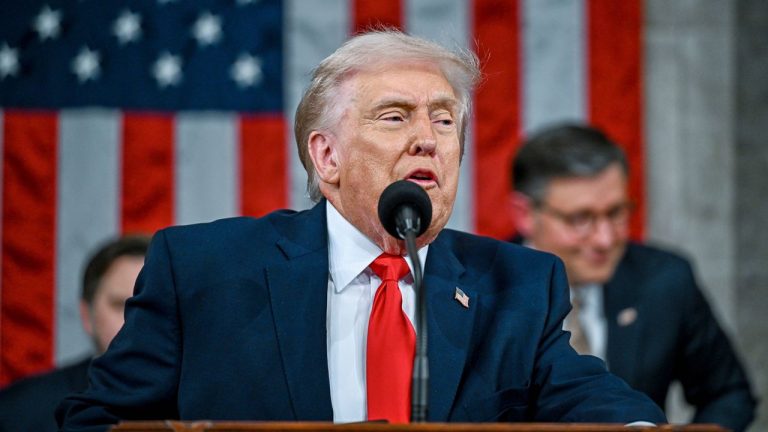
Trump’s decision to pardon Cuellar and his wife came after months of public attacks from the former president against the Biden administration’s Justice Department.
“For years, the Biden Administration weaponized the Justice System against their political opponents,” Trump wrote on Truth Social.
He framed the Cuellars’ case as another example of that “weaponization,” saying the congressman had been targeted because he criticized Biden’s immigration failures.
“Henry, I don’t know you, but you can sleep well tonight — your nightmare is finally over!” Trump posted.
Cuellar and his wife had faced more than a dozen federal charges, including bribery, tied to alleged payments routed through Azerbaijani energy interests and a Mexican bank. Prosecutors argued that Cuellar used his seat on the House Appropriations Committee to influence U.S. policy in ways favorable to those entities.
The congressman denied wrongdoing from the start.
https://twitter.com/RedWave_Press/status/1996288516930584713
Jeffries Defends the Pardon — A Rare Move
House Minority Leader Hakeem Jeffries did not hesitate when asked about Trump’s decision. In fact, he supported it.
“I don’t know why the president decided to do this, [but] I think the outcome was exactly the right outcome,” Jeffries told CNN.
He even questioned the underlying strength of the federal case.
“Listen, the reality is [that] this indictment was very thin to begin with,” Jeffries said. “The charges were eventually going to be dismissed — if not at the trial court level then by the Supreme Court.”
This defense was notable because Jeffries has sharply criticized many of Trump’s previous pardons. His softer tone suggested Democrats may have privately doubted the prosecution from the start.
Republicans React With Surprise — and Speculation
Republicans were caught off guard, not just by the pardon but by Cuellar’s immediate confirmation that he would run for re-election as a Democrat.
For years, the NRCC considered his South Texas district one of their best pickup opportunities. Trump’s popularity along the border has grown, and Republicans believed they could finally flip the seat if Cuellar retired or switched parties.
Now, they face a different battlefield.
Rep. Pete Sessions, a Texas Republican, said Cuellar’s decision proves there was “no quid pro quo.”
“Very interesting,” Sessions repeated. “Very interesting.”
The GOP had already launched its 2026 efforts; a top Republican recruit entered the race on Tuesday. Now, that candidate will need to face a well-known incumbent whose legal cloud has vanished overnight.
https://twitter.com/FoxNews/status/1996354058186064086
Cuellar Says He’s Not Going Anywhere
Cuellar insisted that he intends to fight and win — and that his district still aligns with his conservative brand of Democratic politics.
“This is a conservative district, and I will win it,” he said.
He also emphasized that he never asked Trump for anything, nor did he know the pardon was coming. He has not spoken with the president since the announcement but plans to thank him personally at the White House Christmas party.
The gesture signals a political landscape that has shifted in ways few expected: a conservative Democrat embracing a Conservative Republican president’s act of clemency, while still remaining firmly inside his own party.
A Pardon That Scrambles the Map for 2026
Trump’s decision has created a ripple effect extending far beyond one congressional district:
1. Democrats avoid an unexpected open-seat fight.
Had Cuellar stepped down, the party risked losing one of its few South Texas footholds.
2. Republicans lose a recruitment opportunity.
The GOP has made deep inroads across the border region in recent cycles. A vacant seat could have turned the district red.
3. Trump reinforced his claim that Biden weaponized the Justice Department — even against Democrats.
This helps the White House argue the president’s concern is principled, not partisan.
4. Cuellar’s political capital may actually grow among moderates.
He now occupies a unique space: a Democrat pardoned by Trump while openly critical of Biden’s border failures.
The Big Question: Does the Pardon Pay Off for Trump?
Trump’s decision angered some conservatives who oppose political clemency for any Democrat. But others argue the move highlights Biden’s alleged misuse of the DOJ — a central theme of Trump’s second-term message.
For now, Cuellar benefits the most. His legal jeopardy is gone. His re-election campaign is underway. And he has the full backing of Democratic leadership — even those who often disagree with his centrist positions.
The next year will reveal whether voters reward him for surviving one of the most explosive political scandals in modern congressional politics.

Emily Johnson is a critically acclaimed essayist and novelist known for her thought-provoking works centered on feminism, women’s rights, and modern relationships. Born and raised in Portland, Oregon, Emily grew up with a deep love of books, often spending her afternoons at her local library. She went on to study literature and gender studies at UCLA, where she became deeply involved in activism and began publishing essays in campus journals. Her debut essay collection, Voices Unbound, struck a chord with readers nationwide for its fearless exploration of gender dynamics, identity, and the challenges faced by women in contemporary society. Emily later transitioned into fiction, writing novels that balance compelling storytelling with social commentary. Her protagonists are often strong, multidimensional women navigating love, ambition, and the struggles of everyday life, making her a favorite among readers who crave authentic, relatable narratives. Critics praise her ability to merge personal intimacy with universal themes. Off the page, Emily is an advocate for women in publishing, leading workshops that encourage young female writers to embrace their voices. She lives in Seattle with her partner and two rescue cats, where she continues to write, teach, and inspire a new generation of storytellers.