Fans attending a recent country music concert in Las Vegas were left stunned after the show featured intense, allegedly “satanic-like” stage visuals that many described as resembling the depths of hell. Social media erupted following videos of the performance, which showed skeletons, flames, and other macabre imagery projected on massive LED screens that engulfed the stage.
The concert, held at one of Las Vegas’ most high-profile venues, has drawn attention not only for its music but for the visual experience accompanying it. Attendees reported a surreal atmosphere where the boundary between theatrical production and dark imagery seemed intentionally blurred.
The Visual Experience That Sparked Outrage
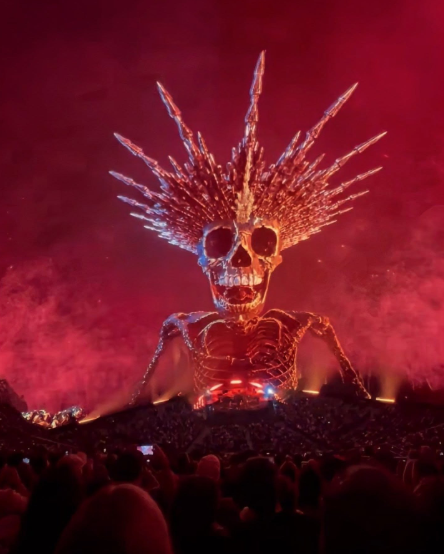
Clips shared online captured enormous skeletal figures, flames rising along the stage’s edge, and a glowing LED backdrop bathed in deep red hues. One image showed a skeleton wearing a spiked crown, suspended above the audience as if presiding over the performance.
Additionally, a performer on stage was seen wearing a crown resembling bones, adding to the ominous tone of the spectacle. Some attendees and online commentators reacted strongly, claiming that the visuals crossed into unsettling or “demonic” territory, a stark contrast to the typically cheerful themes associated with mainstream country music.
The LED screen at the venue, measuring an impressive 160,000 square feet, played a central role in the show. In one sequence, bright orange flames swept across the display, seemingly interacting with the performers and creating a fiery, immersive environment. Fans described the effect as both visually stunning and, for some, unnerving.
Mixed Reactions From Fans and Observers
Social media platforms were flooded with reactions following the performance. Some viewers questioned the appropriateness of the imagery for a country music concert, noting the discrepancy between the genre’s usual lyrical and aesthetic themes and the dark, theatrical visuals.
Comments ranged from astonishment to criticism, with some labeling the show “blatantly demonic” or “dark and evil.” Others expressed concern about the impact of such imagery on younger audiences or more sensitive concertgoers, suggesting that the visual presentation was excessive for the type of music performed.
However, not all feedback was negative. Many attendees defended the production, emphasizing that the most intense visuals lasted only a brief portion of the show. Some praised the spectacle as a creative enhancement, highlighting the use of waves, angels, dancers, and other artistic elements that balanced the darker moments. One fan commented, “From someone who was actually there, thank you for giving me the best day of my life. The show was incredible and don’t let anyone tell you otherwise.”
Introducing the Artist Behind the Controversy
At the center of the conversation is Zac Brown, the 47-year-old Grammy-winning country music singer known for hits such as Chicken Fried, Old Love Song, and Knee Deep. Brown, performing with his band at the Sphere in Las Vegas, incorporated the controversial visuals during his December shows. The singer’s creative direction and stage design were aimed at crafting a memorable concert experience but sparked unexpected backlash for its dark imagery.
Fans at the Sphere had close encounters with the skeletal figures and fire effects, which dominated the 60,000-square-foot stage. Brown’s use of a bone-like crown and other macabre elements contributed to the perception that the show temporarily delved into what some called the “demonic realm.” These artistic choices provoked both intrigue and concern among concertgoers and online viewers.
Fan Reactions and Criticism
Social media commentary has been swift and intense. Many users criticized the contrast between Brown’s traditionally soft, melodic music and the ominous visuals, with one writing, “Zac Brown hasn’t got a single song where they need to be doing all that.” Others echoed similar sentiments, noting that the stage design seemed incongruous with the genre’s image and history.
Some viewers expressed disappointment, claiming that the performance had caused them to question their fandom. “You lost me, a big fan! You’ve crossed into the demonic realm like way too many artists,” one post read. Another simply stated, “Be the light in the darkness instead of ushering in darkness and evil. This just makes me so sad.”
Defense From Supporters
Not all reactions were critical. Numerous fans came to Brown’s defense, explaining that the intense visuals were brief and part of a larger theatrical experience. Several posts emphasized that negative commentators had only seen clips online rather than attending the full show, which included lighter and more uplifting visual elements alongside the darker motifs.
Supporters described the performance as an ambitious and memorable artistic display, praising Brown’s creativity and the immersive nature of the concert. “There’s so much more to it like waves, angels, dancers, etc. You’re stretching with these comments for seeing a 15-second clip,” one fan wrote. Others echoed similar points, asserting that the stage design enhanced the performance rather than overshadowed it.
Tour Dates and Venue Impact
The controversial visuals were presented during Brown’s performances at the Sphere on December 5 and 6, both of which were sold out. The venue, known for its cutting-edge technology and massive LED display, allowed for unprecedented visual effects that amplified the concert’s theatricality. Fans in attendance experienced a level of stage production rarely seen in country music.
Zac Brown Band is scheduled to continue the tour with additional Las Vegas dates on December 12 and 13, followed by more shows in January. The ongoing tour presents opportunities for both continued praise and criticism, as fans and observers discuss the artistic choices made during the Las Vegas performances.
Balancing Artistry With Audience Expectations
The incident raises broader questions about the balance between artistic experimentation and audience expectations within the music industry. Country music, typically associated with storytelling, nostalgia, and emotional warmth, rarely embraces visuals that might be interpreted as dark or occult. Brown’s decision to incorporate skeletons, fire, and bone-like attire demonstrates a willingness to push boundaries but also illustrates the risks of diverging from genre norms.
Some observers have suggested that the reactions reflect generational differences, with younger audiences more accustomed to multimedia spectacles and immersive experiences, while traditional fans may find such visuals unsettling. Social media amplifies these perceptions, allowing even brief clips to shape public opinion and fan response.
The Role of Social Media
Videos and images from the performances quickly circulated on platforms like Instagram and Twitter, fueling discussions about the nature and appropriateness of the visuals. The rapid spread of footage demonstrates how social media can amplify controversies and shape public discourse around live events.
While some commentators criticized the content as excessively dark or “demonic,” others praised the innovative production values and technical achievements, noting that the Sphere’s LED screens allowed for a level of spectacle unmatched by traditional concert venues.
Conclusion
Zac Brown’s Las Vegas performances have sparked a heated debate about the intersection of visual spectacle and musical performance. The skeletal imagery, flames, and bone-like attire pushed boundaries, eliciting strong reactions from both critics and supporters alike. For some fans, the shows represented an unexpected departure from the familiar warmth of country music, while for others, they were a testament to the band’s creativity and ambition.
As the tour continues, it remains to be seen how future audiences will respond to Brown’s theatrical choices and whether the controversy will have lasting effects on fan perception. Regardless of opinion, the Las Vegas concerts have firmly established themselves as memorable events in contemporary country music, demonstrating the growing influence of visual storytelling in live performance.

Emily Johnson is a critically acclaimed essayist and novelist known for her thought-provoking works centered on feminism, women’s rights, and modern relationships. Born and raised in Portland, Oregon, Emily grew up with a deep love of books, often spending her afternoons at her local library. She went on to study literature and gender studies at UCLA, where she became deeply involved in activism and began publishing essays in campus journals. Her debut essay collection, Voices Unbound, struck a chord with readers nationwide for its fearless exploration of gender dynamics, identity, and the challenges faced by women in contemporary society. Emily later transitioned into fiction, writing novels that balance compelling storytelling with social commentary. Her protagonists are often strong, multidimensional women navigating love, ambition, and the struggles of everyday life, making her a favorite among readers who crave authentic, relatable narratives. Critics praise her ability to merge personal intimacy with universal themes. Off the page, Emily is an advocate for women in publishing, leading workshops that encourage young female writers to embrace their voices. She lives in Seattle with her partner and two rescue cats, where she continues to write, teach, and inspire a new generation of storytellers.