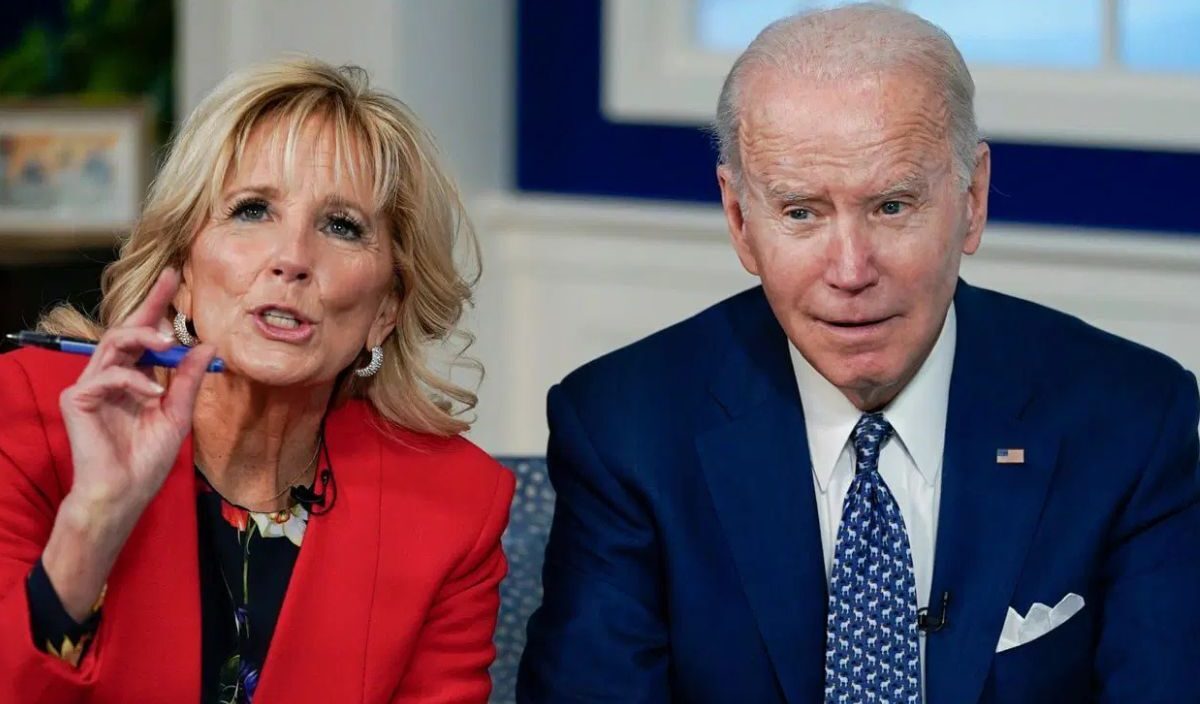
In the aftermath of former President Joe Biden’s recent cancer diagnosis, fresh controversy is erupting—not over policy, but over the role of the person closest to him during his presidency: his wife, Jill Biden.
Though once admired for her public loyalty, Dr. Biden now faces scrutiny from doctors, lawmakers, and media figures. Their concern is focused on how she may have influenced decisions affecting her husband’s health and, by extension, the nation.
A New Kind of Accusation
What began as a health update quickly spiraled into political and ethical debate.
Republican Congresswoman Mary Miller of Illinois issued a striking statement on social media:
“Jill Biden was complicit in covering up Joe Biden’s mental and physical decline… She should face CRIMINAL CHARGES for elder abuse!!”
This wasn’t an offhand remark. Miller doubled down, echoing growing voices from both sides of the political spectrum who are raising a difficult question: Was the former president protected—or exploited—by those around him?
Medical Experts Join the Discussion
Dr. Elaine Healy, a specialist in geriatric medicine, weighed in during an interview with The Post. While she did not name Jill Biden directly, her comments hit close to home.
“Visible bruising and other injuries from physical violence are obvious forms of abuse,” Healy said.
“But non-violent actions—like intimidation, social isolation, or manipulation—also qualify.”
Healy then added a chilling qualifier:
“There’s a more sinister type of elder abuse—using an elderly person for political gain.”
After the Debate: A Flashpoint Moment
The situation escalated after the final 2024 presidential debate. In a now widely circulated clip, Jill Biden was seen guiding her husband offstage. What some viewed as caregiving, others saw as evidence of control.
“What was behind her insistence that he run again, when she had to be aware of his declining capacity?” Dr. Healy asked.
Her conclusion was blunt:
“If she used his dependency to influence decisions, it’s elder abuse.”
Even Mainstream Media Voices Speak Up
Criticism hasn’t only come from conservatives.
Veteran Washington Post columnist Sally Quinn—no fan of Donald Trump—stated on the Tara Palmeri Show:
“I blame Jill Biden for this… If she had said ‘Joe, you can’t do it,’ he wouldn’t have run.”
Quinn added:
“She wasn’t protecting him… I thought it was elder abuse, really.”
That quote struck a nerve, suggesting this debate is crossing party lines.
Trump Allies Join the Pile-On
Donald Trump Jr. took the discussion further. In a sharply worded Truth Social post, he wrote:
“How did Dr. Jill Biden miss stage five metastatic cancer—or is this yet another cover-up???”
His implication: The former first lady either knew and hid the truth, or failed to act in time.
Cancer Diagnosis Sparks More Questions
Joe Biden’s diagnosis stunned the public—not just because of its severity, but because of the timing.
Doctors familiar with prostate cancer expressed shock that it had progressed so far without detection. The cancer was classified as Gleason score 9, one of the most aggressive forms. This typically results in significant PSA level increases years before it reaches this stage.
Dr. Howard Forman noted:
“It’s inconceivable that this wasn’t being followed. He must’ve had numerous PSA tests before this.”
Dr. Steven Quay added that such a case would normally be caught early through routine tests.
“This is one of the simplest cancers to detect. If he’s only being diagnosed now, either it was missed, ignored—or hidden.”
A Timeline of Concern
Looking back, Biden’s visible stumbles, verbal confusion, and physical frailty had become points of public concern well before his diagnosis. But the administration—and his family—often dismissed these moments as exaggerated or out of context.
In hindsight, these moments raise troubling questions. Was Jill Biden shielding her husband—or using his trust to influence decisions that should have never been made?
Legal and Ethical Lines Blur
As Rep. Miller and others call for legal consequences, elder abuse laws become a focal point. While often focused on financial exploitation or neglect, the legal definition has widened in recent years to include coercion, manipulation, and political exploitation.
Jill Biden has not responded to the allegations. White House sources have also declined to comment.
The Public Deserves Clarity
Whatever one’s politics, this isn’t just a partisan issue. It’s a question of transparency, ethics, and how decisions were made inside the White House during a period of increasing fragility.
If the former president was truly unwell during his time in office, Americans deserve to know who knew what—and when.
Until more facts emerge, speculation will only grow. And for now, Jill Biden finds herself at the center of a storm that shows no signs of calming.

Emily Johnson is a critically acclaimed essayist and novelist known for her thought-provoking works centered on feminism, women’s rights, and modern relationships. Born and raised in Portland, Oregon, Emily grew up with a deep love of books, often spending her afternoons at her local library. She went on to study literature and gender studies at UCLA, where she became deeply involved in activism and began publishing essays in campus journals. Her debut essay collection, Voices Unbound, struck a chord with readers nationwide for its fearless exploration of gender dynamics, identity, and the challenges faced by women in contemporary society. Emily later transitioned into fiction, writing novels that balance compelling storytelling with social commentary. Her protagonists are often strong, multidimensional women navigating love, ambition, and the struggles of everyday life, making her a favorite among readers who crave authentic, relatable narratives. Critics praise her ability to merge personal intimacy with universal themes. Off the page, Emily is an advocate for women in publishing, leading workshops that encourage young female writers to embrace their voices. She lives in Seattle with her partner and two rescue cats, where she continues to write, teach, and inspire a new generation of storytellers.