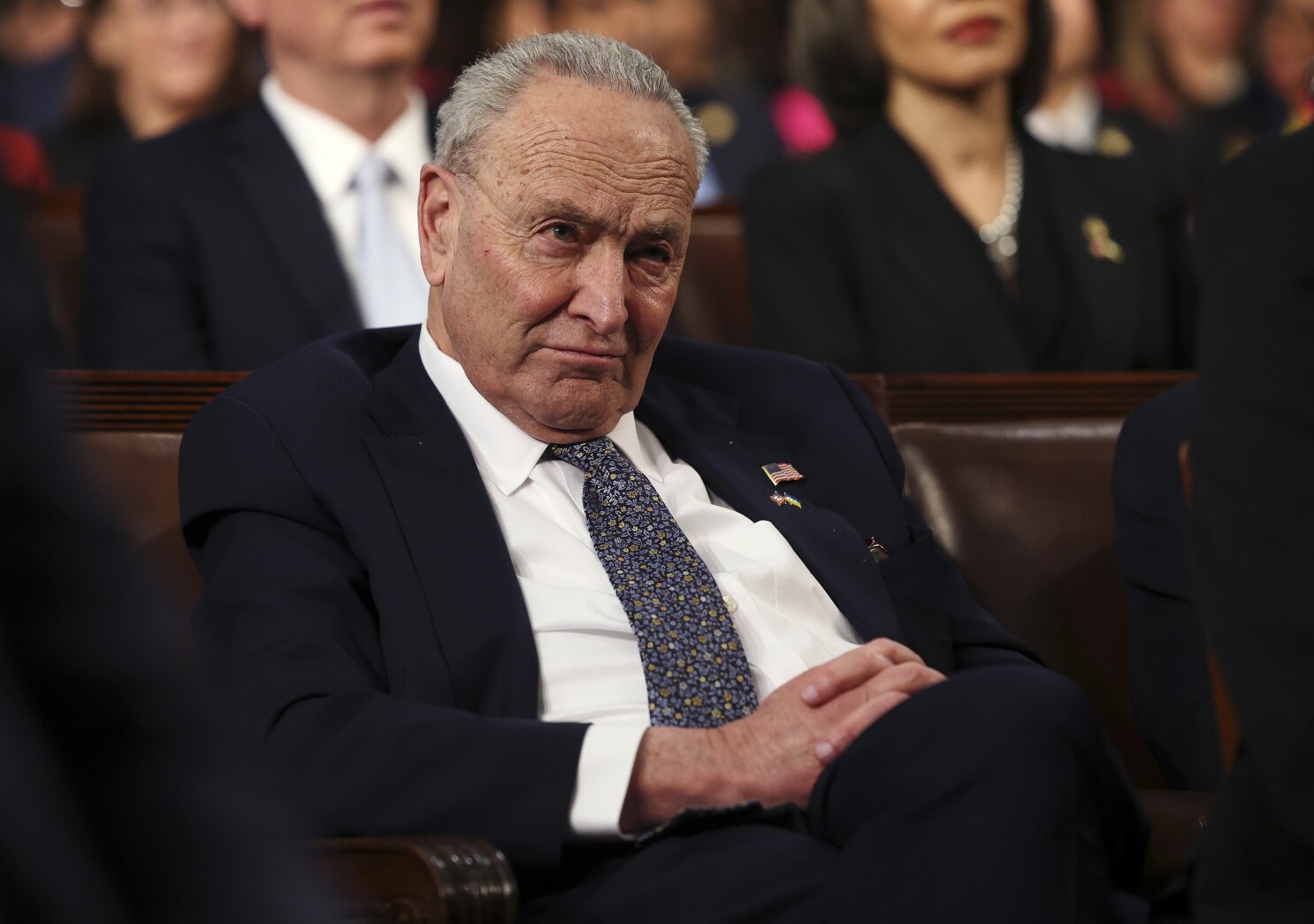
Few issues in American politics have evolved as dramatically over the past three decades as voting laws. Among the political figures whose position has drawn renewed scrutiny is Chuck Schumer, now the Senate Majority Leader and one of the most prominent Democrats in Washington.
In recent years, Schumer has been a vocal opponent of strict voter ID requirements, arguing that such laws risk suppressing turnout and disproportionately affecting minority, elderly, and low-income voters. But in 1996, during a very different political climate, he expressed support for voter identification measures — a stance that contrasts sharply with his current position.
The evolution of his views reflects not only personal political recalibration but also the broader transformation of the national debate over election integrity and access.
The 1996 Context
In 1996, Schumer was serving in the U.S. House of Representatives. At the time, debates over election procedures were framed less around partisan polarization and more around administrative modernization.
During discussions surrounding federal election reforms, Schumer supported measures that included voter identification provisions. The proposals were relatively modest compared with some of the strict photo ID laws enacted years later. They were generally discussed in the context of preventing fraud and increasing public confidence in elections.
In the mid-1990s, voter ID was not yet the sharply divisive issue it would later become. Many Democrats and Republicans alike expressed openness to some form of identification requirement, often paired with broader voting reforms. The political temperature was lower, and the debate had not yet become central to national party platforms.
Schumer’s support at the time aligned with a bipartisan sentiment that identification could serve as a safeguard without significantly restricting access.
The Rise of Strict Voter ID Laws
The political environment began to shift in the early 2000s. After the disputed 2000 presidential election and subsequent changes in election administration, concerns about both voter fraud and voter suppression intensified.
Several Republican-led states enacted strict photo ID laws requiring government-issued identification at polling places. Supporters argued that these measures were necessary to prevent impersonation and bolster election integrity. Critics countered that in-person voter fraud was exceedingly rare and that strict ID requirements created barriers for certain populations.
By the 2010s, the issue had become deeply polarized. Court battles unfolded across multiple states, and civil rights groups challenged laws they viewed as discriminatory.
As Senate Majority Leader, Schumer emerged as a prominent critic of strict voter ID statutes, framing them as part of a broader effort to limit ballot access.
Schumer’s Current Position
Today, Schumer argues that strict voter ID laws can function as a modern-day barrier to voting. He has supported federal legislation aimed at expanding access to the ballot, including proposals that would standardize early voting, protect mail-in voting, and limit restrictive state-level ID mandates.
He has often stated that the focus should be on making voting easier, not harder, particularly in light of record voter turnout in recent national elections.
Schumer’s opposition is rooted in the argument that millions of Americans lack qualifying photo identification and that obtaining such ID can involve costs, travel, or bureaucratic hurdles that disproportionately affect marginalized communities.
Explaining the Shift
The contrast between his 1996 position and his current stance highlights how political issues can evolve over time.
There are several factors that may explain the change:
-
Policy Differences – The voter ID measures debated in 1996 were less stringent than many of the laws enacted in the 2000s and 2010s. Earlier proposals often allowed broader forms of identification and were not embedded within highly partisan disputes.
-
Changing Evidence and Research – Over the years, studies examining voter fraud and voter turnout have influenced lawmakers’ positions. Many Democrats argue that evidence shows in-person voter fraud is rare, while restrictive ID laws can reduce participation.
-
Partisan Realignment – Voting laws have become a core partisan issue. As party coalitions have shifted, positions that once drew bipartisan support now align more strictly along party lines.
-
Legal and Judicial Developments – Supreme Court decisions and federal court rulings on voting rights have reshaped the legal landscape, influencing how lawmakers frame the issue.
Critics and Supporters Weigh In
Critics of Schumer point to his 1996 support as evidence of political inconsistency, arguing that the core principle of requiring identification to vote has not fundamentally changed.
Supporters counter that the substance of the laws has changed significantly. They argue that early proposals were narrower in scope and that today’s strict photo ID requirements represent a different policy category altogether.
They also emphasize that political leaders often reassess positions as circumstances evolve.
Broader National Debate
The debate over voter ID remains central to American politics. According to public opinion polls, a majority of Americans express support for requiring some form of identification to vote. However, support often varies depending on how the requirement is structured — such as whether non-photo IDs are accepted or whether IDs are provided free of charge.
Meanwhile, civil rights organizations continue to argue that strict ID laws can reduce turnout among minority voters, while supporters maintain that identification is a common-sense safeguard comparable to requirements for travel or financial transactions.
Schumer’s evolution mirrors the Democratic Party’s broader trajectory on the issue. While some Democrats in the 1990s supported voter ID in principle, today the party largely opposes strict photo ID mandates without expansive access protections.
Political Memory and Accountability
The resurfacing of Schumer’s 1996 remarks illustrates how historical positions can reemerge in modern debates. In the digital age, archived speeches and votes are easily rediscovered, often fueling accusations of flip-flopping.
However, political scientists note that shifts in policy stance are not uncommon, particularly on issues that undergo significant legal, social, and partisan transformation.
Conclusion
The difference between Chuck Schumer’s 1996 support for voter ID provisions and his current opposition to strict voter ID laws reflects a broader evolution in the national conversation about election integrity and ballot access.
What was once a relatively technical administrative issue has become one of the most polarized topics in American politics.
Whether viewed as inconsistency or adaptation, Schumer’s shift underscores how political positions can change as laws, evidence, and party dynamics evolve. The debate over voter ID is unlikely to fade anytime soon — and as it continues, past statements will remain part of the discussion.

Emily Johnson is a critically acclaimed essayist and novelist known for her thought-provoking works centered on feminism, women’s rights, and modern relationships. Born and raised in Portland, Oregon, Emily grew up with a deep love of books, often spending her afternoons at her local library. She went on to study literature and gender studies at UCLA, where she became deeply involved in activism and began publishing essays in campus journals. Her debut essay collection, Voices Unbound, struck a chord with readers nationwide for its fearless exploration of gender dynamics, identity, and the challenges faced by women in contemporary society. Emily later transitioned into fiction, writing novels that balance compelling storytelling with social commentary. Her protagonists are often strong, multidimensional women navigating love, ambition, and the struggles of everyday life, making her a favorite among readers who crave authentic, relatable narratives. Critics praise her ability to merge personal intimacy with universal themes. Off the page, Emily is an advocate for women in publishing, leading workshops that encourage young female writers to embrace their voices. She lives in Seattle with her partner and two rescue cats, where she continues to write, teach, and inspire a new generation of storytellers.