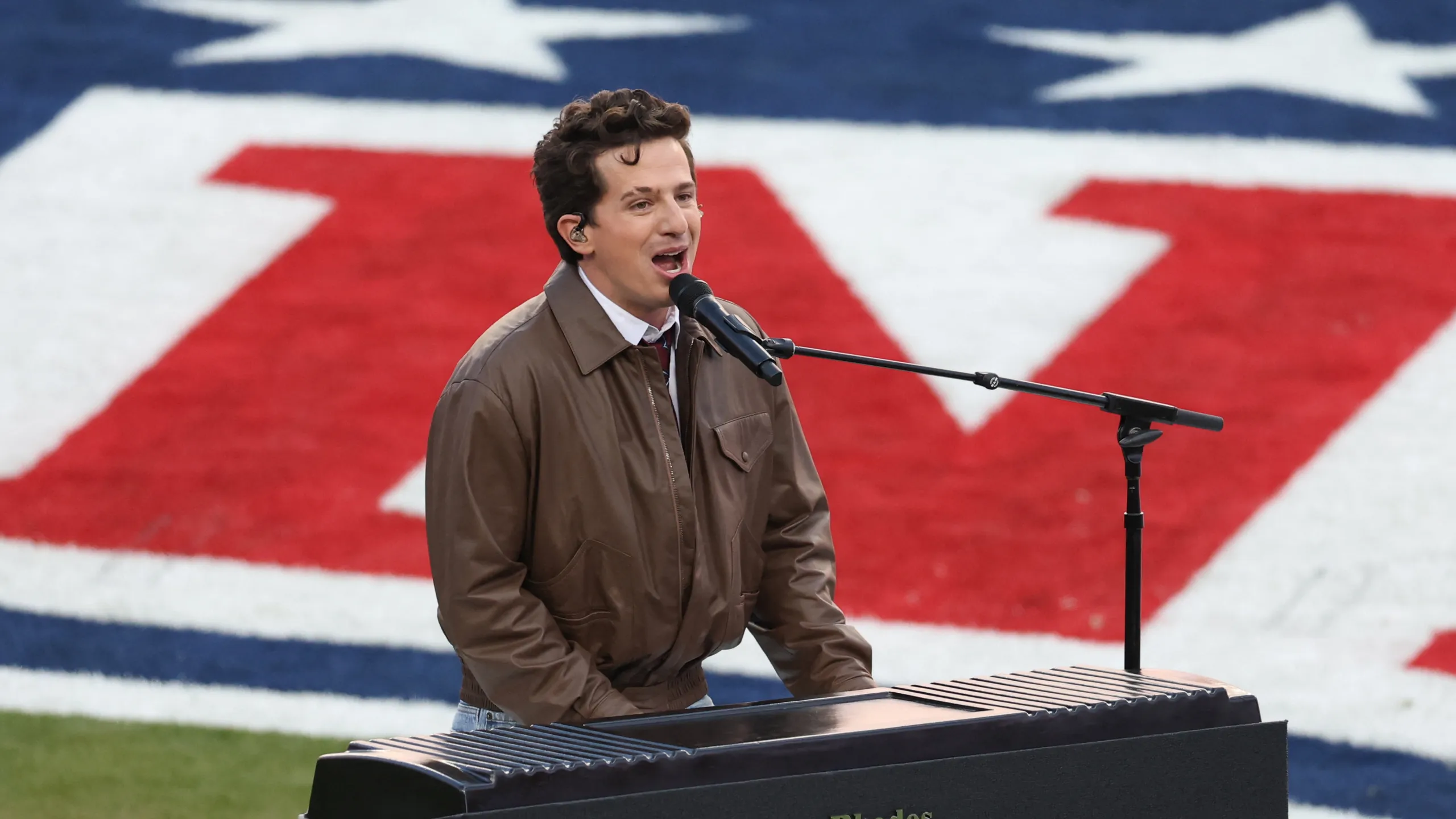
Super Bowl LX had barely begun before controversy erupted, this time centered on pop star Charlie Puth and his performance of The Star-Spangled Banner. While the singer delivered what appeared to be a flawless rendition of the US national anthem, a wave of viewers watching from home quickly took to social media with serious allegations that the performance was not sung live.
Puth performed the anthem on the field ahead of kickoff in Santa Clara, California, as millions of viewers tuned in for one of the most watched television events of the year. The moment, traditionally viewed as an honor reserved for respected performers, immediately became a flashpoint—not for politics, but for questions surrounding authenticity.
A Night Already Filled With Musical Controversy
The allegations against Puth came amid an already turbulent night for Super Bowl music. Prior to kickoff, controversy had been brewing around the NFL’s choice of performers, beginning with the announcement that Bad Bunny would headline the halftime show.
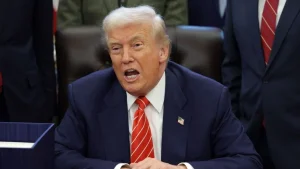
That decision reportedly angered conservative commentators and political figures, including President Donald Trump and Turning Point USA. Trump publicly stated that he would not attend the game due to dissatisfaction with the halftime performer selection, framing the choice as another example of what he views as cultural decline within major American institutions.
The pregame atmosphere became even more charged when Green Day opened the Super Bowl broadcast. The band, long known for its political messaging, used the platform to perform American Idiot, a song that has historically served as a sharp critique of American politics and media culture. While the track is one of their most recognizable hits, its inclusion at an event so closely tied to American nationalism stunned many viewers.
Against that backdrop, Charlie Puth’s appearance for the national anthem was expected to be a stabilizing, unifying moment. Instead, it sparked a different kind of backlash.
“Too Perfect” to Be Real?
Almost immediately after Puth finished singing, viewers began questioning whether what they heard was truly live. Social media platforms were flooded with comments suggesting the performance sounded “too perfect,” lacking the natural imperfections typically associated with live vocals—especially in an outdoor stadium setting.
One viewer wrote:
“Seemed like Charlie Puth was lip-syncing the national anthem. Anyone else have the same suspicions? It was too perfect. Not one little note was off.”
Another took a harsher tone, accusing the singer of disrespecting the moment:
“We’ve gone too far. Lip-syncing the national anthem? This used to be an honor to sing it. Embarrassing.”
Others were even more blunt, labeling the performance fraudulent and questioning why an artist known for vocal ability would rely on a backing track during such a high-profile event.
The criticism quickly snowballed, with hashtags questioning the authenticity of the performance trending as viewers replayed clips and analyzed Puth’s mouth movements, breathing patterns, and microphone handling.
Was It Actually Lip-Syncing?
There has been no official confirmation from the NFL or Charlie Puth regarding whether the anthem was performed live or with pre-recorded assistance. In fairness, anthem performances at major sporting events often involve varying degrees of audio support, including pre-recorded instrumental tracks, vocal layering, or broadcast delay adjustments.
In large stadium environments, sound engineers frequently employ techniques designed to ensure broadcast clarity. Wind, crowd noise, and acoustic delay can severely impact live vocals, especially for solo performers standing on an open field.
Supporters of Puth argue that his reputation as a trained musician with near-perfect pitch makes a clean performance entirely plausible. The singer is known for his meticulous vocal control, and fans were quick to point out that “sounding perfect” does not automatically equate to lip-syncing.
Still, skepticism persisted, fueled by the lack of visible vocal strain and the pristine consistency of the sound.
Why the National Anthem Hits Different
Unlike halftime performances, which are often expected to be heavily produced spectacles, the national anthem carries symbolic weight. For many viewers, it represents patriotism, respect, and tradition. Any perception of inauthenticity—even unproven—can trigger strong emotional reactions.
Critics argued that even the suggestion of lip-syncing undermines the significance of the moment. To them, the anthem is not just another performance but a ceremonial duty that demands full transparency.
That emotional reaction explains why the backlash gained traction so quickly, especially following earlier musical choices that had already polarized audiences.
A Night Far From Over
The anthem controversy unfolded with much of the night’s programming still ahead. Bad Bunny’s halftime performance and Turning Point USA’s alternative “All-American” halftime event featuring Kid Rock were still to come, both expected to generate their own headlines and reactions.
Given the political and cultural tensions surrounding this year’s Super Bowl, many viewers predicted that further controversies were inevitable. In that context, accusations of lip-syncing—while serious—may ultimately prove minor compared to the broader debates playing out around music, politics, and national identity.
Silence From the Artist
As of now, Charlie Puth has not publicly responded to the accusations. Whether the silence is strategic or simply reflective of standard NFL performance protocols remains unclear. Historically, artists accused of lip-syncing at major events often choose not to engage, allowing the controversy to fade as attention shifts elsewhere.
Without definitive proof, the debate is likely to remain unresolved. Some viewers remain convinced the performance was not live, while others see the accusations as an overreaction fueled by an already polarized audience.
Final Thoughts
Whether Charlie Puth lip-synced the national anthem or delivered a technically flawless live performance, the reaction highlights just how scrutinized Super Bowl moments have become. Every note, lyric, and visual is dissected in real time by millions of viewers, many primed to expect controversy.
In a night already marked by political tension, musical statements, and cultural divides, even the national anthem became a battleground for perception and authenticity. If nothing else, the reaction to Puth’s performance underscores how little margin for error exists when performing on one of the world’s biggest stages.
And with the halftime show still looming at the time, one thing was certain: the anthem debate would not be the last controversy to emerge from Super Bowl LX.

Emily Johnson is a critically acclaimed essayist and novelist known for her thought-provoking works centered on feminism, women’s rights, and modern relationships. Born and raised in Portland, Oregon, Emily grew up with a deep love of books, often spending her afternoons at her local library. She went on to study literature and gender studies at UCLA, where she became deeply involved in activism and began publishing essays in campus journals. Her debut essay collection, Voices Unbound, struck a chord with readers nationwide for its fearless exploration of gender dynamics, identity, and the challenges faced by women in contemporary society. Emily later transitioned into fiction, writing novels that balance compelling storytelling with social commentary. Her protagonists are often strong, multidimensional women navigating love, ambition, and the struggles of everyday life, making her a favorite among readers who crave authentic, relatable narratives. Critics praise her ability to merge personal intimacy with universal themes. Off the page, Emily is an advocate for women in publishing, leading workshops that encourage young female writers to embrace their voices. She lives in Seattle with her partner and two rescue cats, where she continues to write, teach, and inspire a new generation of storytellers.