
The unexpected death of a high-profile fast-food executive has sent shockwaves through Chicago’s business community and beyond, prompting an outpouring of condolences and renewed attention on the legacy of one of the nation’s most recognizable regional restaurant brands.
The executive, who led a well-known, multi-state fried chicken chain with deep roots in Chicago’s South Side, died at the age of 55, according to statements released by family members. While the announcement confirmed her passing, no cause of death was disclosed, and relatives asked for privacy as they grieve.
News of her death was initially shared through social media last week in a message posted by family members. The statement, which was later removed, described the loss as devastating and thanked supporters for their prayers and kind words.
“We are deeply saddened to announce the passing of our Chief Executive Officer,” the message read. “The family extends their sincere gratitude for the outpouring of prayers and condolences. At this time, we kindly ask that their privacy be respected during this time of bereavement.”
The absence of details surrounding her death has led to widespread speculation online, though neither the family nor company representatives have commented further. No public records or official statements have been released clarifying the circumstances.
A Leader of a Cultural Institution
The executive was widely recognized not only as a business leader but also as a steward of a brand that holds cultural significance in Chicago and Black communities nationwide. Under her leadership, the restaurant chain expanded steadily while maintaining its reputation for independence, authenticity, and strong neighborhood ties.
The business began decades earlier as a small, family-run operation, created during a time when Black entrepreneurs faced systemic barriers to capital, property ownership, and expansion opportunities. Against those odds, the company grew into a recognizable name, particularly in urban neighborhoods where national chains were slow—or unwilling—to invest.
The late executive often spoke publicly about the responsibility she felt in preserving that legacy.
In interviews over the years, she described the company as more than a restaurant brand, calling it a symbol of perseverance, community ownership, and generational progress.
Roots in Postwar Chicago
The company’s origins trace back to the mid-20th century, when its founder—then a young man from the American South—opened a modest restaurant in Chicago with his wife. Initially operating under a different name, the business focused on comfort foods such as dumplings and chicken feet, staples that reflected both cultural tradition and economic necessity.
According to company history, a turning point came when a local butcher began supplying chicken, allowing the founder to experiment with a fried chicken recipe that would eventually define the brand.
The first location specializing in fried chicken opened in the Kenwood neighborhood, an area that would later become synonymous with the restaurant’s identity.
Over time, the founder’s creation became one of the few Black-owned businesses in the area to achieve lasting success during an era when discriminatory zoning laws, lending practices, and informal segregation limited where Black entrepreneurs could operate.
Carrying the Torch
The founder died in 1988 after battling prostate cancer, leaving behind a growing business and a family determined to continue his work. Leadership of the company eventually passed to his daughter, who stepped into an increasingly prominent role as the brand entered a new phase of growth.
She formally began co-managing the business with her mother in 2000 and soon assumed full executive leadership, a position she would hold for more than two decades.
It was during this period that the brand expanded beyond Illinois, opening locations in multiple states while remaining privately owned and closely tied to its Chicago origins.
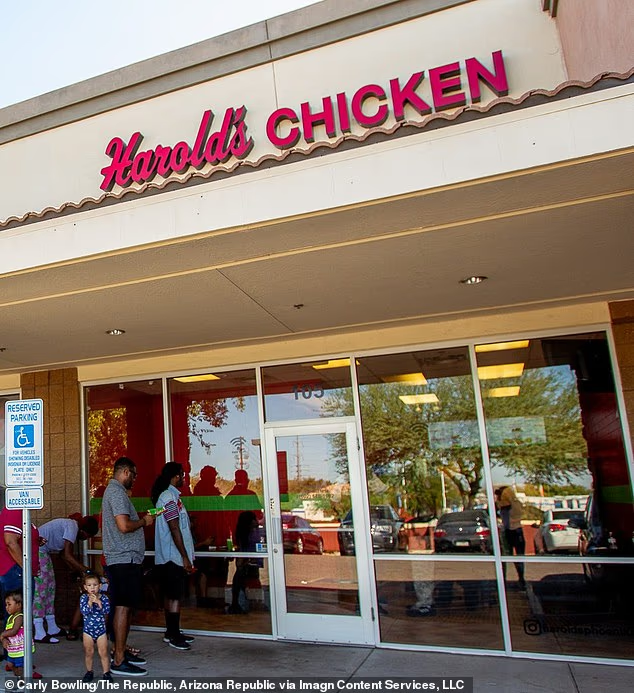
Midway through the company’s history—and at the center of its modern era—was Kristen Pierce-Sherrod, the longtime chief executive whose sudden death was announced last week.
A Voice for Legacy and Ownership
Pierce-Sherrod frequently spoke about her father’s journey as a Black entrepreneur and the challenges he faced building a business at a time when many doors were closed to people who looked like him.
“My father was a young Black man from the South with a dream,” she said in a 2024 interview with ABC 7 Chicago. “He worked hard during a time when African Americans weren’t capable of obtaining businesses or funding. And his hard work paid off.”
She emphasized that the company’s success was rooted in quality and consistency rather than corporate scale.
“It’s the best chicken around,” she said in that same interview. “That’s why we’re so successful. The others can’t compete because they can’t compare. It’s a part of Chicago.”
Her comments reflected a broader philosophy that guided her leadership: growth without erasing identity.

Cultural Impact Beyond the Menu
Over the decades, the restaurant became a cultural landmark, frequently referenced in music, film, and local media. Chicago-based artists, including Chance the Rapper and Lupe Fiasco, have name-checked the chain in lyrics, reinforcing its status as a hometown institution.
The company celebrated its 75th anniversary in 2024, a milestone Pierce-Sherrod marked by highlighting the role of employees, franchise operators, and loyal customers who sustained the brand across generations.
Despite its success, the company remained selective about expansion, choosing to maintain a strong presence in communities it served rather than pursuing aggressive national franchising.
Work Beyond the Restaurant Industry
Pierce-Sherrod’s leadership extended beyond the food business. In 2021, she co-founded the Chicago Children’s Equestrian Center with her husband, Vincent Sherrod, an organization designed to introduce children—particularly those from underserved communities—to horseback riding, emotional development, and self-confidence.
The center focused on teaching equestrian skills alongside lessons in self-worth and discipline, an initiative Pierce-Sherrod described as deeply personal.
She served as CEO of the organization, balancing her time between business leadership and nonprofit work aimed at youth empowerment.
A Sudden Loss, Many Questions
While tributes continue to circulate online, the lack of information surrounding Pierce-Sherrod’s death has left many questions unanswered. Family members have not disclosed whether she had been ill or whether her death occurred suddenly, and no official cause has been released.
Public figures, business leaders, and community members have expressed condolences, praising her dedication to preserving a Black-owned legacy and her role as a mentor to younger entrepreneurs.
As of now, no funeral arrangements or memorial services have been publicly announced.
Looking Ahead
Pierce-Sherrod’s passing marks the end of an era for a company that has long been synonymous with Chicago’s culinary and cultural landscape. What comes next for the business remains unclear, though observers note that its strong family foundation may help ensure continuity.
For many, her story represents both the promise and fragility of generational success—how decades of effort can build something enduring, and how suddenly leadership can be taken away.
As her family mourns privately, supporters across the country continue to reflect on the impact of a woman who helped carry a neighborhood restaurant into history.

Emily Johnson is a critically acclaimed essayist and novelist known for her thought-provoking works centered on feminism, women’s rights, and modern relationships. Born and raised in Portland, Oregon, Emily grew up with a deep love of books, often spending her afternoons at her local library. She went on to study literature and gender studies at UCLA, where she became deeply involved in activism and began publishing essays in campus journals. Her debut essay collection, Voices Unbound, struck a chord with readers nationwide for its fearless exploration of gender dynamics, identity, and the challenges faced by women in contemporary society. Emily later transitioned into fiction, writing novels that balance compelling storytelling with social commentary. Her protagonists are often strong, multidimensional women navigating love, ambition, and the struggles of everyday life, making her a favorite among readers who crave authentic, relatable narratives. Critics praise her ability to merge personal intimacy with universal themes. Off the page, Emily is an advocate for women in publishing, leading workshops that encourage young female writers to embrace their voices. She lives in Seattle with her partner and two rescue cats, where she continues to write, teach, and inspire a new generation of storytellers.