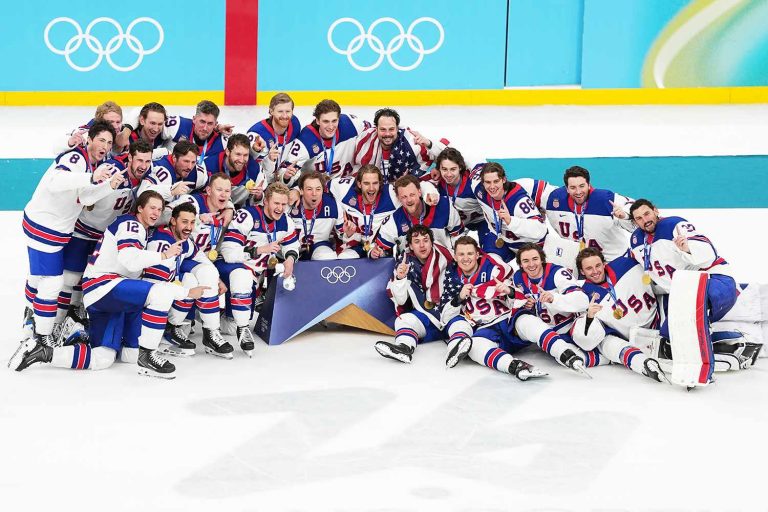



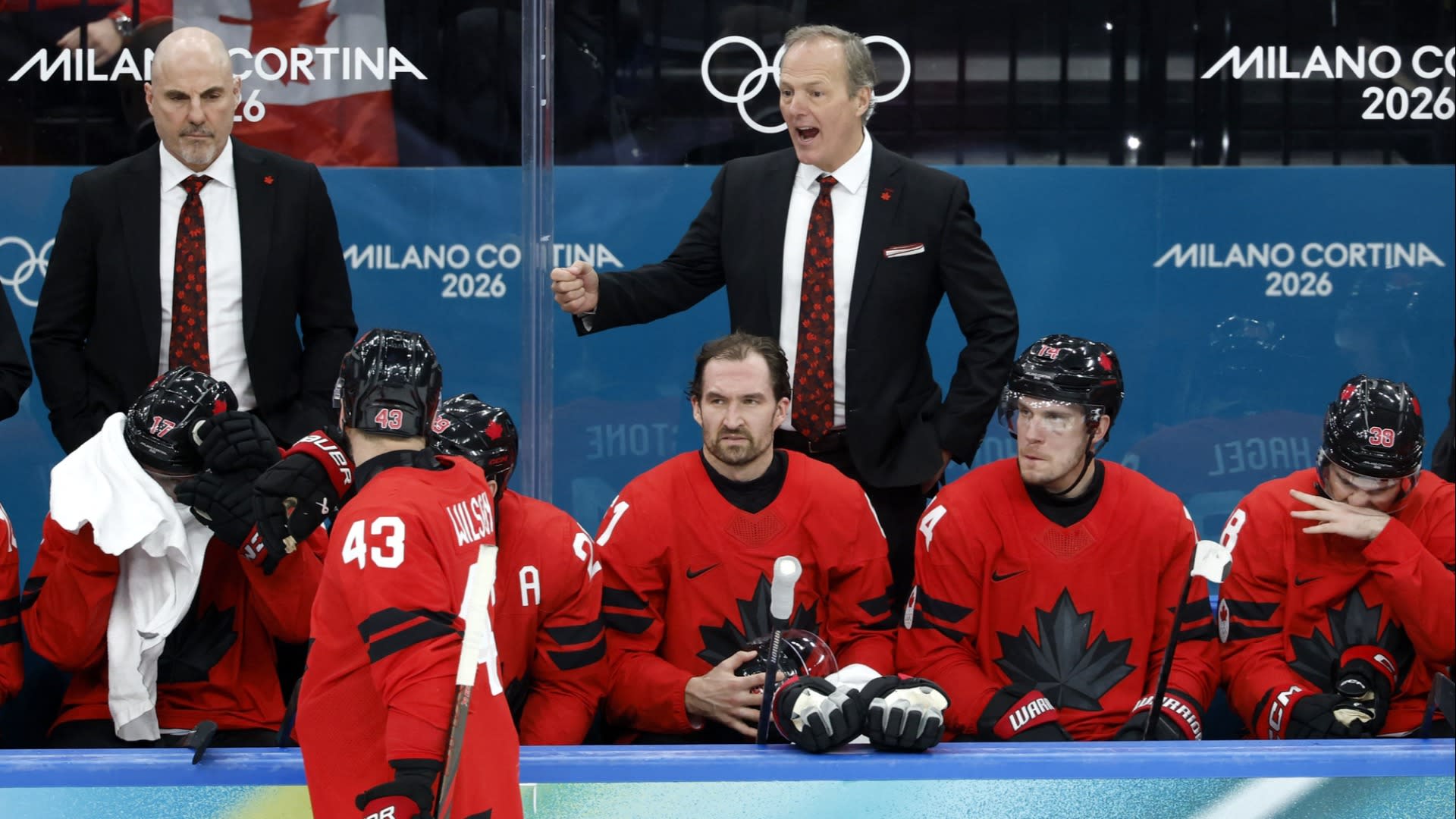
MILAN, ITALY — Team Canada came into Sunday’s men’s Olympic hockey gold medal game against the United States with high expectations, a roster stacked with talent, and a history of Olympic success behind them. Yet despite dominating portions of play, controlling puck possession, and generating numerous scoring opportunities, Canada ultimately fell 2-1 in a heart-wrenching loss that left players, fans, and observers questioning the factors that led to the result.
From the outset, the game was tightly contested. Canada’s forwards moved with speed and purpose, cycling the puck effectively in the offensive zone and creating high-danger scoring chances. Defensively, the team held strong against the Americans’ counterattacks, limiting opportunities on the rush. Nevertheless, the Canadian squad was unable to convert its numerous chances into goals. On Sunday, they managed just one goal on 41 shots against the formidable U.S. goalie Connor Hellebuyck, a number that highlighted both the Americans’ goaltending excellence and Canada’s difficulty finishing in critical moments.
The regulation period ended with a 1-1 tie, reflecting a game that was as much a battle of wills as it was skill. The tension on the ice was mirrored in the stands and across international broadcasts, as fans waited to see which team would secure Olympic gold. For Canada, the stakes were monumental: their roster featured experienced NHL stars alongside younger talents eager to establish their Olympic legacy. For the United States, this marked an opportunity to claim their first gold medal in men’s hockey since 1972, a feat that added layers of historical significance to the contest.
As the game moved into overtime, a format designed to produce a decisive result on a tight Olympic schedule, questions arose about the structure and fairness of how the final would be resolved. Unlike the NHL Stanley Cup playoffs, where overtime is played 5-on-5 in full 20-minute periods with intermissions until a goal is scored, Olympic overtime employs a 3-on-3 configuration, reflecting a compromise intended to accommodate the Games’ schedule and television coverage constraints. This difference, subtle to the casual observer, proved critical as the game approached its conclusion.
Throughout the tournament, Canada had shown resilience under pressure. In the quarterfinals against Czechia, they won in overtime thanks to a timely goal, and in the semifinals against Finland, the team staged a late comeback, scoring in the final minutes of regulation to secure victory. These prior close contests underscored Canada’s ability to persevere in tight situations but also foreshadowed how a single, well-executed play could define a match under a shortened overtime format.
As play resumed in overtime, the condensed nature of 3-on-3 hockey magnified every decision. The open ice provided more opportunities for breakaways and quick transitions, and the reduced number of skaters meant defensive coverage was less forgiving. It was here, in the early moments of overtime, that a decisive play would emerge. Jack Hughes of the United States seized the opportunity, receiving the puck in a critical moment, and with a clean, precise shot, scored the game-winning goal, securing a 2-1 victory and delivering the United States its first Olympic gold in men’s hockey in 46 years. The strike itself was technically flawless, but its timing and the circumstances surrounding it triggered intense debate about the format under which the game was played.
Following the loss, Canada’s head coach, Jon Cooper, addressed the media with visible frustration. While he praised his team’s effort, skating ability, and tenacity, he expressed deep concern over what he perceived as an undue influence of game structure on the outcome. Cooper’s comments highlighted a simmering debate among hockey professionals about whether the Olympic overtime system truly reflects the sport at its highest competitive level.
“You take four players off the ice, now hockey’s not hockey anymore,” Cooper said in a postgame interview. “There’s a reason overtime and shootouts exist — they’re all TV-driven to end games quickly. There’s a reason this format is not used in the Stanley Cup Final or playoffs. The way it’s set up here fundamentally changes the game, and unfortunately, it cost us today.”
The criticism centers specifically on the 3-on-3 overtime rule. By removing two players from each side, the game transforms into a far more open contest, emphasizing speed and individual skill over team systems and structured play. While 3-on-3 hockey can produce spectacular plays and highlight athleticism, detractors argue that it departs from the core strategies that define high-level hockey, such as positional discipline, puck cycling, and coordinated defensive schemes. For Canada, whose gameplay is often predicated on structured offensive pressure and strong defensive coverage, the rule created scenarios where one misstep or a moment of brilliance from an opponent could decisively alter the outcome.
Observers note that the Olympic schedule necessitates a compressed format. Unlike the NHL playoffs, the Olympics operate under tight timelines across multiple arenas, with broadcasting schedules that prioritize audience accessibility and the ability to conclude events in a timely fashion. Yet this compromise has come under scrutiny, especially when it appears to influence medal outcomes in high-stakes games. Canada’s experience on Sunday became a focal point in the broader conversation about the balance between logistical constraints and competitive integrity.
Despite the controversy, Canada’s performance was impressive in many respects. The team’s 41 shots on goal demonstrate offensive dominance and the ability to generate scoring chances consistently. The defensive corps successfully limited several high-quality opportunities for the U.S., and Canada’s goaltending kept the team in contention throughout regulation. Yet, in hockey, margins are often razor-thin, and in the compressed 3-on-3 overtime setting, even the strongest defensive units can be vulnerable.
The result also underscores the role of individual skill and situational awareness in 3-on-3 play. The open ice favors players who can execute quickly and creatively, sometimes amplifying the impact of a single moment. Jack Hughes’ decisive goal was emblematic of this dynamic — a technically proficient play that capitalized on a fleeting opening, which in a full 5-on-5 period with multiple defenders might have been less likely to succeed. This nuance is central to understanding why Cooper described the format as “not hockey anymore” and why discussions about potential changes to Olympic overtime rules have intensified.
Adding to the complexity, Team Canada faced immense pressure throughout the tournament. The weight of expectation, historical precedent, and prior close victories meant that every game carried significant emotional and psychological stakes. The narrow overtime loss highlighted how, under certain formats, even a dominant team in possession and shots can find itself on the losing end. The cumulative effect of three consecutive games decided in tight scenarios — quarterfinal overtime, semifinal comeback, and gold medal overtime — further illustrates the fine margins that separate victory from defeat in international hockey.
Canada’s experience also reignites conversations about the evolution of the sport on the international stage. Advocates for traditional formats argue that gold medal games should mirror NHL playoff standards — extended 5-on-5 periods until a goal is scored — to preserve the integrity of the game. Critics counter that logistical limitations, athlete welfare, and broadcasting demands necessitate alternative structures, such as 3-on-3 overtime and shootouts. Sunday’s result has added urgency to this debate, providing a concrete example of how format choices can materially affect outcomes, even for elite teams like Canada.
While Team Canada did not achieve the ultimate goal of gold, the performance highlighted many positive aspects: disciplined skating, high shot volume, structured play during regulation, and resilience under pressure. The loss, though heartbreaking, provides material for analysis for coaches, analysts, and future tournament organizers about the interplay between game format, player skill, and competitive fairness.
Ultimately, the gold medal was decided in a matter of moments, but those moments were heavily influenced by the rule that shaped overtime play. The 3-on-3 configuration, distinct from standard NHL playoff overtime, accelerated the pace and emphasized open-ice opportunities, creating a scenario where a single breakaway could determine the champion. For Canada, the rule became the defining factor, magnifying the impact of Hughes’ goal and sparking postgame critiques from Cooper and others about its appropriateness in deciding an Olympic gold medal.
In the aftermath, discussions among players, coaches, and hockey officials are expected to continue. Cooper’s scathing remarks, coupled with analytical assessments of possession statistics, shot attempts, and situational plays, provide a foundation for ongoing debate about whether future Olympic games should reconsider overtime formats to better align with traditional hockey standards while still accommodating logistical realities.
As fans reflect on the tournament, Canada’s journey serves as both a testament to skill and determination and a reminder of how rules, formats, and split-second decisions can shape legacies, medal counts, and the narratives that define Olympic hockey history.

Emily Johnson is a critically acclaimed essayist and novelist known for her thought-provoking works centered on feminism, women’s rights, and modern relationships. Born and raised in Portland, Oregon, Emily grew up with a deep love of books, often spending her afternoons at her local library. She went on to study literature and gender studies at UCLA, where she became deeply involved in activism and began publishing essays in campus journals. Her debut essay collection, Voices Unbound, struck a chord with readers nationwide for its fearless exploration of gender dynamics, identity, and the challenges faced by women in contemporary society. Emily later transitioned into fiction, writing novels that balance compelling storytelling with social commentary. Her protagonists are often strong, multidimensional women navigating love, ambition, and the struggles of everyday life, making her a favorite among readers who crave authentic, relatable narratives. Critics praise her ability to merge personal intimacy with universal themes. Off the page, Emily is an advocate for women in publishing, leading workshops that encourage young female writers to embrace their voices. She lives in Seattle with her partner and two rescue cats, where she continues to write, teach, and inspire a new generation of storytellers.