Bruce Springsteen delivers 5 brutal digs at ‘King Trump’ and ICE in song dedicated to Minneapolis victims
on
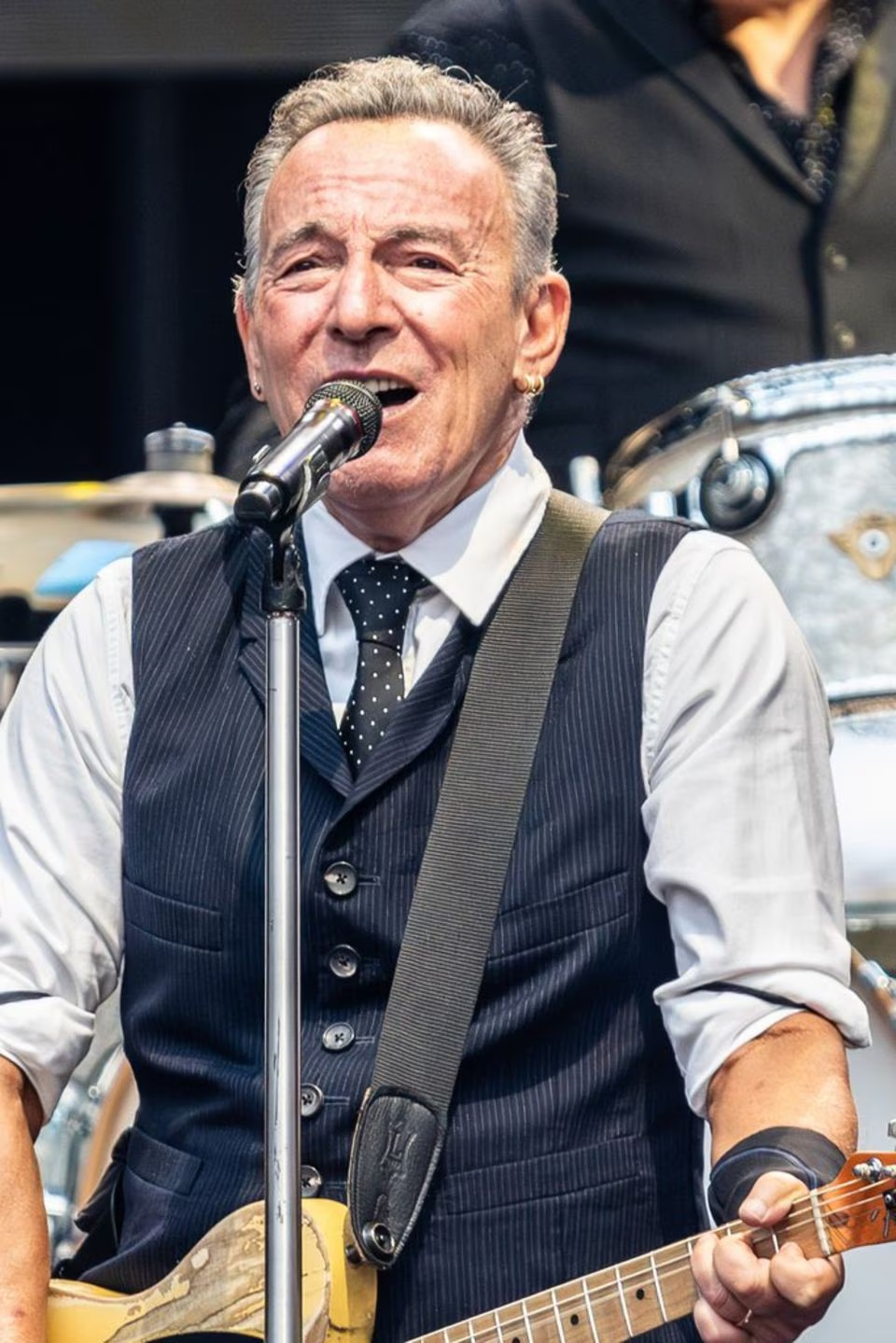
Bruce Springsteen has released a powerful new protest song aimed squarely at Donald Trump, Immigration and Customs Enforcement, and the federal immigration crackdown that has gripped Minneapolis in recent weeks. The track, titled Streets of Minneapolis, was unveiled on Wednesday, January 28, and is explicitly dedicated to two people whose deaths have become symbols of the escalating controversy surrounding federal enforcement operations: Renee Nicole Good and Alex Pretti.
The legendary musician described the song as a response to what he called “the state terror being visited on the city.” In a message shared on the social media platform Bluesky, Springsteen wrote that the song was dedicated “to the people of Minneapolis, our innocent immigrant neighbors, and in memory of Alex Pretti and Renee Good.” The post left little doubt about the intent behind the track, marking one of Springsteen’s most direct and scathing artistic rebukes of the Trump administration to date.
International outrage has followed the deaths of both Good and Pretti, each 37 years old, who were killed in separate encounters with Immigration and Customs Enforcement agents in January. Good, a mother of three, was fatally shot by ICE agent Jonathan Ross on January 7 after dropping her children off at school. Just over two weeks later, Pretti, an intensive care nurse, was shot and killed by federal agents during protests tied to immigration enforcement operations in Minneapolis on January 24.
The two incidents have intensified scrutiny of ICE and the Department of Homeland Security, particularly as video footage and preliminary reviews have raised questions about the official accounts provided in the immediate aftermath. Agents involved in Pretti’s shooting have since been placed on administrative leave, though investigations remain ongoing.
According to reporting, the deaths of Good and Pretti bring the total number of people killed during encounters with ICE this year to eight as of January 29. That statistic has added fuel to an already volatile national debate over immigration enforcement, use of force, and civil liberties. Amid growing protests and criticism, President Donald Trump has stated that his administration intends to “de-escalate” operations in Minnesota, even as his broader immigration agenda remains firmly in place.
ICE raids and enforcement actions have intensified under Trump’s leadership, reflecting a far more aggressive approach to deportations and immigration control than in previous administrations. Supporters argue the measures are necessary to uphold the rule of law and protect national security, while critics say the tactics amount to intimidation, overreach, and the erosion of constitutional rights.
Springsteen’s Streets of Minneapolis enters that debate with unambiguous force. Long known for his working-class anthems and politically charged storytelling, the “Born in the U.S.A.” singer has never shied away from criticizing Trump. However, this song stands out for its specificity, naming events, individuals, and policies tied directly to the Minneapolis crackdown.
One of the song’s most striking lines declares, “Trump’s federal thugs beat up on / His face and his chest.” The lyric draws directly from footage and eyewitness accounts of Pretti’s final moments. Video from the scene shows the ICU nurse attempting to help a woman who had been pushed into a pile of snow by agents. Pretti is later pepper-sprayed, subdued, and appears to have a firearm removed from his person before being beaten and shot. Reports indicate that at least ten gunshots were fired.
By referring to ICE agents as “federal thugs,” Springsteen delivers a double-edged critique. The phrase condemns what he portrays as brutality by federal officers while simultaneously echoing the Trump administration’s own language. Administration officials have repeatedly used the word “thugs” to describe immigrants and deportees, including during announcements celebrating the revocation of tens of thousands of visas for alleged criminal activity.
Another cutting lyric describes ICE and related agencies as “King Trump’s private army from the DHS.” The line frames federal law enforcement not as neutral institutions but as personal enforcers of the president’s political will. The reference to Trump as “King” taps into long-standing criticism that he governs with authoritarian instincts rather than democratic restraint, suggesting loyalty over accountability.
The lyric also echoes broader criticism of Operation Metro Surge, the immigration crackdown in Minneapolis that has drawn legal challenges and condemnation from local officials. Critics argue the operation involved warrantless stops, the detention of U.S. citizens, and the use of excessive force, all of which undermine public trust in federal agencies.
Springsteen continues his indictment with the line, “It’s our blood and bones / And these whistles and phones / Against Miller and Noem’s dirty lies.” Here, the songwriter turns his focus toward senior figures within Trump’s administration who have defended the enforcement actions.
Stephen Miller, one of the architects of the administration’s hardline immigration policy, has stated that federal agents enjoy immunity while carrying out their duties. That position resurfaced publicly in the days following Good’s death, drawing sharp criticism from civil rights advocates.
Homeland Security Secretary Kristi Noem has also faced intense backlash. She claimed that Pretti “attacked” officers and previously characterized the circumstances surrounding Good’s death as an act of domestic terrorism. Those statements, made before investigations were complete, have led to calls for her resignation from both Democrats and some Republicans. Springsteen’s reference to “dirty lies” reflects a growing distrust of official narratives coming from the administration.
Another lyric cuts to the heart of the controversy: “Now they say they’re here to uphold the law / But they trample on our rights.” The line challenges the core justification offered by federal officials—that ICE and DHS are simply enforcing existing laws. Critics argue that enforcement methods matter, and that the tactics used in Minneapolis crossed legal and moral boundaries.
Local officials have accused federal agents of overreach, while lawsuits have been filed alleging violations of constitutional rights. Protesters and civil liberties groups contend that the operations prioritized quotas and optics over due process and public safety, eroding trust between communities and law enforcement.
Springsteen closes one of the song’s most haunting passages with the line, “And there were bloody footprints / Where mercy should have stood.” The imagery underscores the sense of injustice felt by many in Minneapolis and beyond. Where restraint, compassion, and accountability were expected, the outcome instead was violence and death.
The song has resonated far beyond the United States, drawing international attention to the Minneapolis incidents and the broader state of immigration enforcement under Trump. For Springsteen, Streets of Minneapolis is not merely a protest song but a memorial, a condemnation, and a call to conscience.
As investigations into the deaths of Renee Good and Alex Pretti continue, the political and cultural fallout shows no sign of slowing. Springsteen’s intervention adds the weight of one of America’s most influential voices to a debate that has already reshaped public discourse. In doing so, he has once again positioned his music as both a mirror and a challenge to the nation, asking whether the values it claims to uphold are still reflected in its actions.
Emily Johnson is a critically acclaimed essayist and novelist known for her thought-provoking works centered on feminism, women’s rights, and modern relationships. Born and raised in Portland, Oregon, Emily grew up with a deep love of books, often spending her afternoons at her local library. She went on to study literature and gender studies at UCLA, where she became deeply involved in activism and began publishing essays in campus journals. Her debut essay collection, Voices Unbound, struck a chord with readers nationwide for its fearless exploration of gender dynamics, identity, and the challenges faced by women in contemporary society. Emily later transitioned into fiction, writing novels that balance compelling storytelling with social commentary. Her protagonists are often strong, multidimensional women navigating love, ambition, and the struggles of everyday life, making her a favorite among readers who crave authentic, relatable narratives. Critics praise her ability to merge personal intimacy with universal themes. Off the page, Emily is an advocate for women in publishing, leading workshops that encourage young female writers to embrace their voices. She lives in Seattle with her partner and two rescue cats, where she continues to write, teach, and inspire a new generation of storytellers.